Traveling with your dog can be a stressful experience, but it doesn’t have to be. With the right preparation, you and your furry friend can have a smooth and enjoyable journey.
It’s important to understand airline pet policies before booking your flight. Each airline has its own rules and requirements for pets. So, it’s crucial to find an airline that fits your needs.
Being prepared is key to a successful trip. In this article, we’ll share valuable dog travel tips to help you navigate the process with ease.
Key Takeaways
- Research airline pet policies before booking
- Understand the requirements for traveling pets
- Prepare your dog for the flight
- Choose the right travel crate for your dog
- Plan for your dog’s comfort during the flight
Planning Ahead: Essential Pre-Travel Preparations
To make your dog’s air travel safe and fun, you need to plan well. This means taking several important steps. These steps will make the trip better for you and your pet.
When to Start Planning Your Dog’s Air Travel
Start planning your dog’s air travel early. Most airlines need 2 weeks’ notice. But, it’s best to start a month before you travel. This gives time for vet visits, health certificates, and travel plans.
Assessing Your Dog’s Travel Readiness
Check if your dog is ready for travel before booking. Think about their age, health, and how they act. Puppies under 8 weeks shouldn’t fly, and some health issues are risky. Talk to your vet to see if flying is okay for your dog.
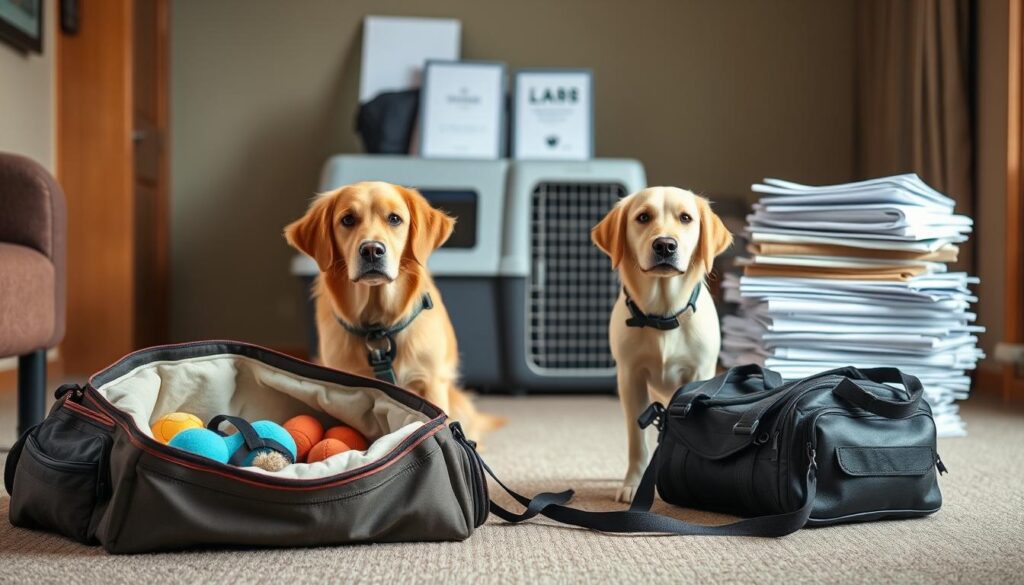
Creating a Pre-Flight Checklist
A detailed pre-flight checklist is key for a stress-free trip. It should include getting a health certificate, keeping vaccinations current, microchipping, and buying a good travel carrier. A checklist keeps you organized and ensures you don’t miss important steps.
By planning early and getting your dog ready for flying, you can lower risks. This makes the journey smoother for you and your pet.
Health Requirements and Documentation
Traveling with dogs by air needs careful planning. You must meet health requirements and gather the right documents. This ensures your dog’s health and follows airline rules for a smooth trip.
Required Veterinary Visits and Health Certificates
Before flying, a vet visit is a must. You’ll get a health certificate for your dog. This proves your dog is fit for travel and meets health rules at your destination. The certificate is good for 10 days before your trip.
Vaccination Requirements for Air Travel
Vaccination rules change based on where you’re going and the airline’s rules. Make sure your dog has all needed shots, like rabies and distemper. Some places have special vaccine needs, so check your destination’s rules.
Microchipping and ID Considerations
Microchipping your dog is a good idea for ID. Use a 15-digit ISO-compliant microchip for travel. Also, make sure your dog’s ID tags are current and on their collar.
Here’s a quick summary of what you need for flying with dogs:
| Requirement | Description | Timeline |
|---|---|---|
| Veterinary Visit | Obtain a health certificate | Within 10 days of travel |
| Vaccinations | Ensure compliance with destination requirements | As per destination regulations |
| Microchipping | ISO-compliant microchip | Before travel |

Choosing the Right Airline for Pet Travel
Choosing an airline for your pet’s travel is the first step. Different airlines offer various services and policies. It’s important to research well.
Pet Policies Across Major US Airlines
Major US airlines have their own pet travel rules. Some let dogs in the cabin, while others have stricter rules or don’t allow pets. It’s key to compare these policies to find the best fit for your dog.
- Some airlines limit the number of pets in the cabin per flight.
- Others require specific carriers or have size limits.
- Some airlines offer more pet-friendly amenities and services.
Cabin vs. Cargo Travel Options
Knowing the difference between cabin and cargo travel is crucial. Cabin travel means your dog is with you in the cabin, in a carrier under the seat. Cargo travel means your dog goes in a pressurized cargo hold. Each option has its own advantages and disadvantages, like cost, safety, and comfort.
Airline Pet Travel Fees and Costs
Pet travel fees vary a lot. Pet travel fees can be from $100 to over $500, based on the airline, travel class, and whether your dog is in the cabin or cargo. Remember to also consider extra costs like health certificates and travel crates.
By carefully looking at these factors, you can choose a safe and comfortable journey for your dog.
Best Airline Pet Travel Tips for Dogs
To make your trip smooth, knowing the best airline pet travel tips is key. Traveling with your dog needs careful planning. This helps reduce stress and ensures a comfortable journey.
Booking Your Flight Strategically
When booking flights for pet travel, pick a flight that fits your dog’s needs. Choose a direct flight to lessen travel stress. Avoid layovers that might add to your dog’s journey complications.
Selecting Pet-Friendly Flight Times and Routes
Choosing pet-friendly flights means picking times and routes that won’t stress your dog. Early morning or late evening flights are often better. They are less crowded and can be more comfortable for your dog.

Communicating with Airline Staff Effectively
Communicating with airline staff is crucial to meet your dog’s travel needs. Tell the airline about your dog’s size, breed, and any special needs early. This ensures the airline makes the right arrangements and avoids last-minute problems.
| Airline | Pet Policy | Fee |
|---|---|---|
| American Airlines | Cabin and Cargo | $125-$200 |
| Delta Air Lines | Cabin and Cargo | $95-$200 |
| United Airlines | Cabin and Cargo | $125-$250 |
Selecting and Preparing the Perfect Travel Carrier
Choosing the right travel carrier for your dog is key for a stress-free flight. The carrier is more than just a way to transport your pet. It’s a safe space that can greatly affect your dog’s comfort and anxiety during the flight.
Airline-Approved Carrier Requirements
Before picking a travel carrier, check with your airline for their specific needs. They have strict rules to keep pets safe and comfortable during flights. Carriers must be well-ventilated, have a secure door, and be made of durable material.
Sizing and Comfort Considerations
The carrier should be big enough for your dog to stand up, turn around, and lie down. Measure your dog and compare it to the carrier’s size. Look for a carrier with a comfy bedding area and good ventilation to keep your dog happy.
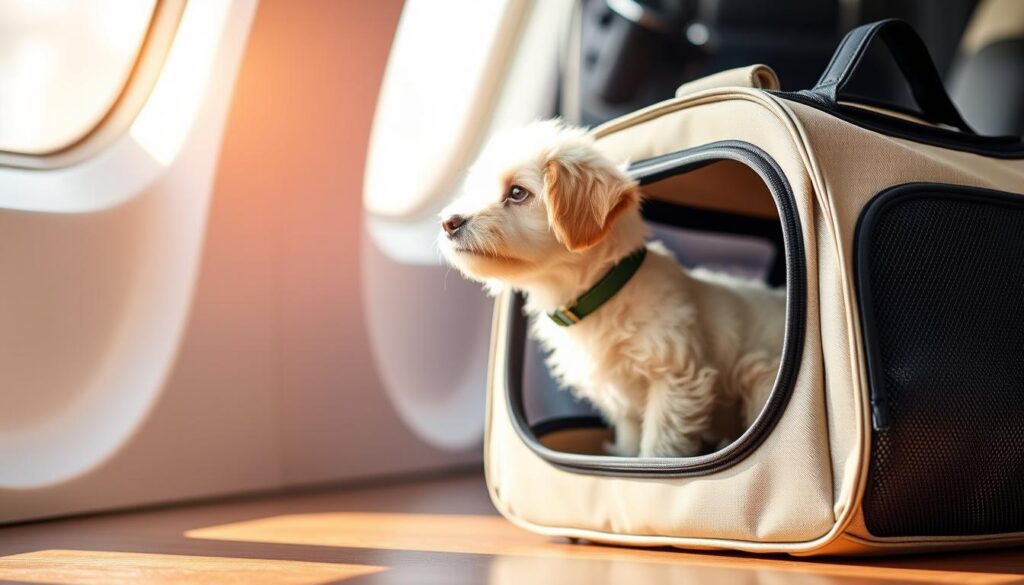
Acclimating Your Dog to Their Carrier
Getting your dog used to the carrier before you travel can help reduce stress. Start by putting your dog’s favorite treats and toys inside. Gradually increase the time your dog spends in the carrier, making it a cozy and familiar spot.
| Carrier Feature | Importance | Tips |
|---|---|---|
| Airline Approval | High | Check with your airline for specific requirements |
| Size and Comfort | High | Ensure your dog can stand, turn, and lie down comfortably |
| Ventilation | High | Look for carriers with good airflow |
Managing Your Dog’s Anxiety and Comfort
Air travel can be scary for dogs. But, with the right steps, you can make their trip smoother. It’s key to manage your dog’s anxiety for their comfort and happiness.
Natural Calming Techniques and Products
There are many ways to calm your dog during flights. Pheromone diffusers and treats with chamomile or melatonin are good choices. They mimic natural calming signals, easing your dog’s stress.
Sedation Considerations and Veterinary Guidance
In some cases, a vet might suggest sedation for travel anxiety. Always talk to your vet first. Sedation should only be used with their advice, as it can be risky.
Familiar Items and Scent Comfort
Bringing your dog’s favorite toy or blanket can offer comfort. The scent of these items is very reassuring. You can also use a piece of your clothing for extra comfort.
Using these strategies can greatly reduce your dog’s travel anxiety. This makes the trip better for both of you.
Day-of-Travel Procedures
To make your dog’s air travel smooth, follow these steps. These procedures help reduce stress for you and your pet.
Pre-Flight Exercise and Bathroom Routines
Before going to the airport, ensure your dog is exercised and has used the bathroom. A tired dog travels better. Try a morning walk or playtime to burn off energy and prevent accidents.
Feeding and Watering Guidelines
Avoid big meals close to flight time to prevent sickness. Opt for a light meal a few hours before. Make sure your dog has water until you leave, but avoid too much to prevent bathroom breaks.
Airport Check-in Process with Pets
Arrive at the airport early when traveling with pets. Check-in rules differ by airline, so know your carrier’s needs. Have all documents ready and be prepared to share your dog’s travel plans.
Special Considerations for Different Dogs
Traveling with dogs requires knowing their special needs. Each dog has its own needs that affect their comfort and happiness during travel.
Small Breed Travel Tips
Small breed dogs need a comfy and safe carrier. Make sure it’s well-ventilated and meets airline rules. Help your dog get used to the carrier before flying. A carrier that fits under your seat is best for keeping them close.
Large Breed Considerations
Large dogs often fly in the cargo hold. It’s important to pick an airline with a good pet travel record. Their crate must be strong, well-ventilated, and have their info. Adding their favorite toys or blankets can help them feel at home.
Brachycephalic (Flat-Faced) Breed Precautions
Brachycephalic breeds, like Pugs and Bulldogs, need extra care. Talk to a vet before flying to check risks. Some airlines won’t fly these breeds because of health issues, so check the airline’s policy.
Senior and Special Needs Dogs
Senior or special needs dogs need extra planning. Work with your vet to plan their travel based on their health. Think about the stress of travel and health risks. Plan for breaks during the trip.
Understanding and meeting your dog’s unique needs ensures a safe and comfortable trip for them.
International Travel and Destination Requirements
Traveling with your dog internationally means dealing with many rules. You’ll need health certificates and might face quarantine. It’s key to follow these rules for a smooth trip.
Country-Specific Pet Entry Requirements
Every country has its own rules for pets. Some need special shots or health papers. It’s important to know the country-specific requirements for where you’re going.
- Check the official government or embassy website for the most current pet travel regulations.
- Make sure your dog’s shots are current and meet the destination’s needs.
- Get a health certificate for your dog before you travel.
Quarantine Policies to Be Aware Of
Quarantine rules change a lot from country to country. Some places have strict rules, while others are more relaxed. Knowing these rules helps avoid problems when you arrive.
Return Trip Planning
Planning your dog’s return trip is as important as the first trip. Look into the return trip requirements for your dog. Some countries have different rules for coming back, so plan early.
Conclusion
Traveling with your dog can seem scary, but it doesn’t have to be. With the right steps, it can be easy and fun. This article has given you the best tips for flying with your pet.
First, plan well and check if your dog is ready for travel. Then, pick the best airline and get the right carrier. Keeping your dog calm and comfortable is key for a good trip.
By following these tips, you’ll know how to plan a great trip for your dog. It’s all about careful planning and knowing airline rules. With these tips, you’re ready to make travel fun for your dog.
When you’re ready to travel with your dog, stay calm and patient. Always think about your dog’s comfort and safety. With the right preparation, you and your dog will have many happy trips together.