Exploring Europe with your furry friend by your side can be incredibly rewarding. When planning your trip, remember your dog’s unique needs. This ensures a smooth and enjoyable journey for both of you.
Dog-friendly camping in Europe offers exciting opportunities. You can explore beautiful places like Ireland’s landscapes or the Mediterranean coast. But, camping with pets needs careful planning and preparation.
Knowing Europe camping tips for dog owners is crucial. Look for dog-friendly campsites, pack the right gear, and learn about local pet rules. These steps are key to a successful trip.
Key Takeaways
- Research dog-friendly campsites before your trip.
- Pack essential gear for your dog, including food, water, and a first-aid kit.
- Familiarize yourself with local pet regulations and restrictions.
- Plan for your dog’s safety and comfort during travel.
- Consider dog-friendly activities and attractions at your destination.
Planning Your European Camping Adventure with Dogs
Planning a camping trip in Europe with your dog can be a great adventure. You’ll discover new places and bond with your pet. Europe has many dog-friendly campsites, from beaches to forests.
Best Seasons for Dog-Friendly Camping Across European Regions
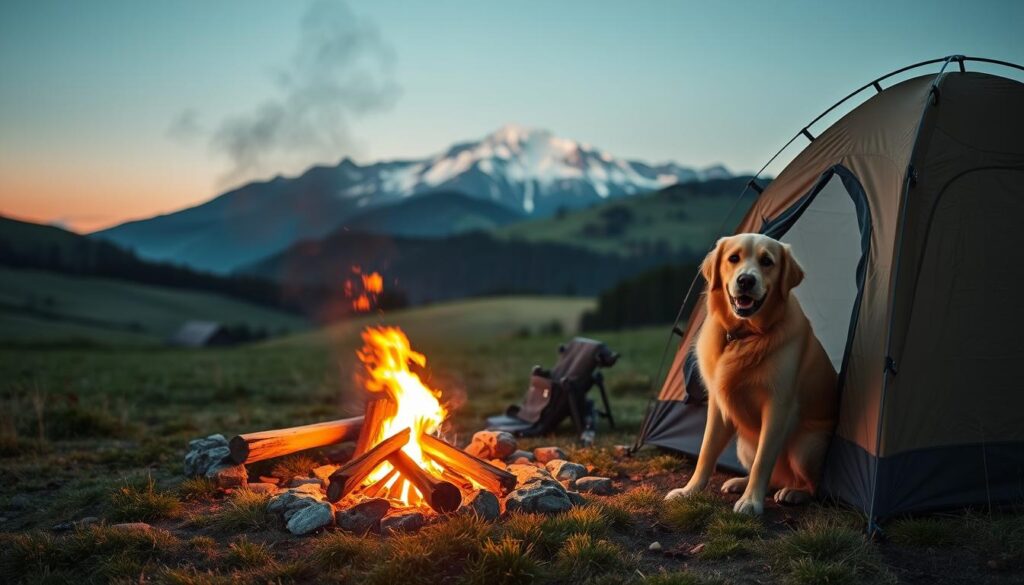
The best time for camping with dogs in Europe changes by area. Spring and autumn are usually the best, with nice weather and fewer people. For example, the Mediterranean regions are lovely in spring and autumn. On the other hand, Northern Europe places like Norway and Sweden are best in summer, when it’s warmer.
| Region | Best Season | Weather Conditions |
|---|---|---|
| Mediterranean | Spring, Autumn | Mild, Sunny |
| Northern Europe | Summer | Warm, Long Days |
| Alpine Regions | Summer | Cool, Possible Snow |
Booking Dog-Friendly Campsites: Timeframes and Platforms
Finding a dog-friendly campsite needs some research. Use sites like Camping.info or Eurocampings.eu to find good options. It’s smart to book 2-3 months early, when it’s busy.
Creating a Dog-Friendly Itinerary
Plan your trip with dog-friendly activities in mind. Think about hiking, dog-friendly beaches, or local spots. Also, look for dog-friendly cafes and restaurants to make your trip better.
With these tips, your camping trip with your dog in Europe will be unforgettable.
Essential Documentation for Camping with Dogs in Europe: What to Know
Before you start your camping trip in Europe with your dog, you need to know about the important documents. Having the right papers makes sure you follow the rules and helps you enjoy your trip more. It’s all about making your journey smooth and worry-free.
EU Pet Passport and Vaccination Requirements
The EU Pet Passport is a must-have for traveling with your dog in Europe. It’s like an ID card for your dog, showing their health and vaccination history. You’ll need to get it from a vet who’s licensed to do so.
The rabies vaccination is a key part of getting your dog ready for travel. Make sure your dog gets vaccinated at least 21 days before you leave. This is because the vaccine needs time to work fully.
Here are some important things to know about the EU Pet Passport:
- It’s issued by a licensed veterinarian.
- It has your dog’s microchip number, vaccination records, and health info.
- It’s good for travel in the EU, as long as your dog’s vaccinations are current.

Microchipping, Identification, and Registration
Microchipping your dog is a must for traveling in the EU. The chip must meet ISO standards (15-digit microchip). Along with a rabies vaccine, it’s needed for the EU Pet Passport. You also need to register your dog’s microchip info in the passport.
Having the right ID and registration is important for:
- Finding your dog if they get lost.
- Following EU rules.
- Easy border crossings.
Pet Travel Insurance and Emergency Coverage
Pet travel insurance is not required but it’s a good idea. It helps cover vet bills for emergencies or unexpected treatments. Look for a policy that matches your travel plans and your dog’s needs. Some policies also help find local vets or deal with pet travel issues.
“Pet travel insurance can be a lifesaver in case of an emergency. Make sure to read the fine print and understand what’s covered.”
When picking a policy, think about:
- Cover for emergency vet visits.
- Help for pet owners.
- How it handles pre-existing conditions.
With the right documents, like an EU Pet Passport, microchipping, and travel insurance, you’re set for a great camping trip in Europe with your dog.
Top Dog-Friendly Camping Destinations in Europe
Europe has many dog-friendly camping spots. You can find them in places like Provence and Italy. These places offer great experiences for dogs and their owners.
France: From Normandy Beaches to Provence Countryside
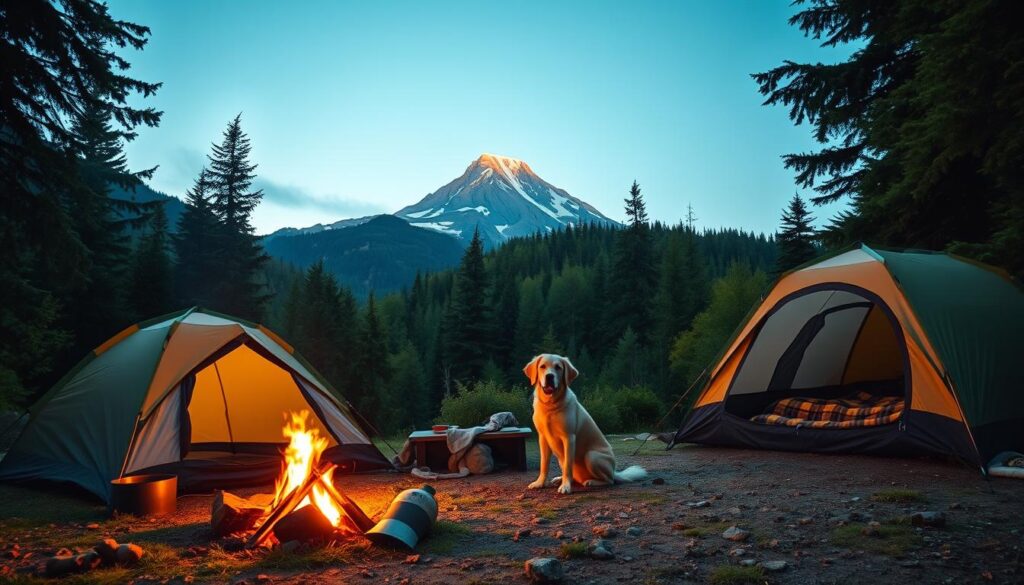
France is famous for its dog-friendly campsites. You can camp by the sea in Normandy or explore the countryside of Provence. Many campsites in France have dog-friendly amenities.
Germany’s Black Forest and Bavarian Camping Spots
Germany is great for dog-friendly camping. The Black Forest has beautiful forests and hills. Bavaria is also great, with its castles and Alpine views. German campsites often have special dog amenities.
Scandinavian Freedom to Roam with Your Dog
Scandinavian countries like Norway, Sweden, and Denmark are very dog-friendly. They have “freedom to roam” laws, so you can camp almost anywhere. The landscapes are stunning, from forests to fjords. Many campsites in these countries have dog-friendly services.
Mediterranean Gems: Spain, Italy, and Croatia
The Mediterranean offers beautiful camping spots. In Spain, you can camp by the Costa Brava. Italy has dog-friendly campsites in the Dolomites and Amalfi Coast. Croatia is also great, with its coastline and islands. Many campsites in these countries welcome dogs and offer fun activities.
Essential Gear and Supplies for European Dog Camping
When you go camping with your dog in Europe, it’s key to bring the right stuff. The weather and places are different everywhere, so you need to get ready. This will keep your dog safe and happy.
Climate-Appropriate Dog Gear for Various European Regions
Europe’s weather changes a lot from north to south. So, you must pack climate-appropriate gear for your dog. In cold places like Scandinavia or the Alps, a warm, insulated dog coat and booties are good. They protect your dog’s paws from snow and ice.
In warmer places like the Mediterranean, a cooling vest or breathable harness is better. It helps keep your dog cool.
Food, Water, and Nutrition on the Road
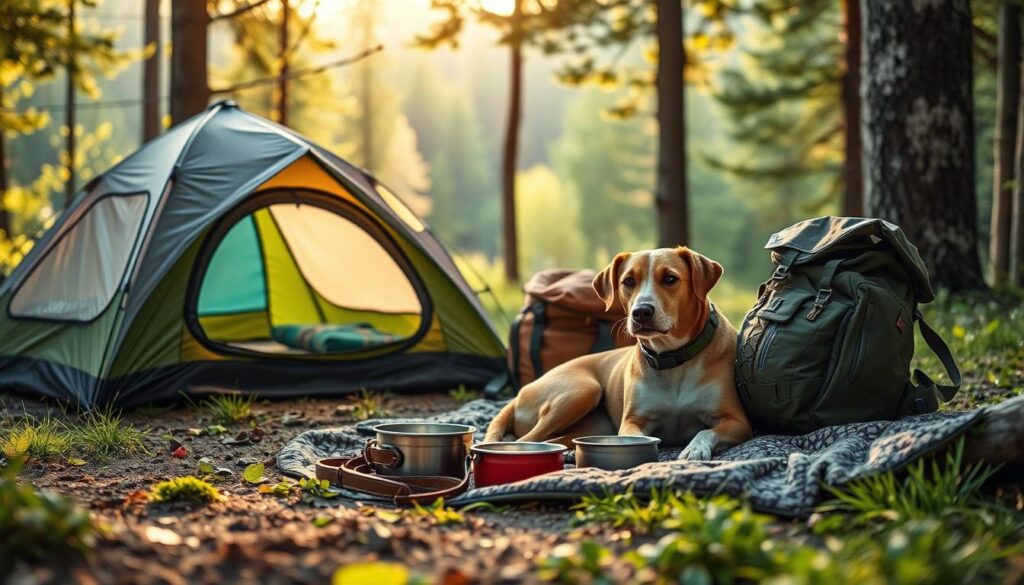
It’s important to keep your dog’s diet the same while traveling. This avoids upset stomachs. Bring enough of your dog’s regular food for your trip. A portable food container keeps it fresh.
Remember a collapsible water bowl and a water filter or purification tablets. They make sure your dog always has clean water.
- Portable food and water containers
- Collapsible bowls
- Water purification tablets or filter
- Dog treats and snacks
Portable Dog Shelters and Sleeping Solutions
A portable dog shelter or cratе gives your dog a cozy place to rest. Look for a lightweight, waterproof option that’s easy to use. Also, a comfortable dog bed or sleeping bag helps your dog sleep well.
With the right gear and supplies, camping in Europe with your dog will be fun and comfy for both of you.
Transportation Strategies Across Europe with Dogs
Traveling with your dog in Europe is easy and fun. You can drive, take the train, or ride a ferry. With the right planning, your trip will be memorable.
Road Tripping: Country-Specific Driving Regulations
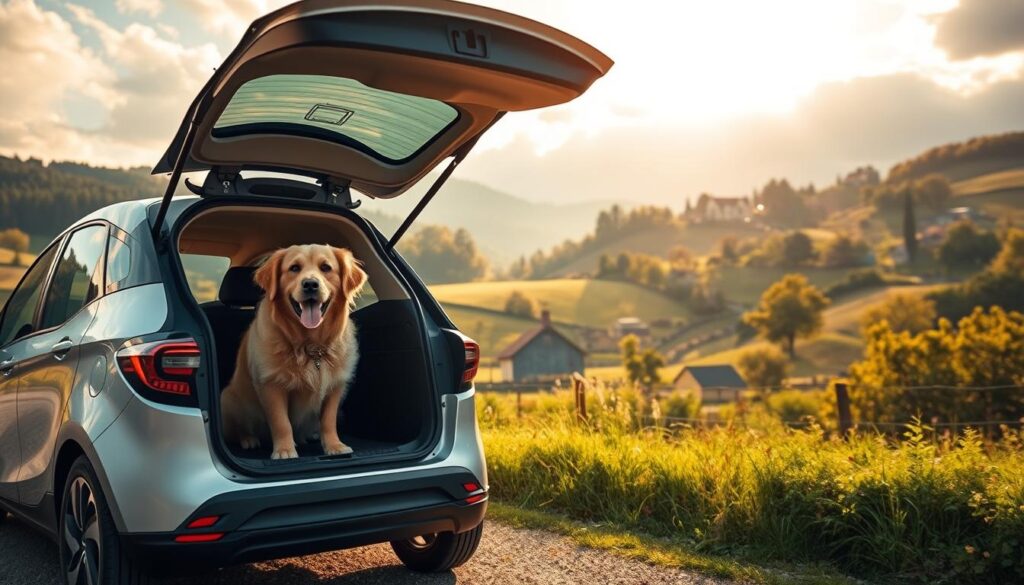
When driving with your dog in Europe, know the local rules. Some places need dogs to wear safety harnesses or be in a crate. Knowing these rules can avoid fines and trouble.
Key Considerations:
- Ensure your dog is properly restrained.
- Familiarize yourself with local traffic laws.
- Keep necessary documents like your dog’s health records and insurance readily available.
Trains, Ferries, and Public Transport Dog Policies
Most trains, ferries, and public transport in Europe welcome dogs. But, rules differ by country and service. Some trains let dogs in carriers for free, while others charge or need a pet ticket.
Tips for Smooth Travel:
- Check the pet policy of your chosen transport service in advance.
- Consider booking pet-friendly accommodations or services.
- Keep your dog on a leash or in a carrier as required.
Border Crossing Procedures with Pets
Traveling with your dog across borders in Europe needs some prep. The EU Pet Passport makes travel between EU countries easier. For non-EU countries, you might need more shots and papers.
Health and Safety While Camping with Dogs
When you camp with dogs in Europe, being ready for health issues and emergencies is key. Knowing about local health risks, finding vet care, and being ready for first aid is important.
Regional Health Risks: Ticks, Parasites, and Wildlife
Europe has many health risks for dogs, like ticks, parasites, and wildlife. Ticks can spread diseases like Lyme disease and tick-borne encephalitis. The risk is higher in wooded and grassy areas. Always check your dog for ticks and use tick repellents.
Parasites, including fleas, mosquitoes, and sand flies, are also a big risk. Flea infestations can cause discomfort and spread diseases. Mosquitoes and sand flies can spread heartworm and leishmaniasis. Keeping your dog on a regular parasite control program is key.
Finding Veterinary Care in Different European Countries
Before you go, find out where to get vet care at your destination. Many European countries have great vet care, but knowing where to go in an emergency is crucial. Some countries have special pet insurance rules or different treatment standards.
First Aid and Emergency Preparedness for Dogs
A first aid kit for dogs is a must-have. Include bandages, antiseptic wipes, tweezers, and any needed medications. Knowing basic first aid, like CPR and wound cleaning, can save your dog’s life. Think about taking a pet first aid course before your trip.
By knowing about local health risks, finding vet care, and having a first aid kit, you can have a safer and more fun camping trip with your dog in Europe.
Dog-Friendly Activities and Adventures in European Campgrounds
Camping in Europe with your dog is an adventure. Many activities are designed for dogs. Campgrounds are more than just places to camp; they offer dog-friendly experiences.
Scenic Hiking Trails Rated by Dog-Friendliness
Europe has stunning hiking trails that welcome dogs. Trails like the Tour du Mont Blanc and the Camino de Santiago are great for all hikers and their dogs. Remember to check the trail’s difficulty, weather, and local dog rules.
Dog-Accessible Lakes, Rivers, and Coastal Areas
Europe’s landscapes have many dog-friendly spots. The coastal paths of Ireland and the riverside walks along the Danube are favorites. In Spain and Croatia, many beaches are dog-friendly for a fun swim.
Dog-Friendly Cultural Experiences Near Campsites
Many European cultural spots are dog-friendly. Historic town centers, local markets, and some museums allow dogs. Camping near places like Rome or Paris lets you explore with your dog, enjoying local food and sights.
Europe’s campgrounds offer hiking, swimming, and city adventures for dogs. Always check local rules for a great trip with your furry friend.
Navigating Challenges: Common Issues and Solutions
Going on a camping trip in Europe with your dog can be very rewarding. But, you need to be ready for challenges. These can include language barriers and unpredictable weather.
Language Barriers and Pet-Related Vocabulary
Traveling abroad with your pet can be tough due to language differences. Learning key pet-related phrases in the local language helps a lot. For example, knowing how to say “My dog is lost” or “Where is the nearest vet?” is very useful.
Carrying a pet travel kit with a translation card or using a translation app on your phone is also a good idea. This way, you can communicate better with locals.
Knowing how to say “My dog is sick” in the local language is very important. Here’s a simple table of key phrases:
| English | French | German | Spanish |
|---|---|---|---|
| My dog is sick | Mon chien est malade | Mein Hund ist krank | Mi perro está enfermo |
| I need a vet | J’ai besoin d’un vétérinaire | Ich brauche einen Tierarzt | Necesito un veterinario |
Dealing with Unexpected Weather and Conditions
European weather can change quickly. It’s important to be prepared for your camping trip with your dog. Always check the weather forecast and pack the right clothes and gear.
Having a portable dog shelter or a waterproof dog coat can save your dog in bad weather. It’s better to be safe than sorry.
Managing Dog Behavior in Unfamiliar Environments
Dogs can get anxious or excited in new places. It’s important to manage their behavior. Bringing familiar items like their bed or favorite toys can help them feel more at ease.
Training your dog to respond to basic commands in the local language is also helpful. This way, you can communicate better with your dog in a foreign country.
By knowing about these challenges and having solutions ready, you can make your camping trip with your dog in Europe more enjoyable and stress-free.
Conclusion: Creating Unforgettable Memories with Your Canine Companion
Camping with dogs in Europe is a special experience. It lets you bond with your pet in stunning landscapes. Planning is crucial for a great trip, from picking the right campsite to getting your dog’s documents.
By following this guide, you can make memories that last a lifetime with your dog. You can hike in the Black Forest, explore France, or relax on Croatia’s beaches. Europe has many experiences that will delight you and your dog.
When you start your European camping trip, be ready for anything. Stay flexible and enjoy the journey with your pet. With the right preparation, you’ll have a memorable trip that you and your dog will always cherish.