For many dog owners, traveling with their pets can be stressful. This is true if their dogs have travel anxiety. The anxiety can show in many ways, like restlessness, panting, or even vomiting.
Finding natural remedies to calm dogs during travel is key. It helps keep them comfortable and safe. It also makes the journey less stressful for their owners. Natural solutions are safer than drugs, with fewer side effects.
Key Takeaways
- Understanding the causes of dog travel anxiety is crucial for finding the right solution.
- Natural remedies can be an effective way to calm dogs during travel.
- Some natural remedies include calming treats, pheromone diffusers, and calming music.
- Consulting with a veterinarian before starting any new remedy is essential.
- Gradual exposure to travel can help reduce dog travel anxiety.
Understanding Dog Travel Anxiety
Dogs often feel anxious when they travel, which can be tough for their owners. This anxiety comes from many things like their genes, past experiences, and new places.
Why Dogs Experience Travel Anxiety
Some dogs are naturally more anxious because of their breed or personality. Past scary experiences during travel can also make them anxious. Plus, new places and changes in routine can make them feel uneasy.
Common Triggers During Travel
Things that make dogs anxious during travel include car rides, new places, and being away from their owners. The car’s motion, loud sounds, and new places can make it worse. Knowing what triggers their anxiety helps owners find ways to calm them down.
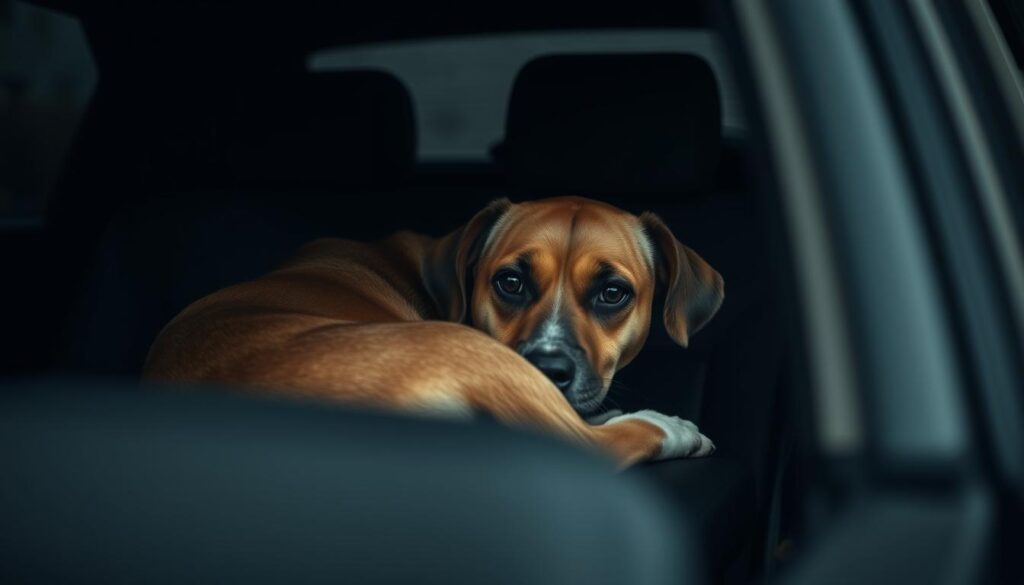
Recognizing the Signs of Travel Anxiety in Dogs
Many dogs get anxious when traveling. Spotting the signs is the first step to help them feel better. Dogs show physical and behavioral signs when they’re stressed or anxious.
Physical Symptoms to Watch For
Physical signs can show a dog’s anxiety. These include:
Digestive Issues and Drooling
Stress can upset a dog’s stomach, leading to diarrhea or vomiting. They might also drool a lot.
Panting and Physical Tension
Panting, even when it’s cool, can mean a dog is anxious. A stiff body or shaking are also signs of stress.
| Physical Symptom | Description |
|---|---|
| Digestive Issues | Diarrhea, vomiting, or loss of appetite |
| Drooling | Excessive salivation |
| Panting | Rapid breathing, even when not hot or after exercise |
| Physical Tension | Stiffened posture, trembling, or muscle rigidity |
Behavioral Changes During Travel
Behavioral changes are also important signs of travel anxiety in dogs.
Vocalization and Restlessness
Some dogs bark, whine, or howl to show they’re upset. They might also pace or fidget a lot.
Escape Attempts and Hiding
In severe cases, dogs might try to escape or hide. This is dangerous and needs quick action.
“Understanding and recognizing the signs of travel anxiety in dogs is crucial for providing them with a comfortable and stress-free travel experience.”
The Science Behind Natural Calming Methods
Understanding natural calming methods can help dog owners manage their pet’s anxiety. These remedies interact with a dog’s body to reduce stress and anxiety.
How Natural Remedies Affect Dog Physiology
Natural remedies like pheromone therapy, herbal supplements, and aromatherapy affect a dog’s nervous system. For example, pheromone diffusers mimic a mother dog’s calming scent. This helps reduce anxiety in dogs.
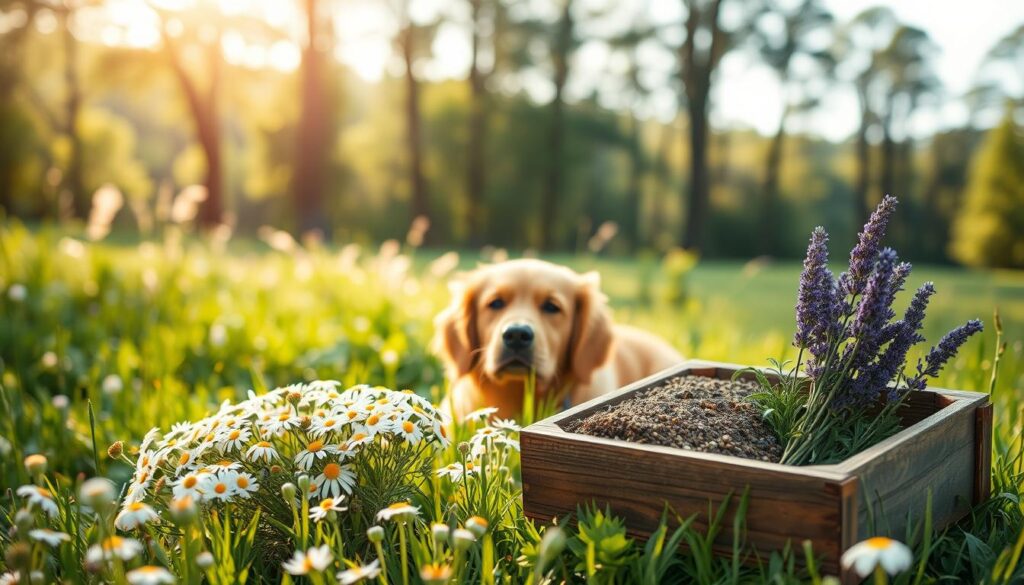
Herbal supplements, such as chamomile and valerian root, also have a calming effect. They help relax the nervous system.
Benefits of Natural vs. Pharmaceutical Solutions
Natural solutions have fewer side effects and a holistic approach to managing dog anxiety. They work in harmony with the dog’s body, promoting well-being.
Unlike pharmaceuticals, natural remedies can be used with behavioral training. This offers a comprehensive way to manage anxiety.
Dog Travel Anxiety Remedies Natural: Herbal Solutions
Traveling with dogs can be stressful. But, some herbal solutions help calm their nerves. More dog owners are using natural remedies to ease their pets’ travel anxiety.

Chamomile and Valerian Root
Chamomile is known for its calming effects. It’s often used to soothe anxious dogs. Valerian root also helps calm nerves and promote relaxation. You can give them to your dog in teas, capsules, or mixed with food.
Lavender and Passionflower
Lavender oil can calm dogs when used right. Passionflower is another herb for dog anxiety. Using these herbs with other calming methods can make them work better.
Dosage Guidelines and Safety Considerations
It’s important to follow the right dosage for herbal remedies. This ensures they are safe and work well. The table below shows a general guide for dosing based on dog size.
| Dog Size | Chamomile Dosage | Valerian Root Dosage |
|---|---|---|
| Small | 1/4 teaspoon | 1/8 teaspoon |
| Medium | 1/2 teaspoon | 1/4 teaspoon |
| Large | 3/4 teaspoon | 1/2 teaspoon |
Always talk to a vet before giving your dog new supplements.
CBD and Hemp Products for Canine Travel Anxiety
As dog owners, we’re always looking for ways to calm our pets during travel. CBD products have become a promising solution. CBD, or cannabidiol, is a compound from hemp that calms dogs without the high from THC.
How CBD Works for Anxious Dogs
CBD works with a dog’s endocannabinoid system. This system controls mood and stress. By supporting it, CBD can reduce anxiety in dogs. Studies show CBD can make dogs feel calmer and more relaxed.
The benefits of using CBD for dog anxiety include:
- Reduced Stress: CBD has been shown to decrease stress levels in dogs.
- Non-Psychoactive: Unlike THC, CBD does not produce a “high,” making it safe for pets.
- Natural Solution: CBD is derived from hemp, offering a natural alternative to pharmaceuticals.
Choosing Quality CBD Products
When picking CBD products for your dog, choose high-quality ones for safety and effectiveness. Here are some tips:
- Look for Third-Party Testing: Ensure the product has been tested by an independent lab for purity and potency.
- Check the Label: Opt for products with clear labeling that includes CBD content per serving.
- Consult Your Veterinarian: Before starting your dog on CBD, consult with your vet to discuss the best product and dosage.
By choosing a reputable CBD product, you can help your dog enjoy a more relaxed and stress-free travel experience.

Aromatherapy and Essential Oils for Anxious Dogs
Dog owners are looking for natural ways to help their pets feel better during travel. Aromatherapy is becoming a popular choice. It uses essential oils from plants to help dogs relax and feel less stressed.
Safe Essential Oils for Canine Travel
Not every essential oil is good for dogs. But some are safe and can help. These include:
- Lavender oil: Known for its calming effects
- Chamomile oil: Promotes relaxation and soothes anxiety
- Frankincense oil: Can help reduce stress and promote calmness
A study in the Journal of Alternative and Complementary Medicine showed that these oils can help dogs feel better.
Application Methods and Precautions
It’s important to use essential oils safely on dogs. Here are some ways to do it:
| Method | Description | Precaution |
|---|---|---|
| Diffusion | Using a diffuser to spread the oil particles in the air | Ensure the dog can leave the area if needed |
| Topical Application | Applying diluted oil directly to the dog’s skin or fur | Always dilute with a carrier oil; avoid sensitive areas |
Always talk to a vet before using new essential oils on your dog. This is very important if your dog has health issues or allergies.
Aromatherapy can be a great way to help anxious dogs. By picking the right oils and using them safely, you can make travel easier for your pet.
“The use of aromatherapy in veterinary practice is gaining recognition for its potential to improve animal welfare.” –
Calming Products and Tools
Traveling with anxious dogs can be tough. But, there are many calming products and tools to help. These include wearable items, cozy resting places, and fun toys. They all aim to lessen travel anxiety in dogs.
Anxiety Vests and Wraps
Anxiety vests and wraps are special clothes that help calm dogs. The Thundershirt is a well-known example. It works by applying gentle pressure.
Studies show these clothes can calm dogs. They do this by giving constant, soft pressure.
Calming Beds and Carriers
Calming beds and carriers offer a safe space for dogs to relax. They are made of soft materials and have enclosed designs. This makes dogs feel secure.
Calming beds with orthopedic support are great for long trips. They provide comfort and help ease anxiety.
Toys and Distractions
Interactive toys and treats can distract dogs from anxiety. They keep dogs busy and reduce stress. Using these calming aids with other methods can make them even more effective.
Behavioral Techniques to Reduce Travel Anxiety
Dog owners can greatly lessen their pet’s travel anxiety with proven methods. These techniques change how dogs react to travel, making trips less stressful for everyone.
Desensitization Training for Car Rides
Desensitization training is a strong method for reducing dog travel anxiety, mainly for car rides. It starts by slowly introducing your dog to the car, first by being near it, then inside while still, and lastly, on short drives.
- Begin by letting your dog explore the car while it’s parked.
- Reward calm behavior with treats and praise.
- Gradually increase the duration and frequency of car rides.
Consistency and patience are key to successful desensitization training.
Positive Association Methods
Linking travel with positive experiences can greatly reduce dog anxiety. This means making travel a pleasant event.
- Feed your dog their favorite meals or treats during car rides.
- Engage your dog in their favorite activities or play calming music during travel.
- Use verbal cues and reassurance to create a calm atmosphere.
Positive reinforcement is vital in making your dog feel at ease during travel.
Travel-Specific Strategies for Different Modes of Transportation
Traveling with your dog can be easy if you know the right strategies. Whether you’re driving, flying, or taking a train or boat, being prepared is key. Each mode of transportation has its own challenges, and knowing how to handle them is crucial for a successful trip.
Car Travel Solutions
Car travel is common for many dog owners. To make car rides less stressful, use a calming vest or wrap. These provide gentle pressure to soothe anxiety. Also, regular breaks during long drives are important. They let your dog stretch, hydrate, and relieve themselves.
Keeping your dog in a comfortable, well-ventilated area of the car helps reduce travel anxiety. Playing calming music or white noise can also make the environment more relaxing.
Air Travel Preparation
Air travel with dogs needs more planning. Always check with your airline for their pet travel policies. This includes carrier requirements, health certificates, and travel documentation. Some airlines let dogs in the cabin, while others require them to travel as checked baggage or cargo.
To minimize stress, get your dog used to their travel carrier early. You can also talk to your vet about calming aids or medications for the flight.
Train and Boat Travel Considerations
Traveling by train or boat can be more relaxed for dogs. But, it’s still important to be prepared. For train travel, check the train company’s pet policy and book a pet-friendly compartment if possible. For boat travel, make sure your dog is comfortable on the water and has a safe place on the vessel.
| Mode of Transportation | Preparation Tips | In-Travel Strategies |
|---|---|---|
| Car | Use calming vests, plan regular breaks | Keep the car ventilated, play calming music |
| Air | Check airline pet policies, acclimate to carrier | Consult vet about calming aids, follow airline instructions |
| Train/Boat | Check pet policies, ensure dog comfort | Keep dog secure, provide regular breaks |
Understanding the specific needs of different modes of transportation helps prepare your dog for travel. This ensures a more enjoyable experience for both of you.
When to Consult Your Veterinarian
Knowing when to seek a vet’s help is crucial for your dog’s travel anxiety. Natural remedies can help, but sometimes, a vet’s advice is needed. This ensures your dog’s comfort and safety on trips.
Signs That Natural Remedies Aren’t Enough
If your dog still shows severe anxiety after trying natural remedies, it’s time to see a vet. Signs of severe anxiety include constant panting, pacing, whining, or destructive acts. In such cases, natural remedies alone may not be enough. A vet can offer more help or different solutions.
Integrating Natural Solutions with Veterinary Care
Managing dog travel anxiety often means using natural remedies and vet care together. Your vet can find the right mix of natural remedies and, if needed, prescribe medication. This collaborative approach helps your dog get the best care, making trips better for both you and your pet.
By teaming up with your vet and using natural remedies and professional advice, you can lessen your dog’s travel anxiety. This makes trips more fun for you and your pet.
Conclusion: Ensuring Stress-Free Adventures With Your Dog
Traveling with your dog can be a great adventure. But, it can also be stressful for both of you. Luckily, there are many ways to make travel less stressful for your dog.
First, understand why your dog might feel anxious when traveling. Then, look for signs of stress. Natural remedies like herbal solutions, CBD products, and aromatherapy can help calm your dog. Also, training methods like desensitization and positive association can reduce anxiety.
To make travel stress-free, explore these options and find what works for your dog. With the right approach, your dog will feel more at ease. This makes travel enjoyable for both of you. Follow these tips and use natural remedies to make your travels more relaxed and fun.