When traveling with your pet, it’s crucial to be prepared for any medical emergencies that may arise.
A well-stocked pet emergency kit is vital for ensuring your pet’s safety and health on the road.
Whether you’re going on a road trip or flying to your destination, being prepared can make all the difference.
In this article, we will guide you through the must-haves for your pet’s emergency kit. We’ll cover everything from understanding your pet’s specific health needs to handling common emergency situations.
Key Takeaways
- Understand your pet’s specific health needs before traveling.
- Assemble a pet emergency kit with the necessary supplies.
- Learn how to handle common emergency situations.
- Be prepared for any medical emergency that may arise during travel.
- Keep your pet’s emergency kit easily accessible.
Why Every Dog Owner Needs a Travel First Aid Kit
Having a travel first aid kit for your dog is essential, not just a luxury. Traveling with dogs can be fun, but it also comes with risks. Whether you’re on a road trip or flying, being ready for emergencies is key for your dog’s health and safety.
Common Travel Emergencies for Dogs
Dogs can face emergencies while traveling, like injuries, heat stroke, and allergic reactions. Pet travel safety is a big worry for dog owners. Knowing these risks helps you act fast.
Issues like motion sickness, getting lost, or running into aggressive animals are common. Understanding these risks lets you take steps to keep your dog safe and comfortable.
Benefits of Being Prepared
Having a dog health care on the road kit is crucial for emergencies. It lets you give quick care and stop small problems from getting worse.
With the right supplies and knowledge, travel can be less stressful for you and your dog. Being ready means you can face any situation with confidence.
Understanding Your Dog’s Specific Health Needs
Before you take your dog on a trip, it’s key to know their health needs. Each dog is unique, with needs based on age, breed, and health. Knowing these needs helps you pack a travel first aid kit just for them.
Pre-Travel Veterinary Consultation
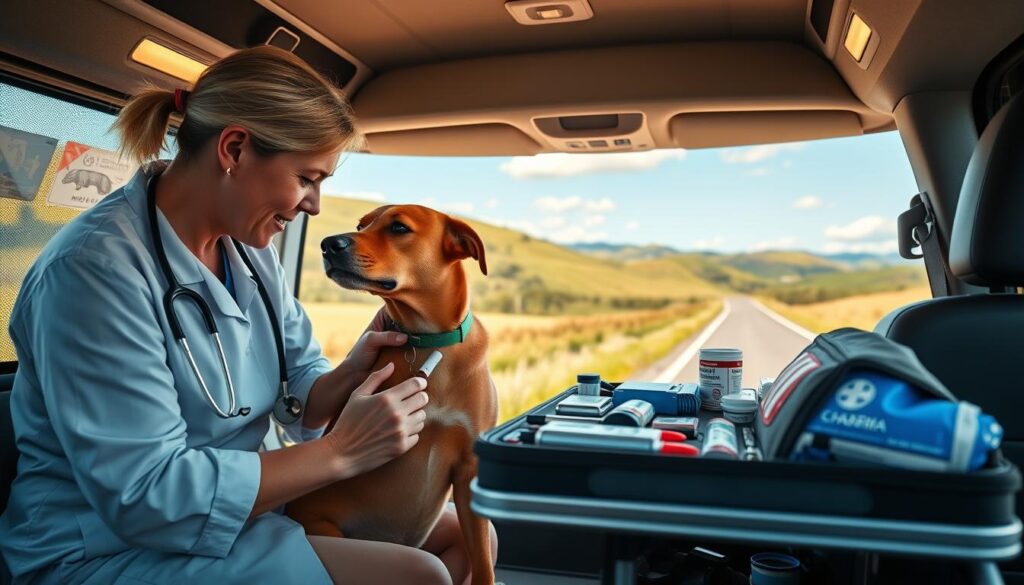
Getting a pre-travel vet check is a must. Your vet can give insights into your dog’s health and tips for travel. This is your chance to talk about your trip, how long it’ll be, and what you’ll do. Your vet can then give advice that fits your dog’s needs.
Key topics to discuss during the consultation include:
- Your dog’s current health status
- Any pre-existing medical conditions
- Required vaccinations or medications
- Specific health concerns related to your dog’s breed or age
Considering Your Dog’s Age, Breed, and Health Conditions
Your dog’s age, breed, and health matter a lot for their travel needs. For instance, older dogs might need more breaks, and some breeds can get heatstroke easily. Knowing this helps you prepare their travel first aid kit better.
Consider the following factors when assessing your dog’s health needs:
- Age: Puppies and older dogs have different needs compared to adult dogs.
- Breed: Certain breeds are prone to specific health issues.
- Health Conditions: Existing health conditions, such as allergies or chronic illnesses, require special consideration.
Essential Medications for Your Dog Travel First Aid Kit
A good dog travel first aid kit needs various essential medications. These should match your dog’s specific health needs. Planning and preparing for your dog’s health while traveling is key.
Prescription Medications
If your dog takes prescription meds, include them in your kit. Pack enough for your trip and a little extra, just in case. Keep these in their original packaging.
Don’t forget a copy of your dog’s prescription and a letter from your vet. This helps if you need to refill a prescription or explain your dog’s health needs while traveling.
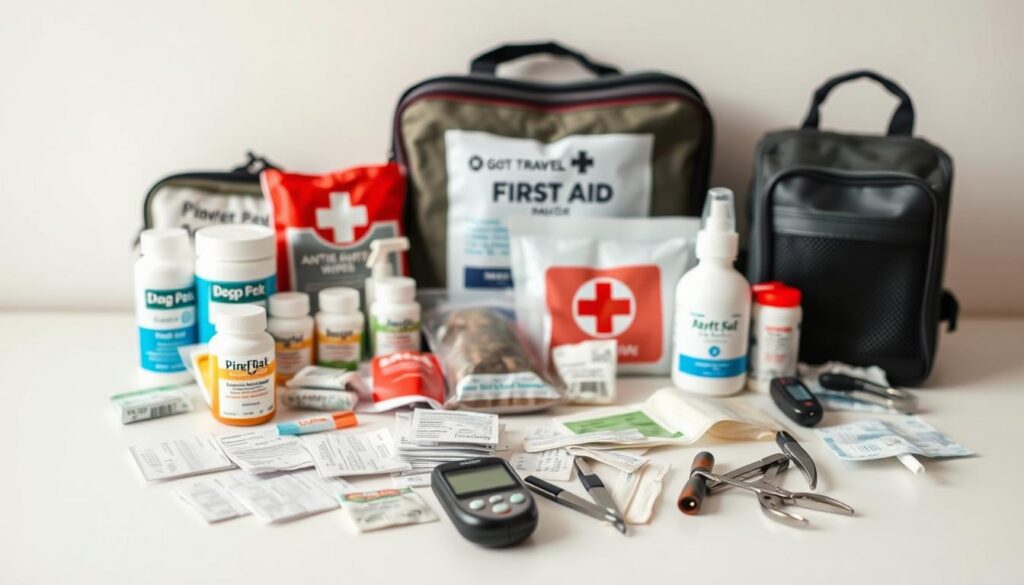
Over-the-Counter Medications
OTC meds can help with minor issues on your trip. But, always check with your vet before giving your dog any OTC meds. Some can harm your dog or interact with their prescription meds.
Common OTC meds include antihistamines for allergies, anti-diarrheal meds, and pain relievers. Always follow the dosage instructions and watch for any side effects.
Natural Remedies and Supplements
Natural remedies and supplements can comfort your dog during travel. These might include calming aids like melatonin or L-theanine for stress and anxiety. Or topical creams for skin irritations.
Before adding any natural remedies or supplements to your dog’s kit, talk to your vet. This ensures they won’t harm your dog or worsen any health issues.
By choosing and packing the right medications for your dog’s travel first aid kit, you can make sure your trip is safe and fun for both of you.
Bandages and Wound Care Supplies
A good dog first aid kit needs bandages and wound care items for travel injuries.
Types of Bandages for Different Injuries
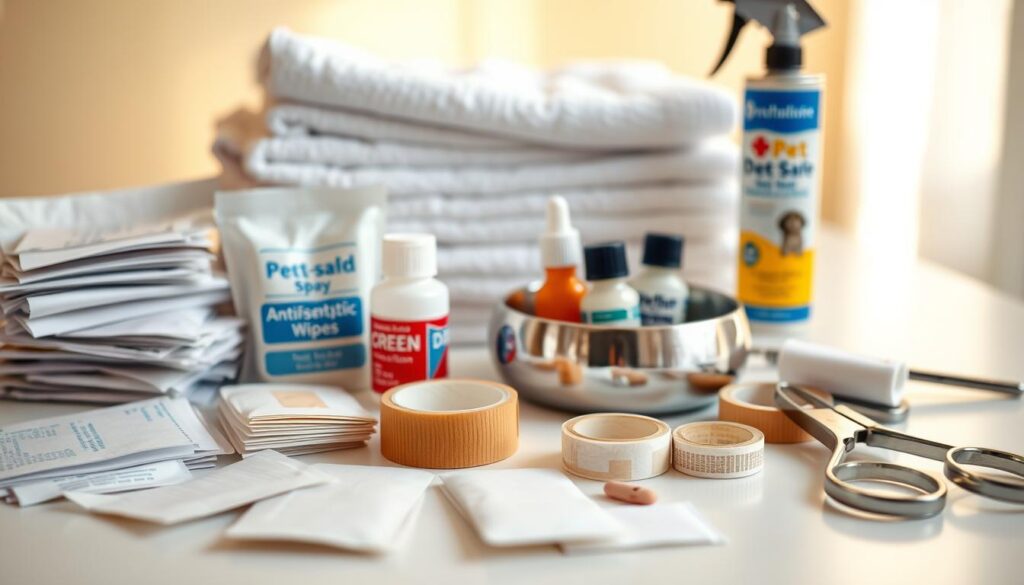
There are bandages for different injuries. Adhesive bandages work for small cuts. Gauze pads and rolls are for bigger wounds. Self-adhering bandages, like Vetrap, help secure dressings without sticking to the wound.
Antiseptics, Cleaning Solutions, and Wound Treatment
Antiseptics and cleaners are key to stop infections. Use antiseptic wipes or solutions like chlorhexidine. For healing, add antibiotic ointments.
| Supply | Purpose |
|---|---|
| Adhesive bandages | Small cuts and scrapes |
| Gauze pads and rolls | Larger wounds and dressing |
| Antiseptic wipes | Cleaning wounds |
With these pet travel safety items in your dog’s first aid kit, you’re ready for emergencies. This ensures your pet stays safe during travel.
Tools and Equipment for Emergency Situations
A good dog travel first aid kit has all the tools you need for emergencies. The right gear can make a big difference. It helps your dog get the care they need fast.
Digital Thermometer and Basic Diagnostic Tools
A digital thermometer is key for checking your dog’s temperature. This shows how they’re doing. Tools like a stethoscope and flashlight help you see how your dog is feeling. They help you decide what to do next for your dog’s health.
Restraint and Transport Items
Having ways to safely hold and move your dog is crucial. Things like a muzzle, stretcher, or makeshift litter are very helpful. They keep your dog safe and make it easier to get them to a vet.
Tick Removal and Splinting Supplies
Tools for removing ticks are important to keep your dog safe from diseases. Bandages and splints help fix broken bones. They keep your dog’s injury stable until you can get to a vet.
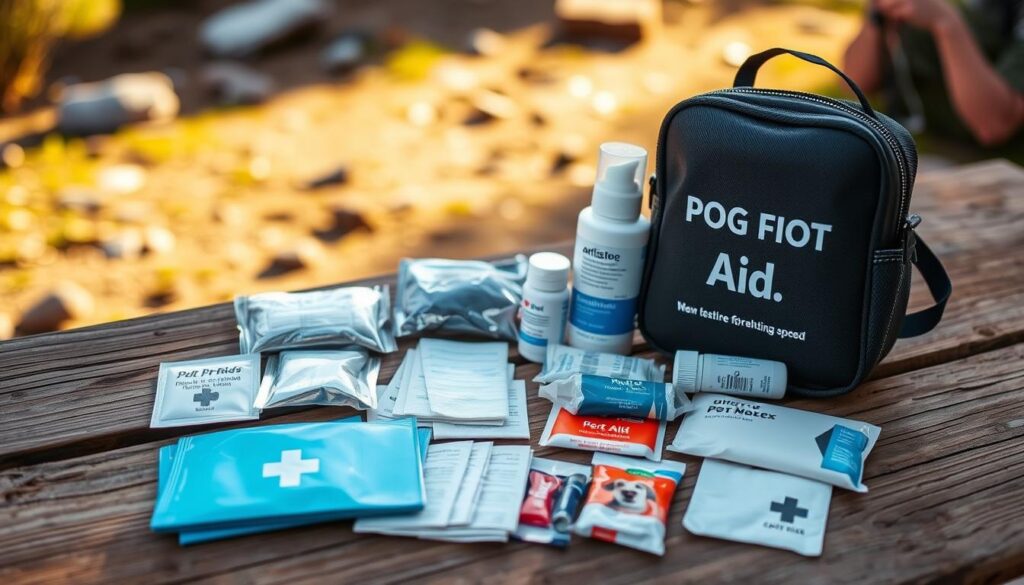
Adding these items to your dog’s first aid kit prepares you for emergencies. It ensures your dog gets the best care when you’re on the move.
Complete Dog Travel First Aid Kit Essentials List
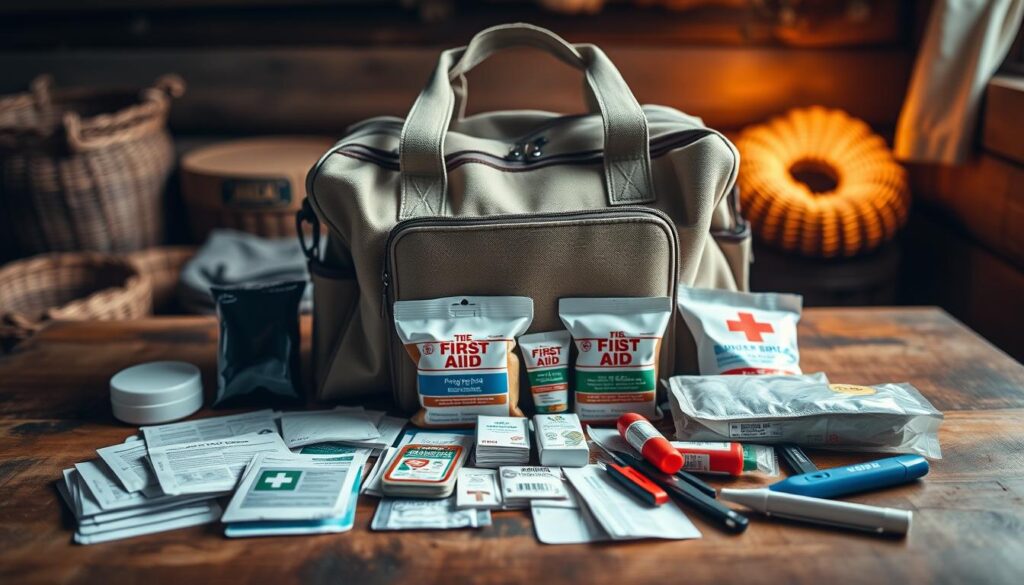
To keep your dog safe while traveling, it’s vital to pack a dog travel first aid kit. This kit should have all the necessary essentials. A well-prepared kit can help you respond effectively in case of an emergency. It ensures your dog receives the care they need.
Basic Kit Components
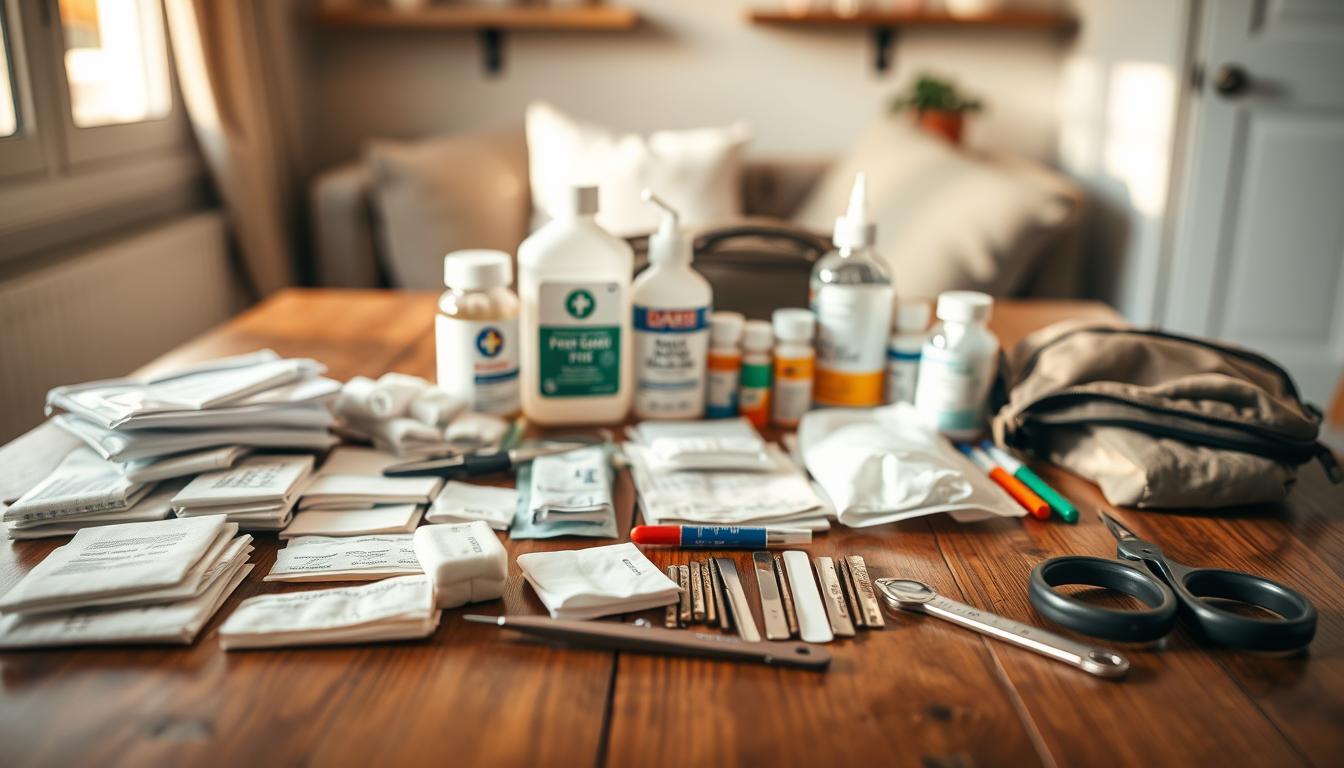
The foundation of any dog travel first aid kit should include basic supplies. These supplies can help you treat common injuries and ailments. The essentials are:
- Bandages and Wound Care Supplies: Including gauze pads, rolls of gauze, adhesive tape, and bandages in various sizes.
- Antiseptics and Cleaning Solutions: To clean wounds and prevent infection.
- Medications: Such as antihistamines for allergic reactions, and any prescription medications your dog may need.
- Basic First Aid Tools: Like tweezers, scissors, and a thermometer.
Advanced Kit Add-ons
For a more comprehensive kit, consider adding advanced supplies. These supplies can help you manage more serious conditions or provide additional care. These include:
- Digital Thermometer: For monitoring your dog’s temperature.
- Splinting Supplies: To stabilize injured limbs.
- Tick Removal Tools: For safely removing ticks.
- Emergency Blanket: To keep your dog warm in case of an emergency.
By including both basic and advanced components, you can ensure your dog travel first aid kit is fully equipped. This gives you peace of mind while traveling with your pet.
Important Documentation to Include
When you travel with your dog, having the right documents is key. It prepares you for any situation that might come up.
Veterinary Records and Contact Information
Carrying your dog’s vet records is crucial in emergencies. These should list vaccinations, medical issues, and any meds. Also, keep your vet’s contact info handy. This makes it easy to reach them for advice or urgent care.
Key documents to include:
- Up-to-date vaccination records
- Medical history, including allergies and chronic conditions
- Contact information for your regular vet and an emergency vet
Emergency Instructions and Reference Materials
It’s also smart to have emergency guides and info in your first aid kit. This includes a dog first aid guide, how to give meds, and signs of emergencies like heatstroke or allergies.
Useful resources to include:
- A first aid guide specific to dogs
- Emergency contact numbers, such as the ASPCA’s Animal Poison Control Center (APCC)
- Information on common travel-related hazards for dogs
With these documents in your dog’s first aid kit, you’re ready for emergencies. This ensures your dog’s safety on trips.
Organizing Your Dog’s First Aid Kit for Easy Access
How you organize your dog’s first aid kit is key in an emergency. A well-organized kit means you can quickly find what you need. This can save your dog’s life and reduce stress.
Container Options and Organization Systems
Choosing the right container for your dog’s first aid kit is important. Look for a sturdy, portable case that can handle travel. Containers with compartments or dividers help keep things organized.
You can also use small pouches or bags inside the main container. This helps categorize items like bandages, medications, and tools.
Labeling and Inventory Management
Labeling your dog’s first aid kit is crucial for quick identification. Use clear labels or stickers to mark each compartment or pouch. Keeping an inventory list also helps you track what you have and what needs to be replaced.
Regularly check your kit to make sure all supplies are still good and not expired. By organizing your dog’s first aid kit well, you’re always ready for emergencies. You’ll have a complete dog travel first aid kit essentials list ready to go.
Customizing Your Kit for Different Travel Scenarios
Traveling with your dog requires a customized first aid kit. Whether you’re on a road trip, flying, or camping, each scenario has its own risks. Being prepared is crucial for your dog’s safety.
Road Trip Specifics
For road trips, think about the risks like motion sickness and accidents. Your kit should include:
- Motion sickness medication
- Car safety harnesses
- Maps or GPS devices
Also, keep a list of emergency contacts handy. This should include your vet and local animal hospitals.
Air Travel Requirements
Flying with your dog requires following airline rules and understanding the stress of travel. Your kit should have:
- Crates or carriers that meet airline standards
- Comfort items like familiar blankets or toys
- Any required health certificates or documentation
Know the airline’s pet travel policy and prepare your dog for the crate.
Camping and Outdoor Adventure Additions
Camping or outdoor adventures come with unique risks like insect bites and wilderness injuries. Your kit should include:
| Supply | Purpose |
|---|---|
| Insect repellent | Protect against insect bites |
| Wound care supplies | Treat minor injuries |
| Tick removal tools | Remove ticks safely |
Having a basic first aid guide for wilderness emergencies is also wise.
Handling Common Emergency Situations
Emergencies can happen anytime, and knowing how to respond can save your dog’s life. When you’re on the road with your dog, it’s essential to be prepared for common emergencies. These include cuts, scrapes, and bleeding, heat stroke and dehydration, and insect bites, stings, and allergic reactions.
Cuts, Scrapes, and Bleeding
For minor cuts and scrapes, clean the wound with antiseptic wipes and apply a bandage to keep it clean. If the bleeding is heavy or doesn’t stop after a few minutes of pressure, seek veterinary care immediately. It’s crucial to have a good understanding of basic first aid to handle such situations effectively.
Heat Stroke and Dehydration
Heat stroke is a serious condition that can occur when your dog is exposed to high temperatures, like in a car. Signs include excessive panting, drooling, and lethargy. If you suspect heat stroke, cool your dog down gradually with water and seek immediate veterinary care. Dehydration can be prevented by ensuring your dog has access to plenty of water during travel.
Insect Bites, Stings, and Allergic Reactions
Insect bites and stings can cause allergic reactions in dogs. If your dog shows signs of an allergic reaction, such as swelling, itching, or difficulty breathing, administer antihistamines if available and consult a veterinarian.
“Prevention is key; consider using insect repellents designed for dogs to minimize the risk of bites and stings.”
Keeping a close eye on your dog during outdoor activities can also help in quickly identifying any potential issues.
Being prepared and knowing how to respond to these emergencies can make a significant difference in your dog’s health and safety while traveling.
Conclusion: Traveling with Confidence and Peace of Mind
Putting together a detailed dog travel first aid kit lets you travel with ease and confidence. It’s key for keeping your pet safe during trips. Knowing how to use the kit’s items is crucial for handling emergencies.
Being ready for emergencies means you can enjoy your travels more. Whether you’re driving, flying, or exploring outdoors, the right supplies and knowledge are vital. They help keep your dog healthy and safe.
Follow the advice in this article to be prepared for common emergencies. This way, you can give your dog the care they need. It ensures a safe and fun trip for both you and your pet.