Taking your furry friend on a boat trip can be a wonderful experience. But, it can also be stressful for your pet if not prepared properly.
Preparing your dog for a boat trip is crucial. It ensures a safe and enjoyable experience for both you and your pet. Dog anxiety on boats is a common issue. But, with the right preparation, you can help your dog feel more comfortable.
This article will provide you with a comprehensive guide. It will help you prepare your dog for a boat trip. You’ll learn tips on boat trip preparation for dogs and how to calm your dog during the journey.
Key Takeaways
- Understand the causes of dog anxiety on boats
- Learn how to prepare your dog for a boat trip
- Discover tips to calm your dog during the journey
- Understand the importance of safety measures for your dog on a boat
- Get tips on how to make the boat trip enjoyable for your dog
Understanding Why Dogs Get Anxious on Boats
Dogs can get anxious on boats for many reasons. It’s important to know what causes their stress. This helps us understand how to help them feel better.
Common Triggers of Boat Anxiety in Dogs
Several things can make dogs anxious on boats. These include:
- Motion: The boat’s movement can upset dogs, making them feel sick or uneasy.
- Noise: The engine sounds, water noises, and other environmental sounds can be too much.
- Unfamiliar Environment: Dogs may feel anxious or stressed in new places.
A study found that
“Dogs are highly sensitive to their environment, and changes in their surroundings can lead to anxiety.”
This is very true for boat trips. There are many new things for dogs to get used to.

Signs Your Dog is Experiencing Boat Stress
It’s important to know when your dog is stressed or anxious. This helps us take steps to calm them down. Common signs include:
| Signs of Stress | Description |
|---|---|
| Panting | Excessive panting can be a sign of anxiety or overheating. |
| Pacing | Restlessness and pacing back and forth can indicate stress. |
| Whining | Whining or other unusual vocalizations can be a sign of anxiety. |
By knowing these triggers and signs, we can help our dogs feel better on boats. This makes boat trips more enjoyable for both dogs and their owners.
Preparing Your Dog for Boat Trips: Essential Steps
Boat trips can be fun for dogs if they’re prepared right. Start by introducing them to water slowly. This helps lower their stress and anxiety in new places.
Introducing Your Dog to Water Gradually
Getting your dog used to water should be slow. Begin by letting them explore water in a safe place. This could be a shallow area where they can stand or play easily.
Steps for Gradual Introduction:
- Start with visual exposure to water.
- Encourage exploration of the water’s edge.
- Gradually increase their interaction with water.
Familiarizing Your Dog with the Boat While Docked
After your dog gets comfortable with water, introduce them to the boat. It’s docked first. This step is key to help your dog get to know the boat and feel less anxious on the trip.

| Tips for Docked Boat Introduction | Benefits |
|---|---|
| Allow your dog to explore the boat at their own pace. | Reduces anxiety by familiarizing them with the boat’s environment. |
| Make the experience positive with treats and praise. | Creates a positive association with the boat. |
Practice Runs: Short Trips Before Long Voyages
Before a long boat trip, take your dog on short trips first. These short trips help build your dog’s confidence on the boat. They also prepare them for longer trips.
Benefits of Practice Runs:
- Helps your dog get used to the boat’s motion.
- Reduces the risk of seasickness.
- Builds confidence for both you and your dog.
Pre-Trip Training Techniques to Keep Your Dog Calm During Boat Trips
To make boat trips stress-free for your dog, focus on pre-trip training. Use desensitization and positive reinforcement. This way, you can reduce your dog’s anxiety and make the trip fun for both of you.
Desensitization Training for Motion and Sounds
Desensitization training helps your dog get used to boat sounds and motion. Begin by exposing your dog to these stimuli at a low level. For example, play boat sounds softly while your dog plays or eats treats. Slowly increase the sound volume to help your dog get used to it.
Desensitization Steps:
- Start with low-level exposure to boat sounds or motion.
- Reward your dog for calm behavior.
- Gradually increase the intensity of the stimuli.

Teaching Basic Commands for Boat Safety
Teaching your dog basic commands is key for their safety on the boat. Commands like “sit,” “stay,” and “come” help manage your dog’s behavior. Practice these commands in different places before the trip to ensure your dog responds well.
| Command | Purpose | Training Tip |
|---|---|---|
| Sit | Helps in managing your dog’s position on the boat. | Use treats to lure your dog into a sitting position. |
| Stay | Ensures your dog remains in a safe location. | Start by having your dog sit, then take a few steps back. |
| Come | Critical for recalling your dog to a safe area. | Use a happy, upbeat tone and reward with treats or praise. |
Positive Reinforcement Strategies for Water Confidence
Positive reinforcement helps build your dog’s water confidence. Link water experiences with positive outcomes like treats and praise. Start by letting your dog explore the water’s edge at their own pace. Then, encourage them to enter the water gradually.
Tips for Positive Reinforcement:
- Use treats and praise to reward desired behavior.
- Be patient and let your dog set the pace.
- Gradually increase the challenge as your dog becomes more confident.
Essential Gear and Safety Equipment for Dogs on Boats
Bringing your dog on a boat is more than just a fun outing. It’s about making sure they’re safe and comfortable. The right gear is key to a great trip for your furry friend.
Choosing the Right Dog Life Jacket
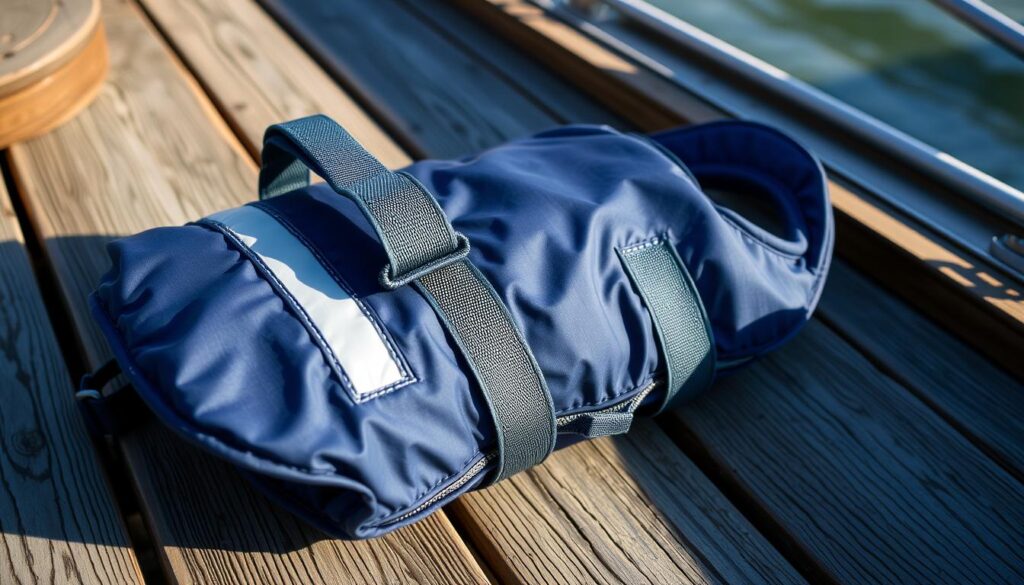
A dog life jacket is crucial for boating safety. Make sure it fits your dog well and is Coast Guard-approved. It should be snug but not too tight, allowing for movement.
Look for a life jacket with a sturdy handle on the back. This is for lifting your dog out of the water if needed. Also, choose one with reflective strips or bright colors for better visibility.
Comfort Items That Reduce Anxiety
Familiar items can calm your dog on a boat. Bring their favorite toy or blanket for reassurance. These items can make them feel secure and reduce stress.
Non-Slip Mats and Safety Barriers
Use non-slip mats on the boat to prevent slipping. They’re great for areas where your dog will walk, keeping them safe when the boat moves.
Safety barriers are also vital. They keep your dog away from dangerous spots like the boat’s edge. This reduces the risk of accidents.
Calming Products and Supplements for Anxious Dogs
Boat trips can be scary for dogs. But, the right calming products and supplements can make them more enjoyable. Anxious dogs need special care to feel comfortable and safe on boats.

Natural Calming Aids and Their Effectiveness
Natural calming aids are popular for easing dog anxiety. Pheromone diffusers like Adaptil mimic a mother dog’s calming pheromones. They can make a boat feel calm. Calming treats with chamomile or valerian root can also help. Always talk to a vet before adding new supplements.
Some people use calming collars and calming sprays with natural ingredients. These are great for boat trips because they’re easy to use and don’t bother the dog.
Anxiety Wraps and Pressure Vests
Anxiety wraps and pressure vests apply gentle pressure to calm dogs. The ThunderShirt is a well-known example. It works by applying deep pressure that calms the nervous system.
When to Consider Prescription Medications
For dogs with really bad anxiety, prescription medications might be needed. Always talk to a vet to figure out the best option. They can suggest the right medication based on the dog’s health and anxiety level. Natural aids are good, but some dogs need stronger help, like during boat trips.
Using different calming methods together can work best. For example, a pheromone diffuser with an anxiety wrap can be very effective. But, always check with a vet before mixing calming aids or medications.
During the Trip: Strategies to Maintain Your Dog’s Calm
When you start your boat trip, keeping your dog calm is key for a fun time. A calm dog is happier and safer on the boat. There are many ways to create a calm atmosphere.
Creating a Safe Space on the Boat
Dogs like a quiet, cozy spot to hide when they feel stressed. On a boat, this could be a special area with their favorite things. Creating a safe space means picking a quiet spot, away from sun and noise. Make it welcoming with familiar smells and items.
Managing Seasickness in Dogs
Dogs can get seasick just like people. Signs include drooling, vomiting, and feeling tired. To help, talk to a vet about medicine or natural ways to feel better. Also, keep your dog’s head up to help with seasickness.
Keeping Your Dog Engaged and Distracted
Keeping your dog busy can help them forget any worries. Bring their favorite toys or play with them. Interactive toys with treats are great because they keep your dog busy for a while.
Maintaining Regular Routines While Onboard
Sticking to your dog’s usual routine helps them feel secure. Keep their meal times, breaks, and exercise the same as at home. Being consistent is very comforting for dogs in new or stressful places.
Special Considerations for Different Dog Breeds and Sizes
Planning a boat trip with your dog requires thinking about their unique needs. This includes their size, breed, age, and health. These factors are key to making sure they’re comfortable and safe on the boat.
Small Dogs vs. Large Dogs: Unique Challenges
The size of your dog affects their boat experience. Small dogs might get seasick more easily and need extra care to stay safe. Large dogs need more room to move and might pose bigger safety risks because of their size and strength.
- For small dogs, use a life jacket with extra support and a secure harness to prevent falls.
- Large dogs need more space on the boat. They might do better in a designated area where they can stand, sit, or lie down comfortably.
Breed-Specific Concerns for Water Activities
Different dog breeds have special needs for boat trips. For example, dogs with thick coats might get too hot, and those with short noses might have trouble breathing. Knowing these breed-specific concerns is key for a safe and fun boat trip.
- Breeds like Labradors and Golden Retrievers are great for water activities because they love swimming.
- Brachycephalic breeds, such as Pugs and Bulldogs, need extra care because they might have breathing problems.
Age and Health Factors to Consider
A dog’s age and health are important when planning a boat trip. Puppies and older dogs have different needs than adult dogs. Health issues, like arthritis or heart disease, can also affect their ability to enjoy the trip.
- Puppies need extra supervision and training to be comfortable and safe on the boat.
- Older dogs or those with health problems might need more breaks and a quiet, comfortable spot on the boat.
By thinking about these factors and taking the right precautions, you can make sure your dog has a safe and fun boat trip. This is true no matter their breed, size, age, or health.
Handling Emergencies and Unexpected Situations
As a dog owner, it’s crucial to be ready for emergencies on boat trips. These can include your dog panicking or even falling overboard. Being prepared is key to keeping your pet safe.
What to Do If Your Dog Panics on the Boat
If your dog starts panicking, stay calm. Keep your dog close to you and comfort them with familiar items. Here’s what to do:
- Speak calmly to reassure your dog.
- Use familiar commands to distract them from the source of anxiety.
- Provide a safe space or a comfortable area for your dog to retreat to.
Water Emergency Procedures for Dogs
If your dog falls overboard, having a plan is vital. Ensure your dog is wearing a properly fitted life jacket to help them stay afloat. Follow these steps:
- Alert others on the boat immediately.
- Stop the boat and carefully maneuver it back to your dog.
- Use a lifeline or a flotation device to help your dog back on board.
First Aid Essentials for Boating with Dogs
Having a first aid kit on board is crucial when boating with dogs. Your kit should include bandages, antiseptic wipes, and any medications your dog might need. Here are some essentials to include:
| Item | Description |
|---|---|
| Bandages | For wrapping injuries |
| Antiseptic Wipes | For cleaning wounds |
| Medications | Any prescribed medications for your dog |
By being prepared and knowing how to handle emergencies, you can ensure a safer and more enjoyable boating experience for both you and your dog.
Conclusion: Enjoying Smooth Sailing with Your Canine Companion
With the right preparation and knowledge, you can enjoy boat trips with your dog. This creates a fun experience for both of you. Understanding why dogs get anxious on boats and preparing them helps reduce stress and increase enjoyment.
Introducing your dog to water gradually is key. Using calming products and safety gear also helps. Practice runs, desensitization training, and positive reinforcement strategies make your dog feel more at ease on boats.
When planning your next boat trip, think about your dog’s needs. This includes choosing the right life jacket and managing seasickness. With patience and the right techniques, you and your dog can have many happy days on the water together.