Traveling with dogs can be tough, mainly when dealing with airport security procedures. A smooth trip needs good prep and knowing the rules.
For many pet owners, airport security with their dog is scary. But, with the right pet travel tips, it can be less stressful for everyone.
Knowing the procedures and being ready can greatly improve your trip. By understanding what’s coming and preparing your dog, you’ll have a smoother airport security journey.
Key Takeaways
- Understand airport security procedures for pets
- Prepare your dog for the security screening
- Know the essential pet travel tips for a smooth journey
- Be aware of the necessary documents and preparations
- Stay calm and patient during the security process
Planning Your Air Travel with a Dog
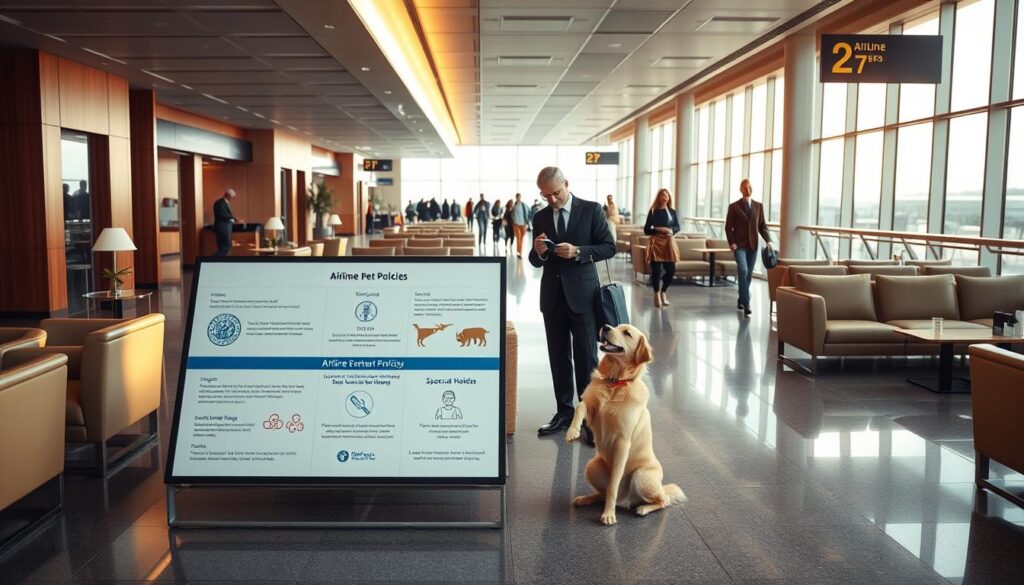
Planning to fly with your dog? It’s key to know the airline pet policies first. These rules help ensure a safe trip for both you and your pet. Flying with pets is getting more common, and airlines have set rules to make it smooth.
Understanding Airline Pet Policies
Every airline has its own pet travel rules. These include what carriers are allowed, size and weight limits, and health checks. It’s important to check these policies before booking to avoid surprises. Some airlines let pets in the cabin, while others need them to travel as checked baggage or cargo.
Booking the Right Flight for Pet Travel
Think about the flight’s length and layovers when booking. These can affect your pet’s comfort and stress. Direct flights are best to avoid delays or lost luggage. Also, some airlines are more pet-friendly than others, so do your research.
Choosing Between Cabin and Cargo Travel
Deciding where your dog travels depends on their size, temperament, and airline rules. Small dogs that fit in approved carriers under the seat can go in the cabin. Larger dogs might need to travel as cargo, which requires careful thought about their comfort and safety.
| Travel Option | Size Requirement | Carrier Requirement |
|---|---|---|
| Cabin | Fits under seat | Approved carrier |
| Cargo | Larger dogs | Specific cargo crate |
Essential Documentation for Traveling with Your Dog
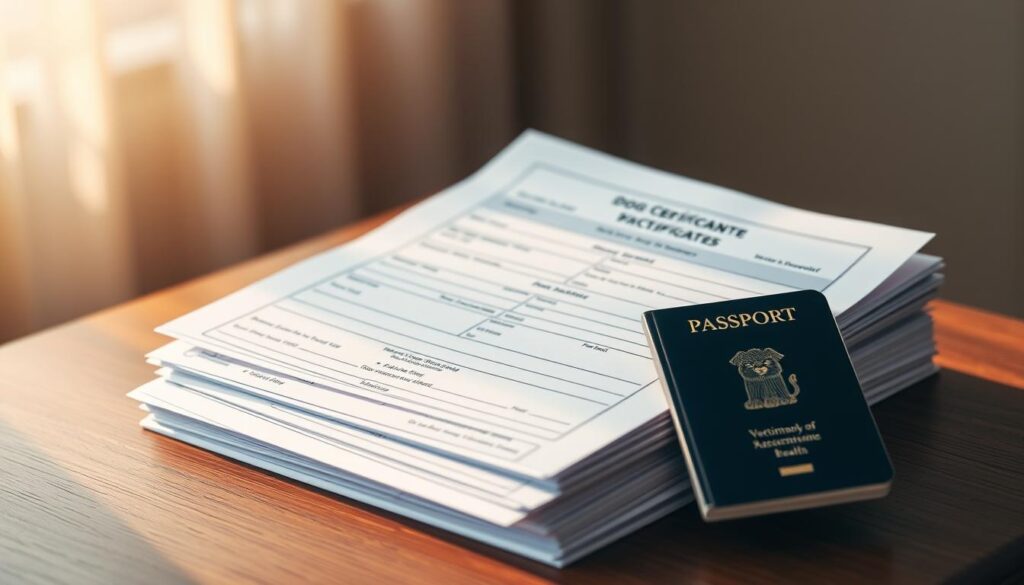
Traveling with your dog by air is easier with the right paperwork. Having all the necessary documents makes the journey smoother for both you and your pet.
Health Certificates and Vaccination Records
A health certificate is crucial for your dog’s air travel. It must be issued within 10 days of your trip. Also, keep your dog’s vaccination records up to date. Airlines and destinations might have specific rules.
Always check with your vet to make sure you have all the health documents needed.
Airline-Specific Forms and Requirements
Every airline has its own rules for traveling with pets. They might need a certain health certificate or extra papers. It’s important to know your airline’s pet travel policies before you book.
This way, you can avoid any last-minute problems that could hold up your trip.
Digital vs. Physical Documentation Tips
Today, many documents are digital, which is convenient for travel. But, it’s smart to have both digital and physical copies of your dog’s papers. Digital copies are easy to access on your phone or tablet.
Physical copies are useful if your devices fail or aren’t accepted. Make sure your digital files are safe and easy to find.
Choosing the Right Carrier for Airport Security
Finding the right pet carrier is key for a smooth airport security check. It keeps your dog safe and comfy. It also helps speed up the security process.
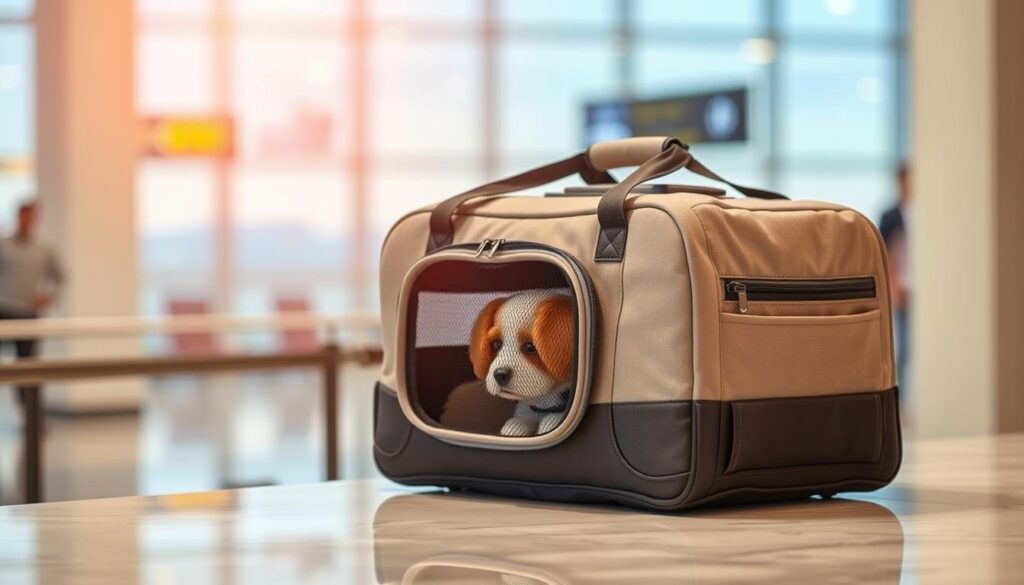
TSA-Approved Pet Carriers
Using a TSA-approved pet carrier is a big plus for airport security. These carriers meet TSA rules, letting your dog go through security checks easily. Even though the TSA doesn’t officially approve carriers, a well-ventilated, easy-to-inspect one helps a lot.
Features to Look for in a Security-Friendly Carrier
A good security carrier should be easy to check and comfy for your dog. Look for ones with multiple access points, like top-loading or mesh panels. This lets TSA agents check your dog without taking them out. Also, sturdy, padded carriers can make your dog less stressed during screening.
Soft-Sided vs. Hard-Sided Carriers at Security
Choosing between soft-sided and hard-sided carriers depends on what you and your dog prefer. Soft-sided carriers are easy to carry and fit under seats. But they might not protect as well as hard-sided ones. Hard-sided carriers are safer but can be bigger. For security, a carrier that’s easy to check and open is best.
Pre-Travel Training for Your Dog
To make your airport trip smooth, training your dog before you go is key. This training lowers your dog’s stress and makes security checks easier for everyone.
Carrier Acclimation Techniques
Getting your dog used to their carrier is a big step. Begin by putting treats and toys in the carrier to make them want to go in. Then, slowly increase the time they spend in it, making it a cozy spot.
Here are some tips for carrier acclimation:
- Put the carrier in a spot your dog often visits.
- Feed your dog near or in the carrier.
- Take short trips with your dog in the carrier to get them used to moving.
Basic Commands That Help at Security
Teaching your dog simple commands can make security checks easier. Commands like “stay,” “quiet,” and “calm” help control your dog’s behavior during checks.
| Command | Benefit at Security |
|---|---|
| Stay | Keeps your dog calm and in place |
| Quiet | Reduces barking and anxiety |
| Calm | Helps your dog relax during screening |
Desensitizing Your Dog to Airport Noises
Airport sounds can scare dogs. To help your dog get used to these sounds, play recordings at home. Start with a low volume and increase it slowly. Reward your dog for staying calm.

What to Pack for Smooth Security Screening
To make airport security easier with your dog, pack smart. The right things can help your dog stay calm and comfortable during screening.
Essential Items for Your Dog’s Comfort
Keeping your dog comfortable at airport security is important. Bring their favorite blanket or toy for reassurance. Also, include a TSA-approved carrier that fits under your seat or meets cargo needs.
Studies show that familiar things can lower a dog’s stress. Experts say, “A familiar object can be a lifeline for a dog in a stressful environment.”
“A familiar object can be a lifeline for a dog in a stressful environment.”
Security-Friendly Accessories and Supplies
Some accessories can help make security easier for you and your dog. Pack a collapsible bowl for water, poop bags for cleanliness, and a quick-release harness for easy carrier removal. These items are useful and help make security smoother.
| Accessory | Benefit |
|---|---|
| Collapsible Bowl | Easy hydration on the go |
| Poop Bags | Cleanliness during travel |
| Quick-Release Harness | Easy removal from carrier |
Treats and Distractions for the Security Line
Treats and toys are great for keeping your dog calm and busy during screening. Bring healthy treats and interactive toys filled with treats. This can distract them from the screening and lower their anxiety.
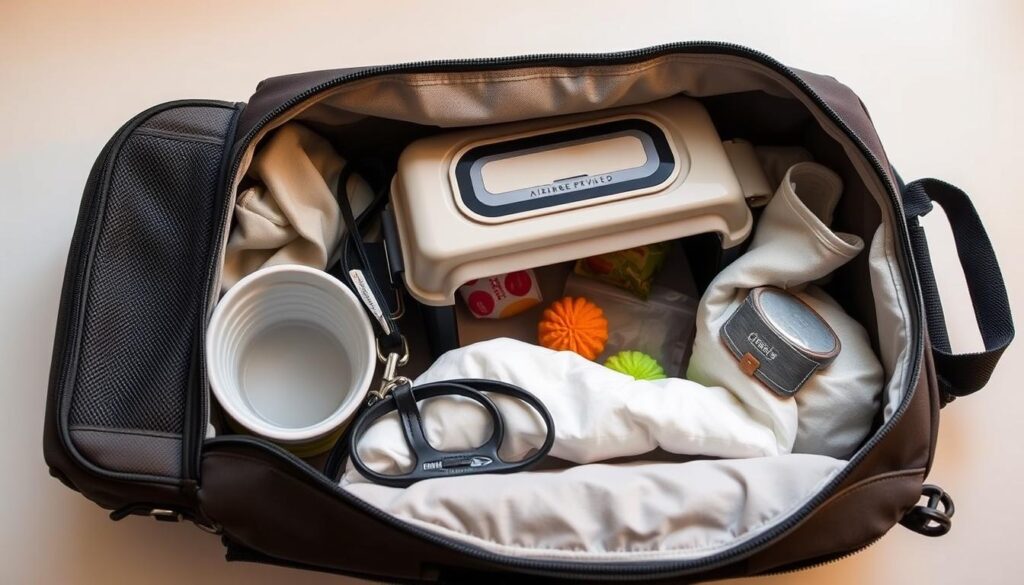
By packing the right items, you can make security screening smoother for you and your dog. Preparation is key to reducing stress and making the experience better for everyone.
How to Get Your Dog Through Airport Security Smoothly: Step-by-Step Guide
Getting your dog through airport security can be smooth with the right prep. It’s a challenge, but a step-by-step guide can help. This way, you and your dog will have a less stressful time.
Arriving at the Security Checkpoint
When you get to the security checkpoint, be ready. Have your dog’s health and vaccination records handy. Let the TSA agents know you’re traveling with a dog for guidance.
Removing Your Dog from the Carrier
When it’s your turn, take your dog out of the carrier. Hold them or put them on the floor, as the TSA says. Keep your dog calm and comfy. Use treats and praise to help them relax.
Walking Through the Metal Detector
If you must go through a metal detector, keep your dog safe. You might go through alone with your dog and luggage. Explain you’re traveling with a dog and follow the TSA’s lead.
Alternative Screening Procedures
Sometimes, you’ll need extra screening. This could be a pat-down or a handheld scanner on your dog’s carrier. Always follow the TSA’s instructions for a smooth process.
| Screening Procedure | Description |
|---|---|
| Metal Detector | Walk through the metal detector while keeping your dog secure. |
| Pat-Down | A TSA agent may perform a pat-down as an alternative screening method. |
| Handheld Scanner | A handheld scanner may be used on your dog’s carrier. |
Managing Your Dog’s Behavior During Security Screening
When flying with your dog, it’s key to know how to handle their behavior at security checks. A calm dog makes the screening easier for everyone.
Calming Techniques for Anxious Dogs
Many dogs get anxious at airport security. To soothe them, use positive reinforcement techniques like treats and praise. You can also use calming aids like pheromone diffusers or calming collars to help.
Handling Unexpected Reactions
Even with prep, some dogs might act out at security. If your dog gets upset, stay calm and use a familiar command or treat to distract them. If they’re really upset, you might need to take them out of their carrier and comfort them.
Working with TSA Agents Effectively
TSA agents know how to handle pets at security. To work well with them, be ready to share info about your dog’s behavior and any special needs. Having your dog’s papers ready can also make things go faster.
Post-Security Considerations
Clearing security is just the start. Now, it’s key to keep your dog comfy and calm before flying. Making sure your dog is comfortable after security is crucial for a stress-free trip.
Finding Pet Relief Areas in the Airport
After security, finding pet relief areas in the airport is vital. These spots let your dog stretch, relieve themselves, and exercise. You can find these areas on airport websites or by asking staff. Some airports have indoor areas with grass and waste stations.
Keeping Your Dog Comfortable Before Boarding
To keep your dog comfy, make sure they have water and a cozy spot to rest. Bring a portable water bowl and give them treats to calm them down. If your dog gets anxious, use calming aids like pheromone diffusers or collars. Also, keep their carrier clean and comfy.
Pre-Boarding Procedures with Pets
Before boarding, learn about the pre-boarding procedures for pets. Some airlines let you board early, while others have special pet check-in rules. Have all your documents ready and be prepared to show them to staff. Knowing these steps will make boarding easier.
Special Considerations for Service and Emotional Support Animals
It’s important to know the needs of service and emotional support animals for a smooth airport security experience. These animals help their owners a lot. Knowing the procedures and requirements can make a big difference.
Different Security Procedures for Service Animals
Service animals are trained to help people with disabilities. When going through airport security, service animals can go with their owners in the cabin. The TSA lets service animals go through security without being seen as a threat. But, you need to be ready to talk about the animal’s training and what it does.
Required Documentation for Service Animals
Emotional support animals used to be treated like service animals, but rules have changed. For service animals, you don’t need to show papers at security, but a vest or harness helps. Airlines might ask for papers, though.
| Documentation Type | Required for | Purpose |
|---|---|---|
| Health Certificate | Service Animals | Verifies the animal’s health status |
| Vaccination Records | Service & Emotional Support Animals | Ensures the animal is up-to-date on vaccinations |
| Airline Forms | Emotional Support Animals | Required by airlines for travel approval |
Navigating Recent Policy Changes
The TSA and airlines have made new rules for service and emotional support animals. For example, emotional support animals are now treated like pets. Always check with your airline for the latest rules before you travel. Knowing these changes can prevent problems at the airport.
Conclusion: Ensuring a Stress-Free Security Experience
Traveling with dogs can be tough, but airport security doesn’t have to be. With the right prep, you and your pet can have a smooth ride.
Know the airline’s pet rules, get all needed papers, and pick the best carrier. Training your dog before you go and packing the right stuff helps a lot.
Stay calm and patient when going through security. Follow the advice in this article to keep things easy for you and your dog.
With these tips, you’re ready for a stress-free airport trip. Enjoy your flight with your furry friend.