Traveling with your dog can be a wonderful experience. But, it needs careful planning and preparation. One key thing to think about is the vaccination requirements for your destination.
Knowing dog travel regulations is crucial for a smooth journey. Different countries have different rules. It’s important to research and follow these rules to avoid any problems.
By knowing the necessary vaccinations and rules, you can keep your dog safe and healthy while traveling.
Key Takeaways
- Research the vaccination requirements for your destination.
- Understand the dog travel regulations for your destination country.
- Ensure your dog is up-to-date on all necessary vaccinations.
- Consult with a veterinarian before traveling with your dog.
- Comply with local health regulations to avoid complications.
Understanding Pet Travel Regulations
Traveling with dogs internationally has many rules to keep animals and people safe. These rules are key to making sure dogs are healthy and don’t harm others.
Why Vaccination Requirements Exist
Vaccines stop diseases from spreading across borders. Rabies is a big worry, and many places have strict rabies vaccination rules. Vaccinating dogs keeps them and others safe.
The Role of International Health Certificates
An International Health Certificate is very important. It shows a dog’s health and vaccination history. A vet issues it, and it’s needed to enter some countries. It proves the dog is healthy enough to travel.
How Requirements Vary by Country
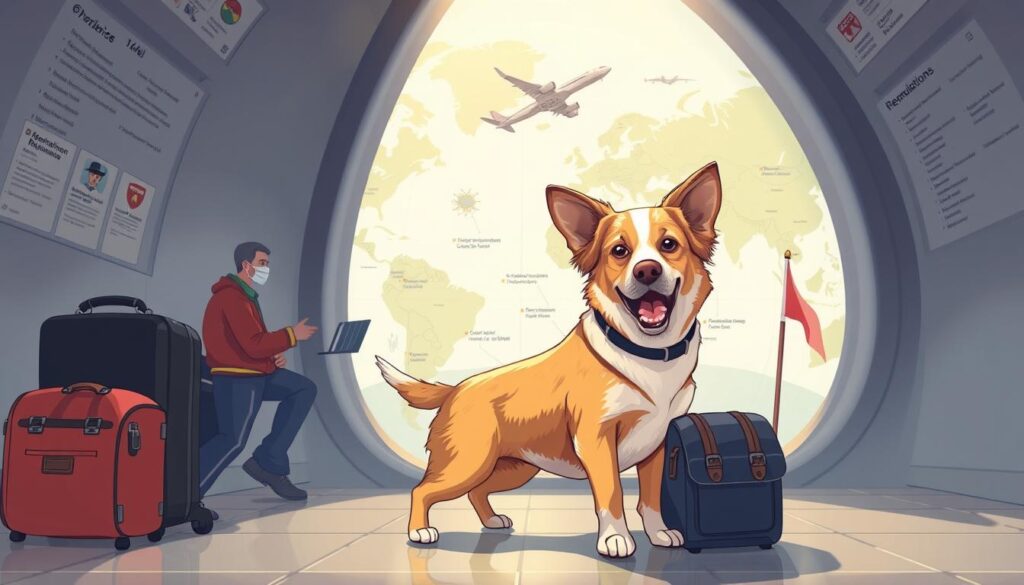
Travel rules for pets change a lot from country to country. For example, the European Union has the Pet Passport scheme. But, places like Australia and the UK have strict rules. Knowing these differences is crucial for traveling with dogs.
| Country/Region | Vaccination Requirements | Additional Documents |
|---|---|---|
| European Union | Rabies vaccination | Pet Passport |
| Australia | Rabies, other vaccinations based on country of origin | Import permit, microchip |
| United Kingdom | Rabies vaccination | Pet Passport or Third Country Animal Health Certificate |
By following these rules, dog owners can make sure their pets have a safe trip.
Core Vaccinations Required for International Dog Travel
Planning international dog travel means knowing the core vaccinations needed. It’s key for a smooth trip. Vaccinations not only follow rules but also keep your pet safe.
Rabies Vaccination: The Universal Requirement
The rabies vaccine is a must for dogs traveling abroad. It’s vital because rabies is deadly and spreads through bites. Dogs must get this vaccine at least 21 days before entering most countries.
Other Common Required Vaccinations
Other shots are also needed for international travel. These include vaccines for distemper, hepatitis, and parvovirus. These are often in one vaccine called DHP or DHPP.
Distemper, Hepatitis, and Parvovirus
- Distemper: Affects dogs’ breathing, stomach, and brain.
- Hepatitis: Causes liver disease in dogs.
- Parvovirus (Parvo): Causes severe stomach problems.
Leptospirosis and Bordetella
Some places might ask for shots against leptospirosis and Bordetella too. Leptospirosis can harm kidneys and liver. Bordetella causes kennel cough, a contagious cough.
Titer Tests: When and Why They’re Required
A titer test checks if your dog has enough antibodies against diseases. Some places need these tests to confirm vaccinations work. For example, a rabies titer test checks if your dog is immune to rabies.

Knowing and following these vaccination rules is key for a worry-free trip with your dog. Always talk to a vet to get the latest info and plan your dog’s shots.
International Dog Vaccination Requirements for Travel by Region
Different regions have their own rules for traveling with dogs. It’s important to know what vaccinations are needed.

European Union Pet Passport and Requirements
The European Union has a Pet Passport for dogs. This lets dogs travel freely in the EU if they meet certain rules. The main rule is a rabies vaccination.
Dogs also need to be microchipped with an ISO-compliant chip. The Pet Passport must come from an approved vet.
Asia-Pacific Vaccination Standards
The Asia-Pacific area has many countries with different rules for dog vaccinations. For example, Japan and New Zealand have strict laws. Dogs may need to be vaccinated or go through quarantine.
On the other hand, countries like Thailand and Indonesia have less strict rules. But they still need dogs to be up-to-date on vaccinations, including rabies.
Requirements for Travel to the UK and Australia
To travel to the UK with your dog, you must follow the Pet Travel Scheme (PETS). This includes getting a Pet Passport or a third-country animal health certificate.
Australia has strict rules too. Dogs must be free of diseases like rabies and may need to go through quarantine.
South and Central America Requirements
In South and Central America, the rules for dog vaccinations vary. Many countries need a rabies vaccination. For example, Brazil wants a health certificate within 10 days of travel.
Middle East and Africa Regulations
The Middle East and Africa have different rules for dog vaccinations. Some places, like South Africa, require rabies and other vaccinations. Others might have less strict rules.
It’s important to check the specific rules for your destination.
To have a good trip with your dog, it’s crucial to know the regional rules. Always talk to a vet and the right authorities to follow the latest rules.
US Requirements for Dog Re-Entry After International Travel
When you bring your dog back to the US, you need to plan carefully. You must follow CDC and USDA rules. Knowing what’s needed for your dog’s return is key.
CDC and USDA Regulations
The CDC and USDA control dog imports in the US. The CDC checks for diseases that can spread to people. The USDA makes sure dogs have rabies shots. The CDC says dogs must be healthy and have a vet’s health certificate within 10 days.
Key requirements include:
- A valid rabies vaccination certificate
- An import permit (in some cases)
- A health certificate issued within 10 days of travel
State-Specific Requirements
States have their own rules on top of federal ones. Some states have special rules for certain breeds or extra shots. Always check with your state’s animal health department for their rules.
High-Risk Country Considerations
Dogs from high-risk countries face tougher rules. The CDC might ask for more papers or quarantine. “The CDC reserves the right to deny entry or require additional measures for dogs coming from high-risk countries,” they say.
Following these rules helps ensure a smooth return for your dog to the US.
Timing and Planning Your Dog’s Vaccination Schedule
Having a good vaccination plan is vital for your dog’s health and travel rules. When you’re traveling with your dog internationally, knowing the vaccination timing and needs is key.
Optimal Vaccination Timeline Before Travel
Vaccination timing is very important. For most places, the rabies vaccination is a must, and it needs to be done before you go. Usually, this is at least 21 days before you arrive. But, this can change, so always check the rules for where you’re going.
Booster Requirements and Validity Periods
Booster shots keep your dog safe from diseases like rabies. How long a vaccine lasts can differ by country and type. For example, rabies shots are good for three years, but some places might ask for different times. Knowing these times helps plan your dog’s shots.

Creating a Pre-Travel Vaccination Calendar
To make sure your dog is ready for travel, make a vaccination calendar. This means:
- Talking to a USDA-accredited vet to find out what shots your dog needs.
- Keeping track of when each shot was given and how long it lasts.
- Getting booster shots when needed.
- Having all your dog’s shots recorded in their health certificate.
By planning your dog’s shots carefully, you can avoid last-minute problems. This makes your trip smoother for both you and your pet.
Documentation and Certification Process
Traveling abroad with your dog requires a key step: meeting documentation and certification needs. Having the right paperwork is crucial for a smooth entry into your destination.
USDA-Accredited Veterinarian Endorsements
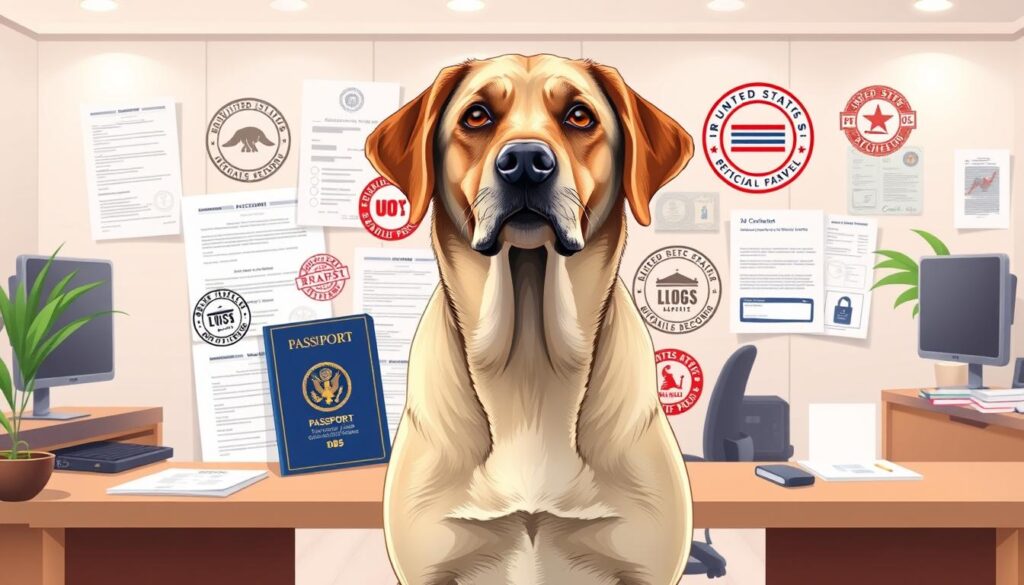
To travel internationally with your dog, you need a health certificate from a USDA-accredited vet. This confirms your dog’s vaccinations are current and the certificate was issued on time.
International Health Certificates
An International Health Certificate is key. It shows your dog’s health status and meets the destination’s rules. It must come from a licensed vet and be endorsed by the USDA in the US.
- Get the health certificate within the required time before travel.
- Make sure it includes your dog’s vaccination and microchip details.
- Check that the certificate is endorsed by the right authorities.
Microchipping Requirements and Vaccination Records
Microchipping your dog is a must for international travel. The chip must be ISO-standard (15-digit). Keeping your dog’s vaccination records up-to-date is also key. They must show the vaccinations needed for your destination.
| Requirement | Description |
|---|---|
| Microchipping | ISO-standard microchip (15-digit) |
| Vaccination Records | Up-to-date vaccinations as per destination country’s requirements |
Digital vs. Physical Documentation
The debate on digital vs. physical documentation is ongoing. Some countries accept digital health certificates, while others need physical ones. Always check with the destination country’s embassy or consulate for their specific needs.
In conclusion, understanding and following the documentation and certification process is vital for international dog travel. With the right paperwork, you can avoid problems and ensure a smooth trip for your dog.
Special Considerations for Different Types of Dogs
Traveling with a puppy, senior dog, or a specific breed requires careful planning.
Dogs at different life stages and breeds have unique needs. These needs are crucial for a safe and healthy trip. Puppies, senior dogs, and certain breeds have special health and vaccination needs for international travel.
Puppies and Vaccination Age Restrictions
Puppies face age limits for vaccinations, like rabies, which is given at 12 weeks or older. This means puppies under 12 weeks might not qualify for travel to some countries. They might need special documents and care.
For example, a puppy going to the European Union might need a Pet Passport. It’s important to talk to a vet to plan the right vaccinations for the puppy and the destination.
Senior Dogs and Health Concerns
Senior dogs often have health issues that make travel tricky. Conditions like arthritis or heart disease need special care. They might need a health checkup closer to the trip to make sure they’re fit to travel.
“Older dogs may need more frequent veterinary check-ups and may require a health certificate issued closer to the travel date.”
Senior dogs might also need special travel arrangements. This could include more comfortable crates or sedation to reduce stress.
Breed-Specific Considerations
Some breeds face special rules or restrictions in different countries. For example, brachycephalic breeds like Bulldogs and Pugs might need extra care because of breathing problems.
| Breed | Potential Health Issue | Travel Consideration |
|---|---|---|
| Brachycephalic Breeds | Respiratory Issues | Additional Health Certificates |
| Large Breeds | Joint Issues | Comfortable Travel Crates |
Medical Exemptions and Alternatives
In some cases, dogs can avoid certain vaccinations for health reasons. A vet must provide a letter explaining the exemption. The dog might need other health measures instead.
For example, a dog that can’t get vaccinations because of past reactions might get a medical exemption. The vet will need to give detailed reasons for the exemption and suggest other health plans.
Common Issues and How to Avoid Them
Dog owners need to know about common problems with international pet travel. It’s not just about booking a flight and packing. You must plan carefully and understand the rules of each country.
Denied Entry: Causes and Prevention
One big worry is being turned away at the border with your pet. This can happen if your papers are wrong or if you don’t meet health standards. Make sure all your documents are correct and check the rules of your destination.
Some places need a certain vaccine or health certificate. Following these rules can stop you from being turned away.
Quarantine Requirements and Exceptions
Quarantine is another problem dog owners might face. Some countries make dogs stay in quarantine if they don’t meet health standards. Knowing the rules and any exceptions can help avoid extra stress and costs.
Some countries, like the EU, have special rules that let dogs skip quarantine. Look into these options and prepare to avoid quarantine.
Emergency Situations While Traveling
Even with good planning, emergencies can happen. It’s important to know what to do if your pet needs a vet abroad. Look up local vets and have a plan for emergencies.
Finding Veterinary Care Abroad
Finding a vet in a foreign country can be hard. Use online resources like vet associations or expat forums to find good vets. Having a list of vets before you go can make you feel more secure.
Also, think about joining a pet travel company. They can help with finding vets and support you during your trip.
Conclusion
Knowing the rules for dog vaccinations when traveling abroad is key. Different countries have their own rules for pets. This makes traveling with your dog smooth.
Before you go, find out what your destination needs. You’ll need to know about rabies shots and get an international health certificate. This is important for your dog’s safety.
Good planning can avoid problems like being turned away or having to stay in quarantine. By following these steps, you and your dog can have a great trip.
Keep up with the latest rules for traveling with dogs. When you’re ready to go, talk to a vet who is approved by the USDA. They can help you get everything your dog needs.