Traveling with your furry friend can be a delightful experience. But dog motion sickness can quickly turn a pleasant journey into a distressing ordeal.
Many dog owners face the challenge of keeping their pets calm and comfortable during car rides. If you’re one of them, you’re not alone. Motion sickness in dogs is a common issue that affects canines of all ages. It causes discomfort and anxiety for both the dog and the owner.
This article aims to provide you with valuable insights into effective solutions for your dog’s car ride discomfort. It helps you make informed decisions about their care.
Key Takeaways
- Understanding the causes of dog motion sickness
- Identifying symptoms to look out for in your dog
- Exploring available treatment options
- Tips for preventing motion sickness in dogs
- How to keep your dog calm during car rides
Understanding Canine Motion Sickness
For dog owners who travel with their pets, knowing about canine motion sickness is key. This issue is complex, involving both physical and mental factors.
What Causes Motion Sickness in Dogs
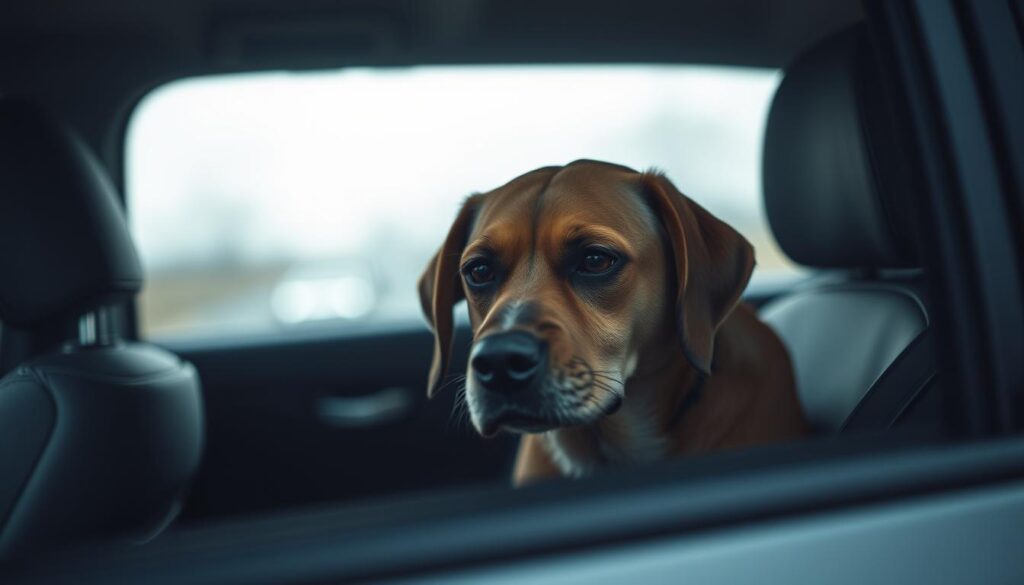
Motion sickness in dogs happens when the brain gets mixed signals. The inner ear feels the car move, but the eyes see something still. This mix can make a dog feel sick.
How Common Is This Condition
Many dogs get motion sickness, affecting a big part of the dog population. Research shows that about 48% of dogs get sick in cars.
| Age Group | Prevalence of Motion Sickness |
|---|---|
| Puppies (under 1 year) | 60% |
| Adult Dogs | 30% |
| Senior Dogs | 20% |
The Impact on Your Dog’s Well-being
Dog travel anxiety and motion sickness can really upset a dog. It makes car rides stressful and uncomfortable. It also affects the owner’s travel experience.
Knowing about canine motion sickness helps dog owners make car rides better for their pets. It’s important to address this issue to ensure a comfortable journey.
Recognizing the Signs of Motion Sickness in Dogs
Knowing the signs of motion sickness is the first step to help your dog feel better in the car. Dogs can show different physical and behavioral signs when they feel sick from car rides.
Physical Symptoms to Watch For
Look out for drooling, vomiting, and restlessness. Some dogs might also pant a lot or yawn too much.
| Symptom | Description |
|---|---|
| Drooling | Excessive salivation, often a precursor to vomiting |
| Vomiting | Actual expulsion of stomach contents, a clear sign of motion sickness |
| Restlessness | Pacing, whining, or agitation during car travel |
Behavioral Changes During Car Rides
Behavioral signs can be just as important as physical ones. Dogs might act anxious or agitated. They could pace, whine, or try to get out of the car.
It’s essential to distinguish between motion sickness and travel anxiety. While some dogs show signs of both, knowing the main cause is key to treating them right.
Distinguishing Motion Sickness from Travel Anxiety
Travel anxiety can look a lot like motion sickness, with signs like panting, pacing, and whining. But, anxiety is often caused by things like fear of the car or bad past experiences.
“Understanding whether your dog’s distress is due to motion sickness or anxiety is key to providing the right relief.”
By knowing the signs of motion sickness and how it differs from travel anxiety, you can start making car rides better for your dog.
Why Some Dogs Are More Susceptible to Travel Sickness
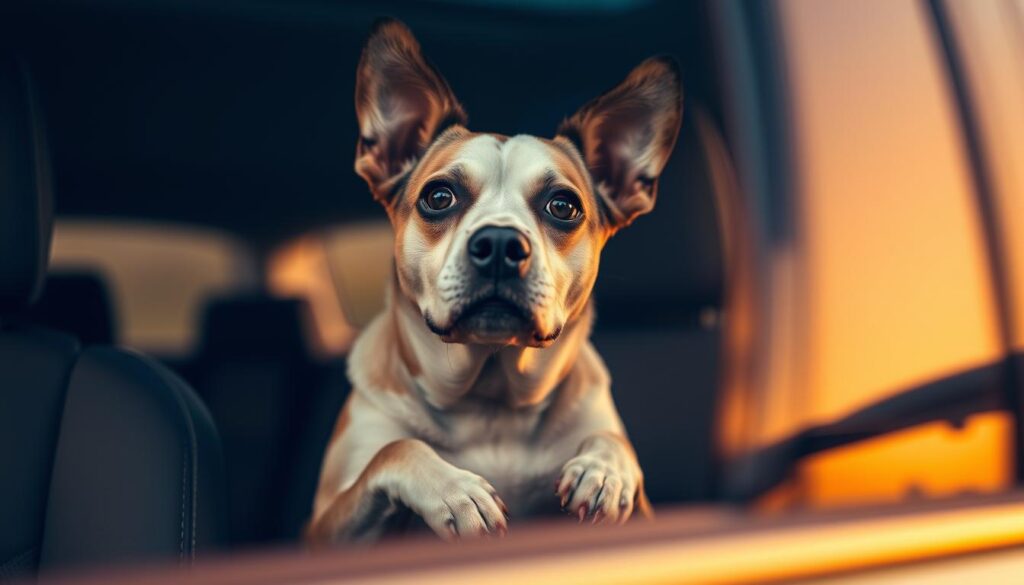
Some dogs get travel sickness more easily because of different reasons. Knowing these reasons helps dog owners prevent their pets’ discomfort on car rides.
Age-Related Factors
Puppies often get travel sickness because their inner ear and balance system are still growing. As dogs get older, they usually get less motion sickness.
Breed Predispositions
Some dog breeds get motion sickness more because of their body shape. For example, Pugs and Bulldogs might get it more because of their short noses and breathing problems.
Previous Negative Experiences
Dogs that had bad experiences in cars, like accidents, might get more anxious and sick. This makes them more likely to get travel sickness.
Inner Ear Development and Sensitivity
The inner ear is key for balance and staying steady. Dogs with ear problems or sensitivities might get motion sickness more. 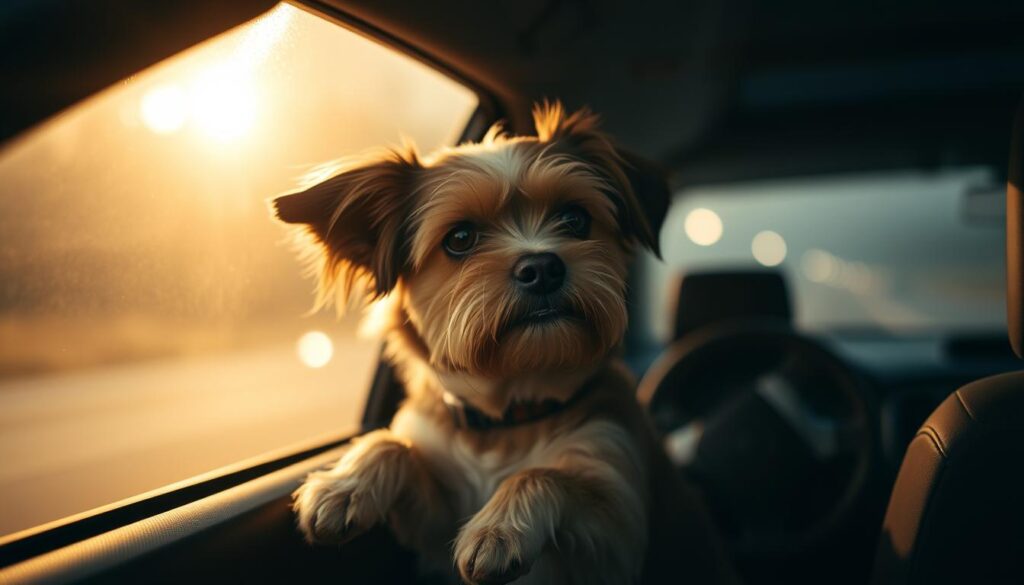
Knowing these reasons helps dog owners get their pets ready for car trips. It can also lower the chance of motion sickness.
Effective Motion Sickness Meds for Dogs During Car Rides
Dogs often get motion sickness on car rides. Luckily, there are many good medicines to help. Finding the right one is key to making car trips less stressful for both dogs and their owners.
How These Medications Work
Meds for dog motion sickness target the inner ear or the brain’s vomiting center. Antihistamines block histamine receptors in the brain. This helps stop nausea and vomiting.

Comparing Different Medication Types
There are many motion sickness meds for dogs, including prescription and OTC ones. Prescription meds like Cerenia are made just for dogs. OTC meds, like Dramamine, need careful dosing.
| Medication Type | Prescription/OTC | Effectiveness |
|---|---|---|
| Cerenia (Maropitant Citrate) | Prescription | Highly Effective |
| Dramamine | OTC | Moderately Effective |
| Antihistamines | Both | Varies |
Timing Medication for Maximum Effectiveness
When to give motion sickness meds is very important. Most meds should be given 1-2 hours before the trip. Always follow the specific instructions provided by your veterinarian or the medication’s guidelines.
Duration of Protection
How long a med works varies. Some, like Cerenia, last up to 24 hours. Knowing this helps plan the right dose for your trip.
Choosing the right med and following the right dosage makes car rides better for your dog.
Prescription Medications from Your Veterinarian
Vets suggest different prescription meds to ease dogs’ travel stress. These meds help dogs feel better during trips, making the journey nice for both dogs and their owners.
Cerenia (Maropitant Citrate): The Gold Standard
Cerenia is a top pick for fighting dog motion sickness. It stops a natural substance that makes dogs vomit. Cerenia is given orally once a day, which is easy for dog owners.
A study found Cerenia greatly cuts down on dog vomiting during travel. “Cerenia has changed how we handle motion sickness in dogs,” says Dr. Jane Smith, a well-known vet. “It’s effective and easy to use, making it a favorite among pet owners and vets.”
Antihistamines: Dramamine and Alternatives
Antihistamines, like Dramamine, can also help with dog travel anxiety. They’re often used for allergies but can also fight motion sickness. But, they might make dogs sleepy.
Sedatives and Anti-Anxiety Medications
Sometimes, vets prescribe sedatives or anti-anxiety meds for travel anxiety. These can calm dogs, reducing stress and discomfort on trips. Always talk to a vet to find the right treatment.
Potential Side Effects of Prescription Options
Prescription meds can be very effective but might have side effects. Common ones include drowsiness, dry mouth, and stomach issues. It’s key to listen to your vet and watch how your dog reacts to the meds.

By teaming up with your vet, you can find the best meds for your dog. This ensures a more comfortable and fun travel experience for them.
Over-the-Counter Solutions for Canine Travel Sickness
Traveling with a dog can be tough, mainly when they get motion sickness. Luckily, OTC remedies can help. Many dog owners start with over-the-counter (OTC) solutions to fight canine travel sickness.
Safe OTC Options for Dogs
There are several OTC meds for dogs, like antihistamines like diphenhydramine (Benadryl) and dimenhydrinate (Dramamine). These can help lessen motion sickness symptoms in dogs.
Proper Dosing Guidelines
It’s key to follow the right dosage for any OTC medication. The dose is based on the dog’s weight. Always check with a vet to find the correct dose.
When to Choose OTC vs. Prescription
For mild motion sickness, OTC meds are fine. But for severe cases, a prescription medication like Cerenia might be needed. Talking to a vet can help decide the best option.
Monitoring Your Dog After Administration
After giving your dog meds, keep an eye on how they react. Watch for any side effects. If you see any bad reactions, call your vet right away.
Natural Remedies and Supplements
Many pet owners look for safe ways to help their dogs with motion sickness. They turn to natural remedies and supplements. These options can help dogs feel better without the risks of regular medicines.
Ginger-Based Products
Ginger has been known for centuries to fight nausea. Now, it’s being used for dogs with motion sickness. Ginger-based products, like chews or treats, can be given before travel. They might help ease your dog’s motion sickness symptoms.
CBD Oil for Dogs
CBD oil comes from cannabis and is known for its calming effects. Some pet owners say it helps their dogs feel less anxious during travel. Always talk to a vet before giving CBD oil to your dog. They can help with the right amount and any possible side effects.
Calming Pheromones and Aromatherapy
Calming pheromones are like what mother dogs use to soothe their puppies. Products like Adaptil can help calm your dog during travel. Aromatherapy, with essential oils like lavender, can also make your dog feel more relaxed.
Effectiveness of Natural Approaches
Natural remedies can be helpful, but they work differently for everyone. Keep an eye on how your dog reacts to new things. If they don’t get better, always check with a vet.
| Remedy | Description | Potential Benefits |
|---|---|---|
| Ginger Products | Ginger chews or infused treats | Reduces nausea and motion sickness |
| CBD Oil | Derived from cannabis, calming effects | Reduces anxiety and stress |
| Calming Pheromones | Mimics natural mother dog pheromones | Calms dogs, reduces travel anxiety |
Administering Medication to Your Dog
Giving your dog medication for motion sickness during car rides needs care. It’s important to use the right techniques to make it less stressful for both you and your dog.
Techniques for Pill Administration
When giving your dog pills, be gentle yet firm. You can hide the pill in a treat or use a pill dispenser to make it easier.
Using Pill Pockets and Treats
Pill pockets and treats hide the taste and texture of medication. They make it more palatable for your dog. Look for products made for this purpose.
Liquid Medication Tips
For dogs that have trouble with pills, liquid medication is a good alternative. Mix it with their food or use a syringe to administer it directly into their mouth.
Creating Positive Associations
To make medication time less stressful, create positive associations. Reward your dog with treats and praise after administration.
| Medication Type | Administration Tips |
|---|---|
| Pills | Hide in treats or use pill pockets |
| Liquid | Mix with food or use a syringe |
Preventative Strategies Beyond Medication
Preventing motion sickness in dogs is more than just using medicine. It’s about using many strategies to make your pet’s travel comfortable. By trying different methods, you can lessen your dog’s travel anxiety and make car rides better.
Acclimation Techniques for Car Travel
One good way to stop canine travel sickness is to get your dog used to car rides. Begin by letting your dog check out the car when it’s not moving. Then, take short drives around the block. Slowly make these trips longer to help your dog get used to the car’s motion.
Optimal Feeding Schedule Before Travel
Changing your dog’s eating schedule can also help a lot. Feed your dog a light meal a few hours before you leave. This helps avoid heavy meals that can cause discomfort and motion sickness.
Creating a Comfortable Travel Environment
It’s important to make sure your dog is comfortable while traveling. This means having good air, a comfy temperature, and not too much noise. Using a dog crate or a special dog seatbelt can also help keep your dog safe and calm.
Special Equipment for Reducing Motion
There are many products out there to help with canine travel sickness. You can find doggy seatbelts, calming vests, and even pheromone diffusers. Try out different things to see what works best for your dog.
Long-Distance Travel Considerations
For long trips, it’s key to plan breaks for your dog. Let them stretch, exercise, and go to the bathroom. Keeping them hydrated and giving treats can also make the trip more pleasant. Planning your route to include places where dogs can stop can greatly improve your dog’s travel experience.
Conclusion
Understanding and addressing motion sickness in dogs is key for a stress-free car ride. Motion sickness meds can be very helpful. By recognizing the signs, you can take steps to ensure your dog’s comfort and safety.
There are many options, from prescription meds like Cerenia to natural remedies like ginger. Using medication correctly and taking preventative steps can greatly reduce your dog’s anxiety during travel. This includes acclimation techniques and making the travel space comfortable.
By choosing the right meds and planning well for travel, you can make the ride better for both you and your dog. This way, you can minimize your dog’s discomfort and enjoy the trip together.