As your furry friend ages, planning a beach trip needs more than just sunscreen and towels. Older dogs have special needs for a fun and safe beach day.
For older dog vacation tips, focus on your dog’s comfort and health. Check their physical condition, prepare medical documents, and pick the right beach.
Our guide will help you make your beach travel with your senior dog a success.
Key Takeaways
- Assess your senior dog’s health before planning a beach trip.
- Choose a dog-friendly beach destination.
- Prepare necessary medical documents and supplies.
- Plan for regular breaks and hydration.
- Consider your dog’s age-related needs when packing.
Understanding Your Senior Dog’s Beach Needs
For a fun beach trip with your senior dog, knowing their health and physical limits is key. As dogs get older, their bodies change, affecting their beach fun. It’s important to understand these changes.
Age-Related Considerations for Beach Trips
Senior dogs may face health issues like arthritis and mobility problems. These can make it hard for them to enjoy the beach. Knowing these issues helps plan a safe, fun trip.

Assessing Your Dog’s Physical Capabilities
Before the beach, check your senior dog’s physical abilities. Look at their sand-walking skills, stamina, and any physical limits. This helps pick activities they can handle and avoid too much effort.
Benefits of Beach Trips for Older Dogs
Beach trips are good for older dogs, even with caution. The beach offers mental and gentle physical activities. It keeps them healthy and happy, with new sights and smells.
Pre-Trip Veterinary Checkups and Preparations
Getting your senior dog ready for a beach trip starts with a vet visit. This first step is key to keeping your dog healthy and safe on the journey.
Essential Health Screenings Before Travel
It’s vital to have your senior dog checked by a vet before you leave. This check should look for any health issues that could get worse with travel or beach fun. Your vet will tell you if your dog is ready for the trip and what steps to take.
Medication Management for Senior Dogs
Managing your senior dog’s meds is crucial when traveling. Make sure you have enough of any medicines your dog needs. Here are some tips:
Organizing Prescriptions for Travel
Put meds in their original containers and carry a copy of the prescription. It’s smart to have a letter from your vet explaining your dog’s health and treatment.
Adjusting Medication Schedules Across Time Zones
If you’re crossing time zones, talk to your vet about changing your dog’s medicine schedule. This can prevent any bad reactions or problems.
Updating Identification and Microchip Information
Make sure your dog’s ID and microchip info are current before you go. Check that the microchip is registered with the right contact details and that ID tags are on their collar.
| Pre-Trip Preparation Task | Description | Importance Level |
|---|---|---|
| Veterinary Checkup | Comprehensive health screening | High |
| Medication Management | Organizing prescriptions and adjusting schedules | High |
| ID and Microchip Update | Ensuring current contact information | High |
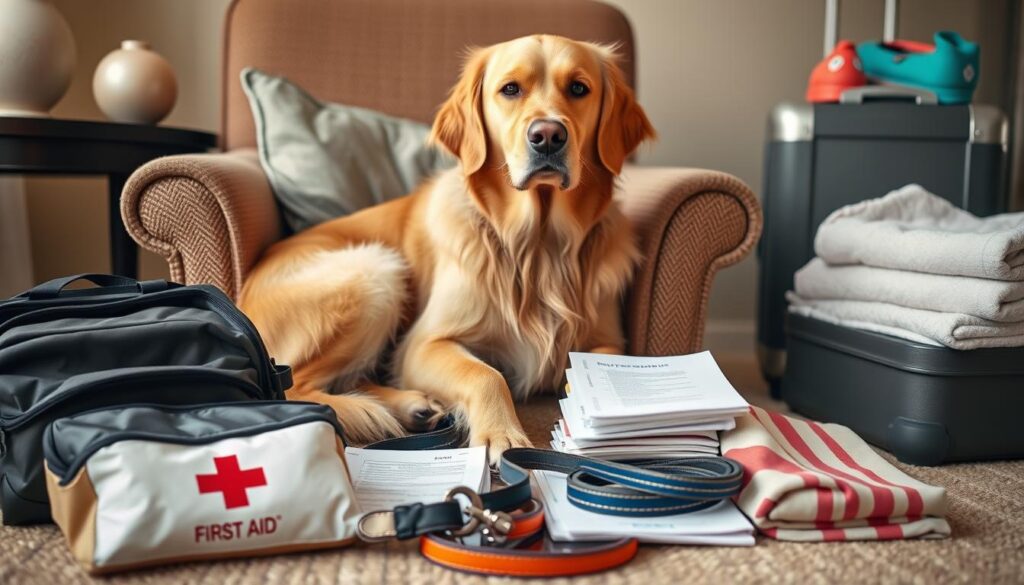
Beach Travel Tips with Senior Dogs
As your dog gets older, beach trips need more planning. This ensures their comfort and safety. Understanding their needs and making adjustments is key to a good trip.
Planning Comfortable Transportation
Getting your senior dog to the beach safely is important. Whether by car or plane, think about what makes their journey easy.
Car Travel Adaptations for Older Dogs
For car rides, use a comfy dog bed or a carrier that supports their joints. Make sure they’re safe and can’t move too much. It’s also important to stop often to let them stretch and go to the bathroom.
- Use a dog harness or carrier to keep your dog secure.
- Keep the car at a comfortable temperature.
- Bring familiar items like their favorite blanket.
Flying with Senior Dogs
Flying with senior dogs needs extra planning. Check airline pet policies, as some have age limits or need health certificates. Think about how flying might stress your dog and talk to your vet if needed.
“When flying with pets, it’s essential to choose an airline that accommodates older dogs comfortably and safely.” – Pet Travel Expert
Scheduling Rest Stops and Breaks
It’s crucial to stop often on long trips. Senior dogs need breaks to stretch, drink water, and go to the bathroom. Plan your route to include places where your dog can move around easily.

Managing Anxiety and Motion Sickness
Many senior dogs get anxious or sick during travel. Talk to your vet about ways to help. Bringing familiar items like their favorite toy can also comfort them.
Tips for Reducing Travel Anxiety:
- Gradually get your dog used to the carrier or car.
- Keep your dog calm with soothing music or a pheromone diffuser.
- Consider calming treats or supplements after talking to your vet.
With careful planning and thinking about your senior dog’s needs, you can have a fun beach trip together.
Essential Packing List for Senior Dogs at the Beach
Planning a beach trip with your senior dog? It’s key to pack the right items for their comfort and safety. A good packing list can make the trip enjoyable for your older dog.
Comfort Items and Orthopedic Bedding
Senior dogs love a bit of extra comfort, even more so when traveling. Orthopedic bedding can support their joints. Orthopedic dog beds help reduce pressure and improve sleep. Pet experts say a quality, portable orthopedic bed can greatly improve your dog’s travel comfort.

Specialized Gear for Mobility Support
Mobility issues are common in senior dogs. The right gear can make your beach trip easier.
Beach-Friendly Mobility Harnesses
A beach-friendly mobility harness is a game-changer for dogs with mobility issues. These harnesses offer support and stability, making it easier for your dog to move on the sand. Look for ones with padded straps and adjustable fittings for a better fit.
Portable Ramps and Steps
Portable ramps and steps help your senior dog get around the beach. They’re great for dogs who struggle with stairs or getting into vehicles. These tools help keep your dog independent and mobile.
| Item | Description | Benefit |
|---|---|---|
| Orthopedic Bedding | Supportive bedding for joint relief | Enhanced comfort and reduced pain |
| Mobility Harnesses | Harnesses designed for support and stability | Increased mobility and confidence |
| Portable Ramps/Steps | Tools for easier navigation | Improved accessibility and reduced strain |
Senior-Specific First Aid Supplies
A senior dog first aid kit is essential. Include bandages, antiseptic wipes, and any needed medications. Also, have a guide to canine first aid. Pet care experts say a well-stocked first aid kit can prevent emergencies.
“A well-stocked first aid kit is essential for any dog owner, specially when traveling with senior dogs.”
By considering your senior dog’s needs and packing the right supplies, you can ensure a fun and safe beach trip for them.
Finding Senior-Friendly Beach Destinations
Choosing the right beach for your older dog is key. As dogs get older, their needs change. What’s good for younger dogs might not be best for seniors.
Researching Dog-Friendly Beaches with Senior Amenities
Look for beaches that are dog-friendly and have senior amenities. You want comfortable walking paths, shaded areas, and accessible facilities. Online forums and websites where pet owners share their experiences are great resources.
Some beaches have specialized dog beaches with gentle slopes and calm waters. These are perfect for older dogs who may not be as active.
Evaluating Beach Terrain and Accessibility
The beach’s terrain is crucial for senior dogs. Beaches with soft sand or gentle slopes are easier to navigate. Avoid beaches with steep dunes or rough terrain that could be hard for your dog.
| Beach Feature | Ideal for Seniors | Not Ideal for Seniors |
|---|---|---|
| Terrain | Soft sand, gentle slopes | Steep dunes, rough terrain |
| Amenities | Shaded areas, comfortable walking paths | Limited shade, rugged paths |
Quieter Beaches with Less Crowds and Noise
Older dogs like a calm environment. Beaches with fewer people and less noise are better for them. Visit during the off-season or early morning to avoid crowds.
By picking a beach that fits your senior dog’s needs, you both can have a great time.
Beach Safety for Older Dogs
Keeping older dogs safe at the beach requires preparation and the right gear. As dogs get older, they may have trouble cooling down and handling stress. So, it’s important to be extra careful.
Temperature Management and Preventing Overheating
Older dogs can get heat stress easier because they’re not as strong or healthy. It’s key to keep an eye on their temperature and watch for signs of overheating.
Recognizing Heat Stress in Senior Dogs
Look out for signs like a lot of panting, drooling, and feeling tired. If you see these, it’s time to cool your dog down fast.
Cooling Techniques and Products
There are ways to keep your dog cool, like giving them shade and cool water. You can also use cooling vests to help control their temperature.
Water Safety Considerations
Water safety is also very important for older dogs at the beach. They might not swim as well as they used to, and they can get tired quickly.
Always watch your dog when they’re in or near the water. Using a dog life jacket can also make them safer.
Creating Shaded Rest Areas and Comfort Zones
Setting up shaded spots can protect your senior dog from the sun and heat. Bring a portable canopy or umbrella to make a cool spot.
Make sure your dog has a comfy place to rest, away from the sun and crowds. This helps prevent them from getting too tired.
| Safety Measure | Description | Benefit |
|---|---|---|
| Temperature Monitoring | Regularly check your dog’s temperature | Prevents overheating |
| Shaded Rest Areas | Create shaded areas for rest | Reduces heat stress |
| Water Safety | Supervise your dog near water | Prevents drowning |
Beach Activities Suitable for Senior Dogs
Planning beach trips for senior dogs is key to keeping them happy and relaxed. As dogs get older, they need different activities. This ensures they stay active without getting too tired.
Gentle Exercise Options in Sand and Water
Senior dogs still need some exercise, but it should be gentle. Short walks on the beach and playing in the water are great. It’s important to watch how they feel to prevent them from getting too tired.
Mental Stimulation Activities at the Beach
Mental games are as important as physical ones for senior dogs. Hiding treats or toys in the sand is a fun game. This keeps their minds sharp and makes them feel proud.
Reading Your Dog’s Body Language and Energy Levels
It’s vital to know how your dog feels at the beach. If they seem tired or stressed, like panting or limping, stop. Changing activities based on their signs makes sure they have a good time.
| Activity | Benefits | Precautions |
|---|---|---|
| Short Walks on the Beach | Maintains mobility, gentle exercise | Watch for signs of fatigue |
| Gentle Paddling | Low-impact exercise, enjoyable | Ensure water is not too cold or deep |
| Hide and Seek with Treats | Mental stimulation, fun | Keep treats healthy, avoid overfeeding |
Choosing the right activities and listening to your senior dog’s needs makes beach trips special for them.
Managing Health Issues During Beach Trips
Beach trips with senior dogs can be fun, but it’s key to think about health concerns. As dogs get older, they face more health problems. The beach can make these issues worse.
Dealing with Arthritis Flare-Ups
Arthritis is common in older dogs, and the beach can make it worse. To help with arthritis on beach trips:
- Give them a comfy, orthopedic bed for breaks.
- Choose gentle exercises instead of hard ones.
- Use a dog cart or stroller for longer walks.
Tip: Talk to your vet about pain meds to take along.
Protecting Sensitive Skin and Paws
Older dogs have sensitive skin that can get sunburned, irritated by sand, and dry from saltwater. To keep their skin and paws safe:
| Protection Measure | Benefit |
|---|---|
| Apply dog-safe sunscreen | Prevents sunburn |
| Rinse paws after swimming | Removes salt and sand |
| Use paw balm or wax | Protects against irritation |
“Just like humans, dogs can suffer from sunburn, specially those with light-colored coats or thin fur. Using a dog-specific sunscreen can help prevent this issue.”
Handling Digestive Upsets and Hydration
Changes in diet and place can upset a senior dog’s stomach. To keep their digestive health good on beach trips:
- Keep their diet as regular as you can.
- Bring lots of fresh water for them to drink.
- Watch their stool and for signs of dehydration.
Knowing about these health issues and taking steps can make beach trips better for your senior dog.
Conclusion
Traveling to the beach with your senior dog can be a wonderful experience. It creates lifelong memories. But, careful planning is key to ensure a safe and enjoyable trip for your older dog.
Understanding your dog’s needs, preparing for the trip, and choosing the right beach are important. The importance of planning cannot be overstated. It directly impacts your dog’s comfort and safety.
By following the tips in this article, you can make your senior dog’s beach trip fun and relaxing. From pre-trip veterinary checkups to beach activities, every detail matters. With the right preparation, you and your senior dog can enjoy many happy beach trips together.