Flying with your dog can be a stressful experience for both you and your pet. But, with the right preparation, it can be a safe and enjoyable journey.
Knowing the basics of dog air travel is key. This means understanding the airline’s pet policy, getting your dog used to their carrier, and making sure they have all needed vaccinations and documents.
Our guide will help you prepare your dog for flight. We’ll cover everything from picking the right carrier to tips for a smooth check-in and boarding process.
Key Takeaways
- Understand airline pet policies before booking
- Get your dog accustomed to their carrier
- Ensure all vaccinations and documents are in order
- Choose the right flight for your dog’s comfort
- Prepare your dog for the check-in and boarding process
Understanding Air Travel with Dogs
Planning to fly with your dog? It’s key to know your options. Air travel with dogs can be tough, but knowing what to expect makes it easier.
Cabin vs. Cargo: What’s the Difference?
Dogs can travel in the cabin with you or as cargo. Cabin travel is for small dogs that fit under your seat. It lets you keep an eye on your dog and interact with them.
Cargo travel is for bigger dogs. They go in a special, pressurized area. This is separate from the cabin.

Is Your Dog Suited for Air Travel?
Not every dog is ready for flying. Your dog’s size, health, and personality matter a lot. For example, dogs with short noses might have trouble breathing.
Think about your dog’s age and health too. Talking to a vet is a must to check if your dog can fly.
Knowing these things helps you choose the best travel option for your dog. It ensures they’re safe and comfortable in the air.
How to Prepare Your Dog for Plane Travel
To make flying stress-free for you and your dog, start preparing early. Preparing your dog for a plane trip involves several steps. These steps can greatly improve their comfort and safety during the flight.
Starting the Preparation Process Early
It’s important to start early. This lets your dog get used to the travel carrier. It also helps reduce anxiety and builds confidence. Start at least 2-3 weeks before the flight to get your dog used to the crate and other travel items.
Crate Training Techniques
Crate training is key for air travel. The crate will be your dog’s safe space on the flight. Introduce the crate gradually, making it a cozy space with familiar bedding and toys. Here’s a simple crate training schedule:
| Day | Crate Training Activity |
|---|---|
| 1-2 | Introduce crate with treats and toys |
| 3-5 | Encourage crate entry voluntarily |
| 6-14 | Increase crate time gradually |
Familiarizing Your Dog with Airport Sounds and Sensations
Getting your dog used to airport sounds and sights can help reduce stress. Play recordings of airport sounds at home. Also, take your dog on a pre-flight visit to the airport if you can. This can make a big difference in their comfort.
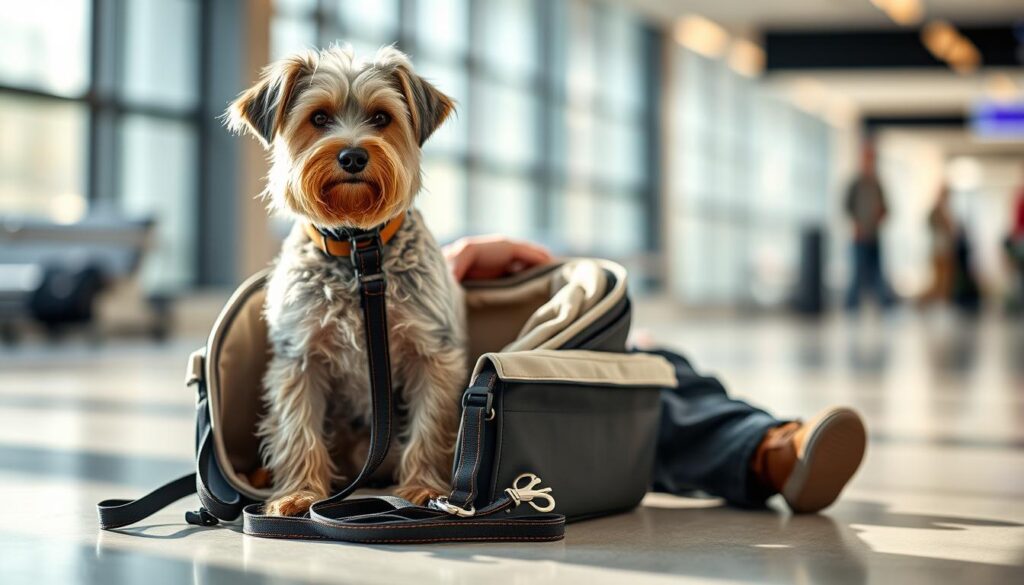
By following these steps and starting early, you can ensure your dog is ready for the flight. This makes the travel experience better for both of you.
Essential Health Requirements for Flying Dogs
Before flying with your dog, it’s important to know the health needs for a safe trip. Air travel can be tough on dogs. Making sure they’re healthy enough is key.
Required Veterinary Check-ups and Timing
A vet visit is a must before flying with your dog. This should happen within 10 days of your flight. The vet will check your dog’s health and give a health certificate.
Vaccination Documentation and Health Certificates
Having up-to-date vaccination records is vital. The vet will check your dog’s shots and give a health certificate. This certificate is usually good for 30 days, depending on where you’re going and the airline’s rules.
Key Documents to Prepare:
- Vaccination records
- Health certificate from a licensed vet
- Any extra health documents needed by the airline or destination
Special Considerations for Senior or Health-Compromised Dogs
Senior dogs or those with health problems need extra care. Talk to your vet about the risks of flying. Some health issues might mean flying is not safe. Your vet can help decide what’s best.

Meeting the health needs for flying is crucial for a safe trip. By following these guidelines, you can keep your dog healthy and happy during the flight.
Navigating Airline Policies and Regulations
Flying with your dog is more than just booking a ticket. You need to know the airline’s pet policies well. This ensures a safe trip for both you and your dog.
Pet Policies Across Major U.S. Airlines
Airlines have different rules for pets. For example, Delta Air Lines lets small dogs in the cabin. United Airlines has special rules for pet carriers. Here’s a look at what major U.S. airlines say about pets:
| Airline | Cabin Pet Policy | Cargo Pet Policy |
|---|---|---|
| Delta Air Lines | Allowed in cabin, max weight 20 lbs | Allowed, with specific crate requirements |
| United Airlines | Allowed in cabin, max dimensions 9x11x17 inches | Allowed, with specific crate requirements |
| American Airlines | Allowed in cabin, max weight 20 lbs | Allowed, with specific crate requirements |
Breed Restrictions and Size Limitations
Some airlines have breed restrictions and size limitations for pets in cargo. For example, snub-nosed breeds like Pugs and Bulldogs might face restrictions. Always check with your airline before booking.
“Understanding the specific requirements and restrictions of your airline is key to a stress-free flight with your pet.” – Pet Travel Expert
Additional Fees and Booking Requirements
Traveling with your dog can cost extra, and prices vary. For instance, pet travel fees on Delta Air Lines range from $95 to $200. You also need to meet certain booking requirements.

Knowing these rules and planning ahead ensures a safe trip for your dog.
Selecting the Perfect Travel Carrier for Your Pup
Finding the right travel carrier for your dog is key to a stress-free flight. The right carrier ensures your dog’s comfort and safety in the air.

Airline-Approved Crate Specifications
Make sure the carrier meets airline-approved crate specifications. This includes material, ventilation, and size. An airline-approved crate keeps your dog safe and comfy during the flight.
- Check the airline’s website for crate size, material, and ventilation requirements.
- The crate should be well-ventilated and big enough for your dog to move around.
Comfort Features to Look For
A good travel carrier also has comfort features to reduce your dog’s stress. Look for:
- Soft bedding or a comfy mat.
- Good ventilation to avoid overheating.
- Easy access for feeding, watering, and comforting your dog.
Proper Sizing and Preparation of the Carrier
Proper sizing is vital for your dog’s comfort. Measure your dog and pick a carrier that’s big enough. Also, preparing the carrier early helps your dog get used to it.
- Start by letting your dog get used to the carrier for short times, then longer.
- Add familiar items like toys or blankets to make it cozy.
Packing Essentials for Your Dog’s Flight
Knowing what to pack is key for a smooth dog flight. You need to think about what will keep your dog comfortable and safe. This means choosing the right items carefully.
Food, Water, and Feeding Supplies
It’s important to bring your dog’s regular food to keep their routine. This helps avoid any upset stomachs from travel. Also, pack a water bottle or collapsible bowl to keep them hydrated. Don’t forget their bowls and a measuring cup for feeding.
Comfort Items and Familiar Toys
Comfort items and toys can really help your dog feel better during the flight. Bring a favorite toy or blanket that smells like home. These items can offer comfort in a new place.
Emergency Supplies and Medications
It’s smart to be ready for anything by packing emergency supplies and medications. This could be a first-aid kit, extra leashes, or any medicines your dog needs. Having these ready can help you handle any unexpected issues.
| Essential Items | Purpose |
|---|---|
| Regular Dog Food | Maintain dietary routine |
| Familiar Toys/Blankets | Reduce stress and provide comfort |
| Emergency Supplies (First-aid kit, extra leashes) | Prepare for unexpected situations |
| Necessary Medications | Ensure health and well-being during travel |
Day-of-Flight Preparation Checklist
To make your journey smooth, a day-of-flight checklist is key. It keeps you organized and focused on what’s important.
Exercise and Bathroom Strategies Before Departure
Before heading to the airport, make sure your dog is tired but happy. A long walk or playtime can help. This way, your dog will be less stressed during the flight.
Feeding Schedule Adjustments
Don’t feed your dog a big meal before flying. A light snack a few hours before is better. Make sure they have water, but check the airline’s rules on it during the flight.
Navigating Security and Boarding with a Dog
Going through security with your dog needs some prep. Have your dog’s leash and harness ready. Be ready to take your dog out of their carrier if security asks. Know the airline’s pet boarding rules for a smooth process.
Managing Your Dog’s Anxiety and Comfort During Air Travel
Air travel can be scary for dogs. It’s key to manage their anxiety. Making sure your dog is comfortable during the flight is important for a stress-free trip for both of you.
Natural Calming Techniques and Products
There are many natural ways to calm your dog’s anxiety. These include:
- Pheromone diffusers that mimic the calming scent mother dogs produce to calm their puppies
- Calming treats containing ingredients like chamomile or melatonin
- Calming wraps or vests that provide gentle pressure
It’s also good to bring your dog’s favorite toys or blankets on the trip. This helps keep them in a familiar environment.
When to Consider Medication Options
At times, natural methods might not be enough. Your vet might suggest medication for your dog’s anxiety. Always talk to a vet before starting any medication. They can check if it’s right for your dog’s health and needs.
Comforting Your Dog Throughout the Journey
Start comforting your dog from the trip prep. Try to keep their routine as normal as you can. This includes regular feeding and exercise times.
During the flight, being with your dog and reassuring them can help a lot. It makes a big difference in their comfort.
| Comfort Measure | Description | Benefit |
|---|---|---|
| Familiar Items | Bringing favorite toys or blankets | Provides a sense of security |
| Calming Aids | Pheromone diffusers, calming treats, wraps | Reduces anxiety |
| Routine Maintenance | Keeping feeding and exercise routines normal | Reduces overall stress |
Conclusion: Ensuring a Smooth Journey for You and Your Furry Friend
Flying with your dog can seem scary, but it doesn’t have to be. With the right steps, it can be a fun trip for both of you. Knowing airline rules, getting your dog ready, and packing the right things can make flying easy.
Getting your dog ready is key. This means crate training, getting them used to airport sounds, and health checks. Also, picking the right carrier and knowing airline pet rules are important for a smooth trip.
By following these tips, you can reduce your dog’s stress and keep them comfortable. With good planning, you and your dog can have a great and worry-free flight.