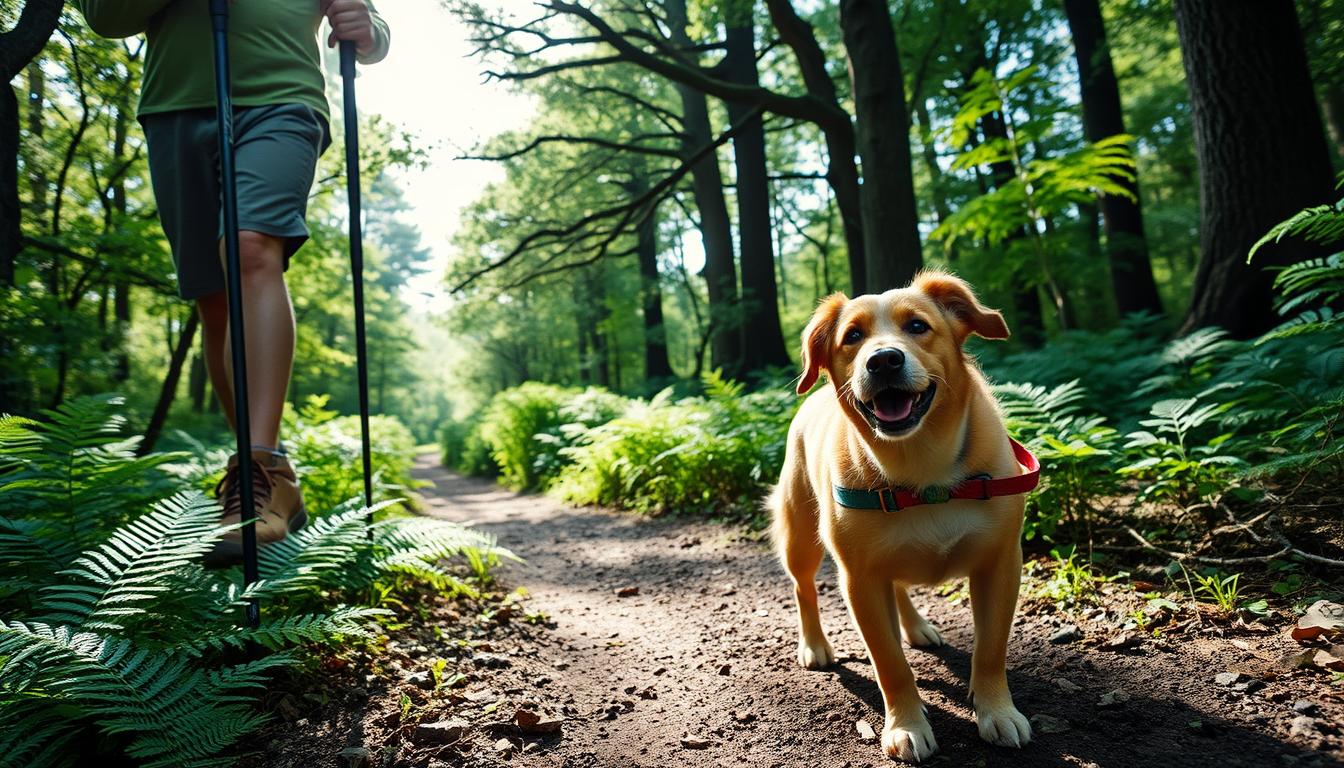
Hiking with your dog is a great way to spend time together. But, it comes with risks. Tick bites can be a big problem, spreading diseases like Lyme disease and Rocky Mountain spotted fever.
On a forest hike, ticks can quickly attach to your dog’s fur. It’s vital to know how to keep them away. This knowledge is key for a safe and fun hike.
Key Takeaways
- Understand the risks associated with tick bites on dogs.
- Learn effective methods for tick prevention during dog hiking.
- Discover how to prepare your dog for safe forest hikes.
- Explore products and techniques for keeping ticks off your dog.
- Find out how to inspect your dog for ticks after a hike.
Why Ticks Are a Serious Threat to Your Hiking Buddy
Hiking with your dog can expose them to ticks. These tiny creatures carry serious diseases. Ticks are not just a nuisance; they can transmit pathogens that cause significant health issues in dogs.
Common Tick-Borne Diseases in Dogs
Dogs can get various diseases from ticks, including Lyme disease, Rocky Mountain spotted fever, and ehrlichiosis. These diseases can cause symptoms like fever, lethargy, and even arthritis and anemia. Lyme disease is known for causing lameness and joint pain in dogs.
| Disease | Symptoms | Prevention |
|---|---|---|
| Lyme Disease | Lameness, Fever, Joint Pain | Tick Preventatives |
| Rocky Mountain Spotted Fever | Fever, Vomiting, Diarrhea | Avoid Tick Areas |
| Ehrlichiosis | Fever, Weight Loss, Bleeding | Regular Tick Checks |
Why Dogs Are Tick Magnets on Trails
Dogs attract ticks because of their body heat, moisture, and vibrations. Trails with dense vegetation and leaf litter are high-risk areas. Keeping your dog on a leash and staying on marked paths can help reduce the risk.
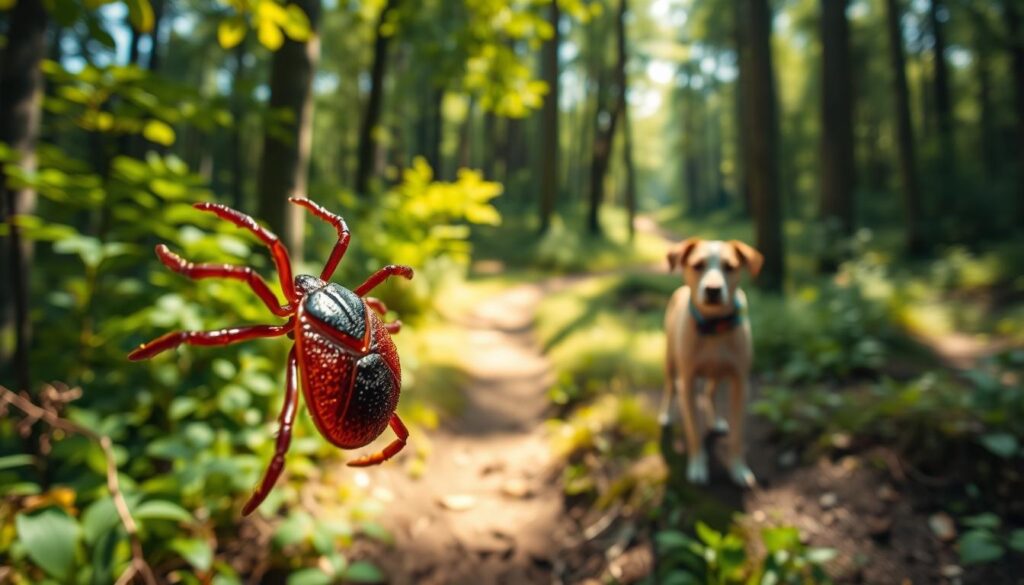
Meet the Culprits: Identifying Common Ticks in U.S. Forests
U.S. forests are home to several tick species that can pose serious health risks to dogs. Understanding these ticks is crucial for dog owners who frequent hiking trails with their pets.
Some of the most common ticks found in U.S. forests include:
- Deer Ticks: Known for transmitting Lyme disease, these ticks are a significant concern.
- American Dog Ticks: These ticks can spread Rocky Mountain spotted fever, a potentially life-threatening disease.
- Lone Star Ticks: Recognizable by the white spot on their backs, they can transmit ehrlichiosis, a disease that affects both dogs and humans.
Deer Ticks and Lyme Disease Risk
Deer ticks, or black-legged ticks, are vectors for Lyme disease, the most common tick-borne illness in the U.S. They are prevalent in the Northeast and Midwest, in wooded, bushy areas.
American Dog Ticks and Rocky Mountain Spotted Fever
American dog ticks are known to transmit Rocky Mountain spotted fever, a serious disease that can be fatal if not treated promptly. These ticks are found throughout the U.S. but are more common in the eastern and central regions.
Lone Star Ticks and Ehrlichiosis
Lone Star ticks are identified by the white spot on their backs. They transmit ehrlichiosis, a disease that can cause a range of symptoms from mild to severe. These ticks are mainly found in the southern and eastern U.S.
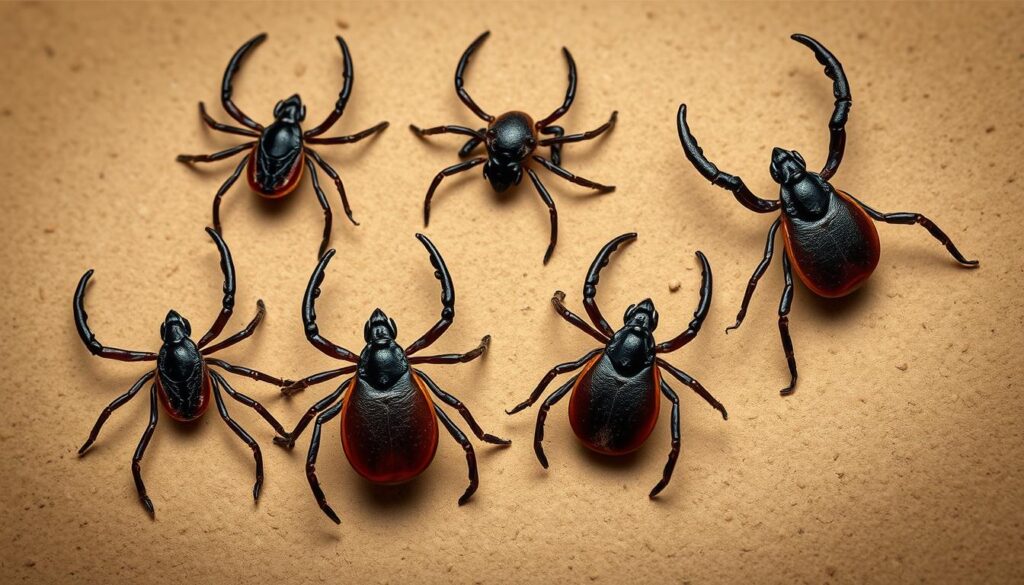
Being aware of these ticks and their habitats can help dog owners take necessary precautions to protect their pets during hikes.
Prep Your Pup: Essential Pre-Hike Prevention
Keeping your dog safe from ticks is key to a fun hike. Before you go, there are steps you can take to lower tick risks.
Choosing the Right Veterinary Tick Preventatives
There are many tick preventatives out there. Veterinary advice is crucial in picking the best one for your dog. This depends on your dog’s age, health, and where you’ll be hiking.
| Preventative Type | Application Method | Duration of Protection |
|---|---|---|
| Topical Treatments | Applied directly to the dog’s skin | Typically lasts several weeks |
| Oral Medications | Given orally, often in the form of a chewable tablet | Can last up to a month or more |
| Tick Collars | Worn around the dog’s neck | Can provide protection for several months |
Timing Your Medication Application for Maximum Protection
The timing of medication application is key. Most tick preventatives need to be applied before you go outside. Always follow the product’s instructions and talk to your vet for advice.

By picking the right tick preventative and applying it right, you can lower tick risks for your dog. This makes hiking safer and more fun for both of you.
Gear Up: Must-Have Tick Protection Equipment
Protecting your dog from ticks on hikes is more than just knowing how. You need the right gear. The right equipment can greatly lower the chance of tick bites when you’re on the trails.
Effective Dog-Friendly Tick Repellent Sprays
Using dog-friendly tick repellent sprays is a top way to keep ticks away. These sprays go on your dog’s coat, creating a barrier. When picking a spray, choose ones with natural ingredients like lemongrass oil or geraniol. Some good brands include:
- Wondercide Tick Repellent
- PetGuard Tick Repellent
- Vet’s Best Tick Repellent
Always check the label and follow the application instructions for the best results.
Protective Clothing and Accessories for Your Four-Legged Hiker
Protective clothing and accessories add extra safety. Dress your dog in a tick-repellent bandana or a tick-proof vest. These are great for dogs in dense areas or places with lots of ticks.

- Tightly woven fabric to prevent ticks from crawling through
- Treatment with tick-repellent materials
- Adjustable fittings to ensure a comfortable, secure fit
Using these gear options together can greatly lower the risk of tick bites on hikes.
How to Prevent Ticks on Dog During Forest Hikes Travel
To have a safe and fun hike with your dog, it’s key to know how to avoid ticks. Ticks can spread diseases, so keeping your dog safe is very important.
Smart Trail Selection to Minimize Tick Exposure
Picking the right trail can lower tick risk. Look for trails that are well-kept and have less vegetation. Wide paths with little brush are best.
Staying on Paths and Avoiding Tick-Infested Areas
It’s important to stick to the path to avoid ticks. Don’t go into thick bushes or tall grass. Keeping your dog on a leash helps too.

Quick Check Routine During Rest Breaks
Checking for ticks during breaks is a smart move. Look closely at your dog’s ears, neck, and paws. Also, check yourself and your gear for ticks.
| Tick Prevention Tips | Benefits |
|---|---|
| Choose well-maintained trails | Reduces tick exposure |
| Stay on designated paths | Minimizes contact with tick habitats |
| Regular tick checks | Early detection and removal of ticks |
The After-Hike Tick Sweep: Don’t Skip This Step
After a hike, it’s key to check your dog for ticks. Ticks can attach quickly, so a post-hike check is essential for your dog’s health.
Complete Step-by-Step Tick Inspection Guide
To check your dog well, you’ll need tweezers, a magnifying glass, and a bright area. Start by feeling your dog’s body for bumps. Look closely at the ears, neck, and paws, where ticks often hide. Use tweezers to gently look at the skin under the fur.
Step-by-Step Inspection:
- Start at the dog’s head and work your way down to the tail.
- Check all folds of skin, specially around the ears and neck.
- Inspect between the toes and under the paws.
- Run your hands over the dog’s back, sides, and belly.
Tick Hiding Spots Most Dog Owners Miss
Many owners check the ears and neck but miss other spots. Look at the armpits, groin area, and around the anus. Ticks can also hide in the eyelids and inside the ear canal. A detailed check is vital.
Knowing these spots and following the guide can lower the risk of tick-borne illnesses in your dog.
Tick Removal101: Safe and Effective Techniques
Removing ticks from dogs is crucial, more so after hiking in areas where ticks are common. Learning the proper techniques can greatly lower the risk of your pet getting sick.
Essential Tick Removal Tools for Your Hiking Kit
Having the right tools for tick removal can make the process easier for both you and your dog. Make sure to include:
- Fine-tipped tweezers: For grasping ticks close to the skin.
- Tick removal tools: Specialized tools designed for tick removal, often with a curved edge to slide under the tick.
- Antiseptic wipes: For cleaning the area after tick removal.
The Right Way to Remove a Tick (And What Not to Do)
Removing a tick correctly is key to prevent disease transmission. Here’s how to do it:
- Grasp the tick with fine-tipped tweezers as close to your dog’s skin as possible.
- Pull upward with steady, even pressure. Do not twist or jerk the tick.
- Continue pulling until the tick is removed completely.
- Clean the area with antiseptic wipes.
Avoid using home remedies like petroleum jelly, nail polish, or heat to remove ticks. These methods can cause more harm.
Natural vs. Chemical Tick Repellents: Finding the Right Balance
Keeping your dog safe from ticks is very important. It’s crucial to know the difference between natural and chemical repellents. As a dog owner, you might be thinking about what’s best for your pet. You might consider how well they work, if they’re safe, and if they’re good for the environment.
Essential Oils and Natural Solutions Worth Trying
Many dog owners are choosing natural tick repellents, like essential oils. These include:
- Lemongrass oil: Known for its tick-repelling properties
- Lavender oil: Can help soothe your dog’s skin while repelling ticks
- Geranium oil: A natural insect repellent that’s also effective against ticks
These natural solutions can work well, but use them right and in small amounts. Always mix essential oils with a carrier oil. Also, talk to your vet before trying any new products on your dog.
When to Rely on Chemical Protection in High-Risk Areas
In places with lots of ticks or during peak season, chemical repellents might be needed. Products with permethrin or fipronil can fight ticks well. But, it’s important to follow the instructions and be careful to avoid exposure.
When choosing between natural and chemical repellents, think about your dog’s needs. Also, consider the tick situation in your area and the risks of each repellent type.
Seasonal Tick Strategies: Adjusting Your Approach Year-Round
Ticks are a big problem in different seasons. Knowing when they are most active helps keep your dog safe. If you love hiking with your dog, learning about tick seasons is important.
Spring and Summer: Maximum Protection During Peak Season
In spring and summer, ticks are everywhere, posing a big risk to dogs. To keep your dog safe, you should:
- Use a mix of tick preventatives, like topical treatments and collars.
- Check your dog for ticks after every hike.
- Stay away from places known to have lots of ticks.
Fall and Winter: Why Vigilance Is Still Important
Even though ticks are less active in fall and winter, they’re not gone. Some ticks stay active, even on warmer days. So, it’s important to stay alert:
“Even in winter, ticks can be active on warmer days, posing a continued risk to dogs.” – Tick Prevention Expert
| Season | Tick Activity Level | Recommended Protection |
|---|---|---|
| Spring | High | Maximum protection: use of preventatives and regular checks |
| Summer | High | Maximum protection: use of preventatives and regular checks |
| Fall | Moderate | Continue preventatives and checks, be cautious of warmer days |
| Winter | Low to Moderate | Maintain vigilance, specially on warmer days |
Changing your tick prevention plan with the seasons can really help keep your dog safe from tick-borne illnesses.
Know Your Territory: Regional Tick Threats Across America
Dog owners who love hiking need to know about tick threats in America. Different places have different ticks. Knowing the ticks in your area or where you hike helps protect your dog.
Northeast and Mid-Atlantic Tick Danger Zones
The Northeast and Mid-Atlantic have a lot of Lyme disease. This is mainly because of the blacklegged tick (Ixodes scapularis). Owners in these areas should check their dogs for ticks after hikes in woods or grass.
Southeast and Gulf Coast Tick Challenges
In the Southeast and Gulf Coast, ticks like the lone star tick (Amblyomma americanum) and the Gulf Coast tick (Amblyomma maculatum) are common. These ticks can spread diseases like ehrlichiosis and STARI.
Midwest and Western Region Tick Species
The Midwest has the American dog tick (Dermacentor variabilis). It can spread Rocky Mountain spotted fever, but it’s rare. In the West, the Rocky Mountain wood tick (Dermacentor andersoni) is a problem too. It can also spread Rocky Mountain spotted fever.
Red Flags: When to Rush to the Vet After a Hike
Don’t wait until it’s too late; know the warning signs of tick-borne illness after hiking with your dog. Even with precautions, a tick bite can happen. It’s key to spot the signs of tick-borne illness to get your dog to the vet fast.
Behavioral Changes That Signal Tick-Borne Illness
Watch for changes in your dog’s behavior. Look for signs like being very tired, not wanting to eat, or acting strangely aggressive. These could mean your dog has a tick-borne illness. If you see these signs, call your vet right away.
Physical Symptoms That Require Immediate Attention
Look for physical signs too. Fever, joint pain, or swelling are big red flags. Some tick-borne illnesses can also cause rashes or lesions. If your dog shows any of these, get veterinary care fast.
Conclusion: Creating Tick-Free Memories on the Trail
Going on hikes with your dog can be a memorable experience. By following the tips in this article, you can lower the risk of tick bites. This way, you can make lasting memories on the trail.
Tick-free hiking is possible with the right prevention and caution. Using the right tick preventatives and checking for ticks regularly are key. These steps help keep your dog safe from ticks.
Dog-friendly hiking means being prepared and aware. Knowing about local tick threats and adjusting your plans for the season is important. This ensures a safe and fun hike for you and your dog.
With these tips, you’re ready to explore trails with confidence. You’ll know you’re protecting your dog’s health. So, put on your hiking boots, grab your dog’s leash, and enjoy your next tick-free adventure.