
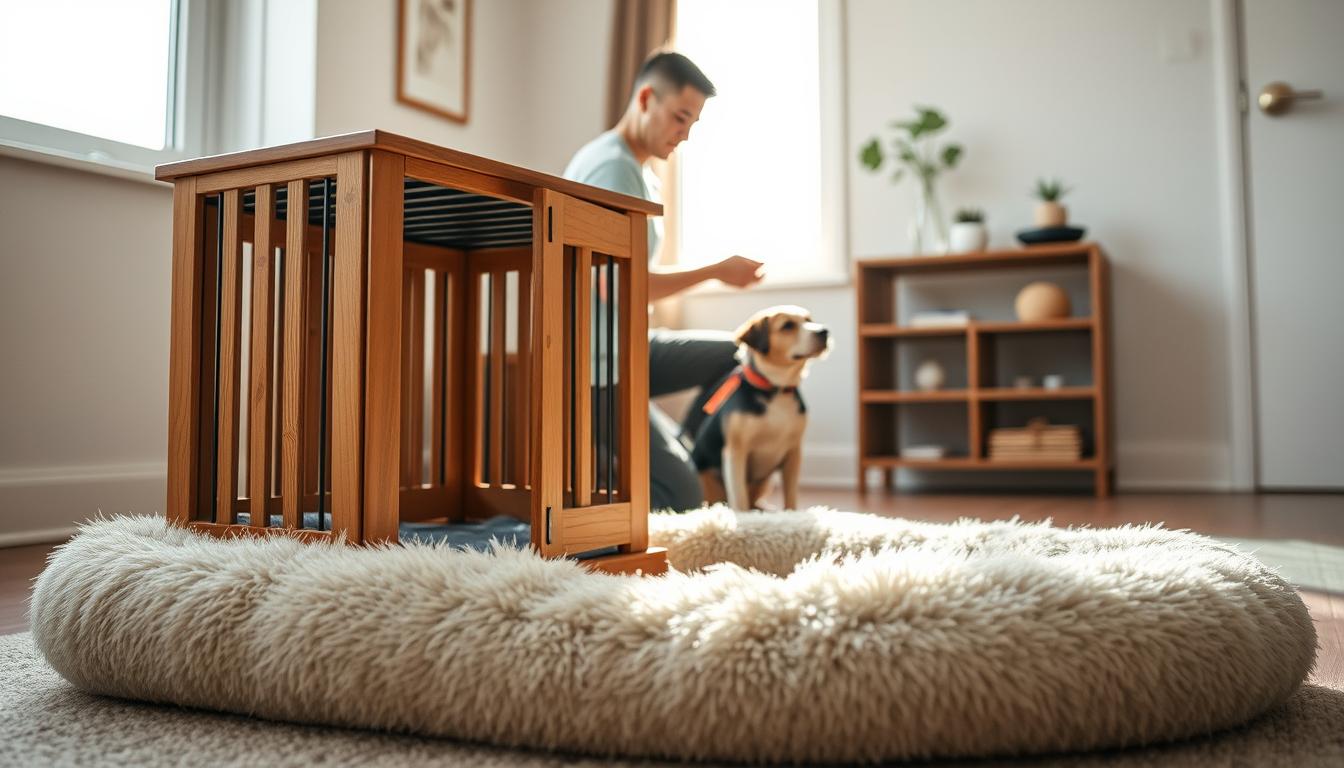
Traveling with your dog can be a daunting task. But with the right preparation, it can be easy. Crate training is key for safe and comfy travel. It helps reduce your dog’s stress and anxiety.
Our 5 easy steps guide will help you crate train your dog. You’ll learn how to make travel safe and comfy for your dog. Follow these simple steps for successful crate training for dogs.
Key Takeaways
- Understand the importance of crate training for safe dog travel
- Learn the 5 easy steps to crate train your dog
- Discover tips for successful travel crate training
- Reduce your dog’s stress and anxiety during travel
- Create a comfortable and safe space for your dog
The Benefits of Crate Training for Travel
Crate training is key for getting your dog ready for travel. It makes them safer and more comfortable. It also lowers the risks of traveling with pets.
Safety Benefits During Travel
A crate keeps your dog safe while traveling. It protects them from dangers like sudden stops. The American Society for the Prevention of Cruelty to Animals (ASPCA)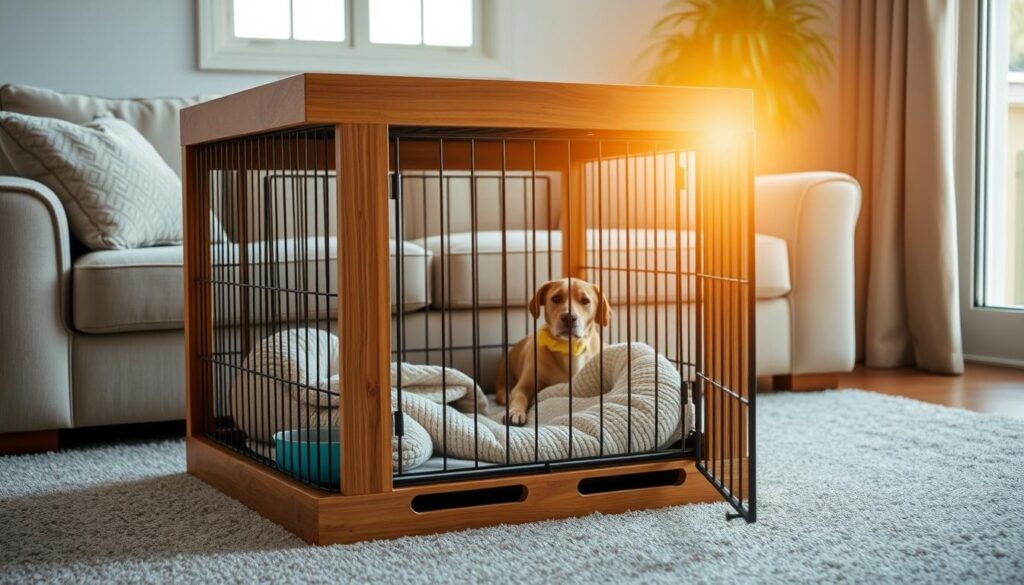
Keeping your dog in a crate stops them from being tossed around or getting in the way. It also keeps them from escaping. Crate-trained dogs stay calm and in their crate during travel.
Reduced Anxiety for Your Dog
Crate training helps your dog feel less anxious during trips. Dogs see their crates as safe places. Trainers say a crate can be like a “den” for your dog.
Dog training expert Karen Pryor notes, “A crate can become a dog’s own personal sanctuary.” Making the crate cozy helps reduce your dog’s travel stress.
Also, crate training makes your dog more used to travel stressors. They get used to being in small spaces. This makes trips less stressful for both you and your dog.
Choosing the Right Travel Crate for Your Dog
Finding the right travel crate is crucial for a smooth trip with your dog. A good crate keeps your dog safe, comfortable, and less stressed during travel.
Size and Material Considerations
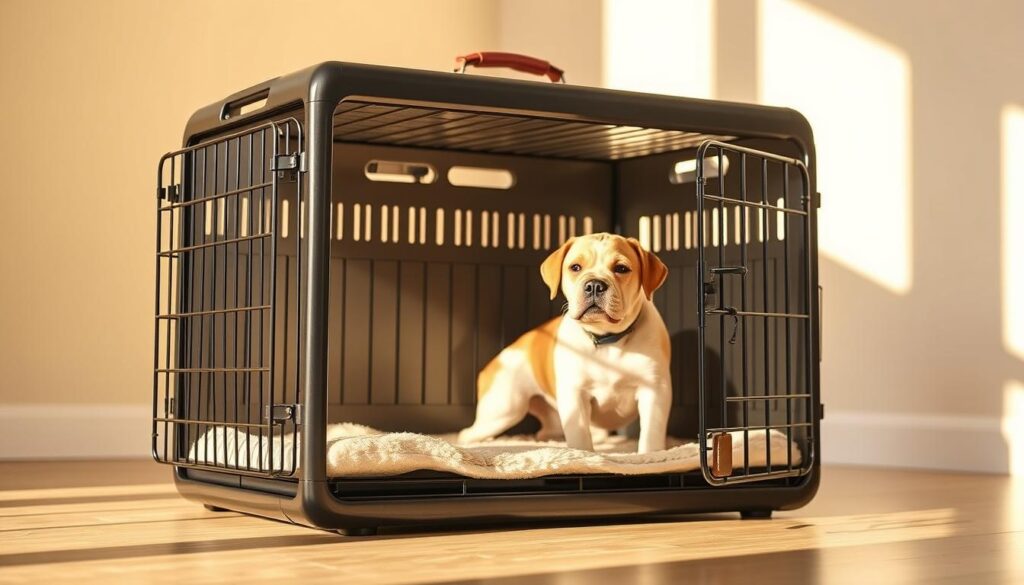
Size matters a lot when picking a travel crate. It should let your dog stand, turn, and lie down easily. Choose durable, well-ventilated crates made from metal or top-notch plastic. Make sure it locks securely to stop your dog from getting out.
Features to Look for in a Quality Travel Crate
A top-notch travel crate needs good ventilation to keep your dog cool and comfy. Look for crates with multiple doors for easy entry. Also, consider ones with built-in water and food bowls. Some even come with cozy bedding or mats.
| Feature | Importance | Benefit |
|---|---|---|
| Ventilation | High | Keeps dog cool and comfortable |
| Multiple Doors | Medium | Ease of access |
| Built-in Bowls | Low | Convenience during travel |
Different Types of Travel Crates
There are many travel crate types, like soft-sided crates, hard-sided crates, and airline-approved crates. Soft-sided crates are easy to carry, while hard-sided ones offer better protection. Airline-approved crates are a must for flying.
Essential Supplies for Successful Crate Training
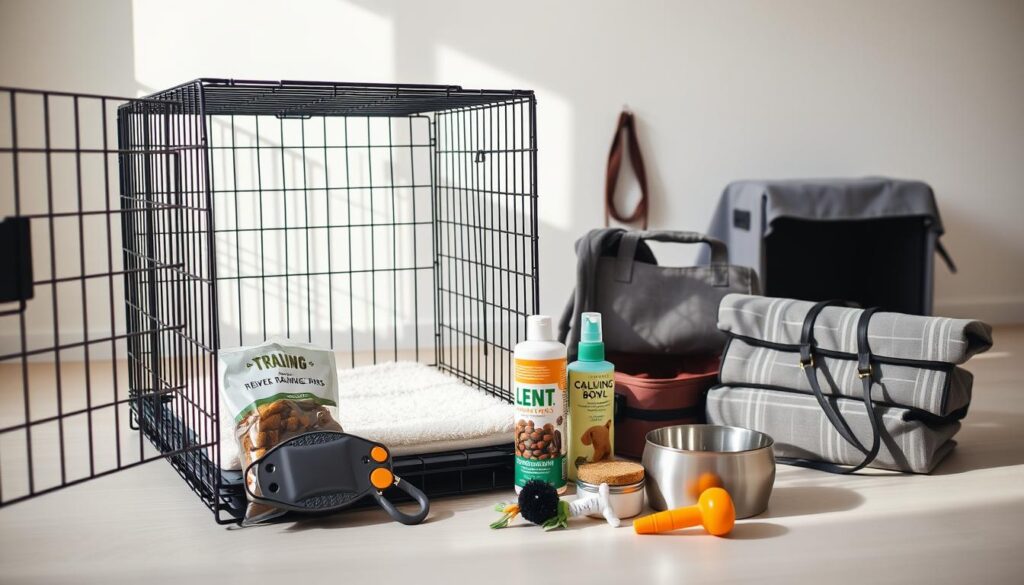
Starting crate training with the right supplies is key. The right gear helps your dog adjust faster and better to the crate.
Comfort Items to Include
It’s important to make the crate a cozy spot for your dog. Comfort items like familiar bedding, favorite toys, and a piece of your clothing can make it feel safe. These items help reduce anxiety and make crate training easier.
- Familiar bedding or blankets
- Favorite toys or chew toys
- A piece of clothing with your scent
Training Treats and Toys
Training treats and toys are crucial for good behavior and crate training. Treats should be small, tasty, and easy to eat. Toys should be tough and safe. Using them right helps your dog like the crate more.
- Choose small, tasty treats
- Select durable, safe toys
- Use treats and toys to reward calm behavior
Adding these key supplies to your crate training plan makes it better and more positive for your dog.
Preparing Your Dog Mentally for Crate Training
Before starting crate training, it’s key to get your dog mentally ready. This means knowing what your dog needs and adjusting your training to fit those needs.
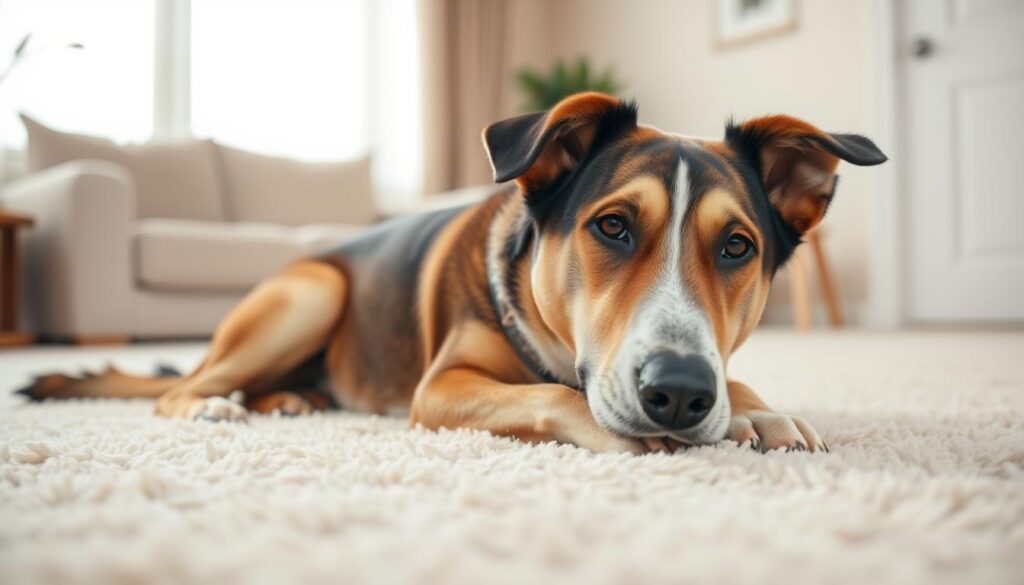
Understanding Your Dog’s Temperament
Every dog is different, and this affects how they do with crate training. Some dogs get anxious or don’t like change, while others adjust easily. Knowing your dog’s temperament helps you train them better. For example, if your dog gets anxious, start with the crate in a calm place.
Setting Realistic Expectations
Crate training takes time and patience. It’s important to remember it’s not done quickly. Setting goals you can reach and celebrating small wins keeps you and your dog excited about training.
By understanding your dog’s personality and setting the right goals, you can make a crate training plan that works well for your dog.
Step 1: Introducing Your Dog to the Crate
Starting crate training means making your dog feel at ease with the crate. This needs patience and positive feedback. It’s key to make your dog feel safe and welcome in the crate.
Creating Positive First Impressions
Begin by placing the crate in a spot your dog likes to hang out. Open the crate door so your dog can check it out on their own. You can make it more inviting by putting treats or toys inside. This helps your dog see the crate in a good light.
Making the Crate Inviting
- Place a comfy bed or blanket inside the crate.
- Add your dog’s favorite toys to make the crate a welcoming space.
- Position the crate in a way that it becomes a part of your dog’s daily environment.
Using Treats and Praise Effectively
Treats and praise are great for introducing your dog to the crate. Give treats and affection when your dog goes into the crate on their own. This makes them think the crate is a good thing.
Tips for Effective Rewarding
| Reward Type | When to Use | Benefits |
|---|---|---|
| Treats | When your dog first enters the crate | Creates a positive association |
| Praise | Immediately after your dog enters the crate | Reinforces good behavior |
| Toys | After your dog is comfortable entering the crate | Keeps your dog occupied and happy |
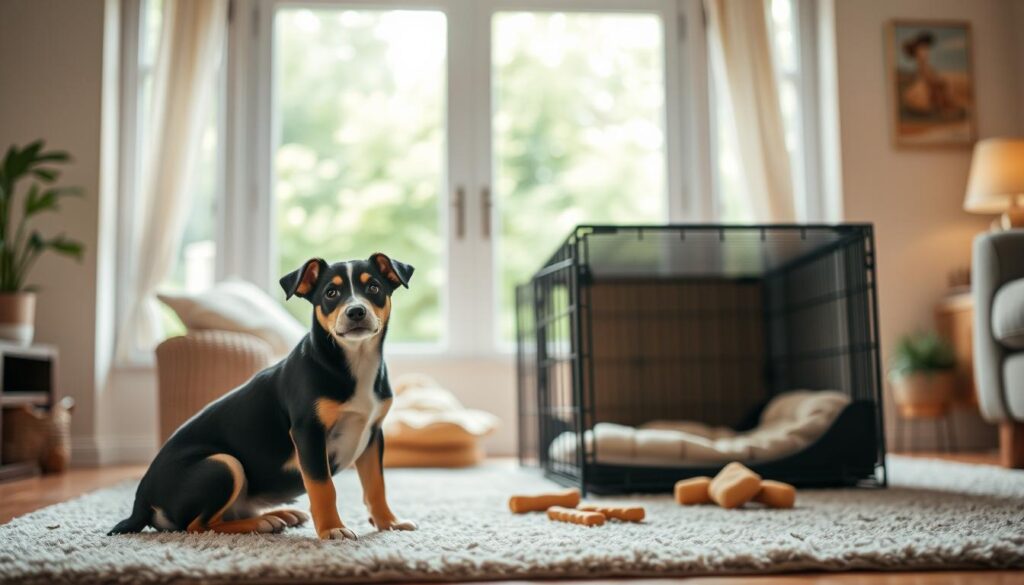
Step 2: Encouraging Your Dog to Enter the Crate Voluntarily
Now that your dog knows the crate, it’s time to get them to go in on their own. This step is key to making the crate a cozy spot for your dog.
The Treat Trail Technique
The treat trail technique is a great way to get your dog to go into the crate. You place treats along the way into the crate, making a path for your dog to follow. “The key is to make the experience positive and rewarding,” says dog training expert, Karen Pryor.
Begin by putting treats just inside the crate. Then, move them a bit further in, encouraging your dog to go in for them. This method not only makes the crate a good place but also boosts your dog’s confidence.
As your dog gets more comfortable, you can stop using treats all the time. Use them only sometimes to remind your dog of what to do.
Using Command Words Consistently
It’s important to use the same command words when training your dog. Pick a command like “crate” or “kennel” and use it every time. This helps your dog know what to do, making training easier.
Consistency is key when using command words. Make sure everyone in the family uses the same command. This way, your dog will learn to go into the crate when they hear the command.
Step 3: Extending Time in the Crate Gradually
As you move forward with crate training, it’s key to slowly increase the time your dog spends inside. This step is vital for making your dog comfortable with the crate for longer periods. It also makes travel less stressful for them.
Incremental Duration Increases
Start by adding a few minutes to your dog’s crate time in small steps. For instance, if they’re okay with 5 minutes, try 7-10 minutes next. Watch your dog’s comfort and adjust as needed. If they seem stressed, slow down the increase.
It’s wise to add a few minutes every few days. This lets your dog get used to the new time without feeling anxious. It makes the training easier and less stressful for them.
Keeping Your Dog Occupied While Crated
It’s important to keep your dog busy while they’re in the crate. This prevents boredom and stress. A great way to do this is with puzzle toys filled with treats. These toys keep your dog engaged for a long time. You can also give them a long-lasting chew or a treat-filled Kong toy.
Here are some more tips to keep your dog entertained:
- Change toys often to keep things interesting
- Use different textures and smells to excite your dog
- Leave a TV or radio on for background noise
By slowly increasing crate time and keeping your dog busy, you can make crate training more effective. It will also be less stressful for your dog.
| Duration | Activity | Tips |
|---|---|---|
| 5-10 minutes | Initial crate exposure | Start with short sessions |
| 10-30 minutes | Gradual increase | Monitor dog’s comfort level |
| 30+ minutes | Extended stay | Use puzzle toys and treats |
Step 4: Closing the Door for Short Periods
Closing the crate door is a key part of crate training. It needs patience and careful handling. Your dog should feel okay going into the crate on their own. Now, it’s time to start closing the door while they’re inside, starting with short times.
Start by closing the door for a few seconds when you’re close by. If your dog stays calm, give them treats and praise. This makes them think the closed door is a good thing.
Managing Anxiety When Closing the Door
It’s important to manage your dog’s anxiety when closing the crate door. If they seem upset, like whining or pawing, stay calm. Don’t let them out right away. Wait for them to calm down before opening the door.
Experts say, “Patience and consistency are key in crate training. It’s not just about keeping your dog in; it’s about giving them a safe space.”
“Crate training, when done right, is a great tool for dog owners. It gives pets a safe place and helps with separation anxiety.”
Building Up to Longer Door-Closed Sessions
Slowly make the door closed for longer, watching your dog’s behavior. If they’re calm, you can keep increasing the time. It’s good to keep them busy with treats or toys.
| Duration | Action |
|---|---|
| 0-5 seconds | Initial door closure |
| 10-30 seconds | Reward calm behavior |
| 1-2 minutes | Gradually increase duration |
Step 5: Simulating Travel Conditions
Preparing your dog for travel is key. You need to get them used to what they’ll face on the road. This makes them more comfortable and calm.
Think about short car rides, air travel, and long trips. Each part helps your dog get used to the crate in different ways.
Short Car Rides with the Crate
Begin with short car rides and the crate. It helps them get used to the car’s motion and the crate. Start with short trips and then make them longer.
Preparing for Air Travel Requirements
For air travel, your dog needs to get used to the crate being closed. They also need to meet the airline’s size and ventilation rules.
Practicing for Longer Journeys
For long trips, practice keeping your dog in the crate for a while. You can do this by simulating long car rides or staying in a hotel room. Remember to give them breaks for exercise and relief.
| Travel Simulation | Description | Benefits |
|---|---|---|
| Short Car Rides | Take your dog on short drives with the crate | Gets your dog accustomed to the crate in motion |
| Air Travel Prep | Prepare your dog for air travel requirements | Ensures compliance with airline regulations |
| Longer Journeys | Practice extended crate stays | Prepares your dog for longer travel durations |
How to Train Dog to Use Travel Crate: Troubleshooting Common Issues
Training your dog to use a travel crate can be tough. It needs patience, consistency, and understanding of your dog’s behavior. Even with effort, problems can still happen. Knowing how to fix them is key.
Dealing with Whining and Barking
Whining and barking are common when dogs start crate training. Make sure the crate is comfy and welcoming. Add comfortable bedding and a few favorite toys. Also, gradually increase the time spent in the crate to help your dog adjust.
- Start with short periods and gradually increase the duration.
- Ignore the whining or barking unless you suspect your dog needs attention for a legitimate reason.
- Reward calm behavior with treats and praise.
Addressing Fear or Resistance
Some dogs may fear or resist the crate. To help, create positive associations with it. Place treats and toys inside to encourage your dog to go in. Patience is key; don’t force your dog into the crate.
- Begin by leaving the crate door open.
- Encourage your dog to enter with treats.
- Gradually increase the time your dog spends in the crate.
Age and Breed-Specific Challenges
Different ages and breeds face unique challenges. Puppies need more breaks and training. Some breeds might be more anxious or have special needs. Knowing these differences is important for crate training.
When to Consult a Professional Trainer
If you’re stuck or feel overwhelmed, consider a professional dog trainer. They can offer tailored advice and help with your dog’s specific needs.
Conclusion
By following the 5 easy steps in this article, you can make your dog comfortable and confident in their travel crate. This ensures a safe and stress-free journey.
A well-planned crate training summary is key for successful travel preparation. Start by introducing your dog to the crate. Encourage them to enter voluntarily. Then, gradually increase the time they spend inside.
With patience and consistency, your dog will learn to see the crate as a positive place. This makes travel preparation easy. By spending time on crate training, you can lower your dog’s anxiety and stress during travel. This makes the journey more enjoyable for both you and your pet.
Effective crate training is a smart investment in your dog’s comfort and safety during travel. By understanding its importance and following the steps in this article, you can ensure a smooth and enjoyable journey for your dog.


