For many pet owners, young dogs are more than just pets; they’re family members.
Figuring out if your puppy is ready for travel takes some thought. You need to look at their age, health, and how they act.
As a caring pet owner, it’s key to check if your puppy is ready for travel. This ensures a safe and fun trip for both you and your pet.
Key Takeaways
- Check your puppy’s health before planning travel.
- Think about your puppy’s age and how they act.
- Look into places you can go and how to get there.
- Get all the documents and things you need.
- Plan for your puppy’s comfort and safety.
When Is a Puppy Ready for Travel?
Traveling with your puppy is a big decision. Before you hit the road, make sure your puppy is ready. This means checking their age, health, and if they’re used to new places.
Age Considerations
Your puppy’s age is key to knowing if they’re ready for travel. Puppies grow at different speeds. Their age affects their body and mind readiness for trips.
Developmental Milestones
More than just age, your puppy’s growth stages matter. They need to be social and handle stress well for travel.
Vaccination Requirements
Getting your puppy vaccinated is crucial before travel. This keeps them safe from diseases and meets travel rules.
Timing Between Shots and Travel
Wait until your puppy has all their shots before traveling. This ensures they’re protected and ready for new places.
| Vaccination Type | Typical Schedule | Importance for Travel |
|---|---|---|
| Core Vaccinations | 6-8 weeks, followed by boosters | High |
| Rabies Vaccination | 12-16 weeks | High |
Think about these points to see if your puppy is ready for travel. This way, you both can enjoy the trip.
Understanding Your Puppy’s Travel Readiness
Checking if your puppy is ready for travel is key for a fun trip for both of you. You need to look at a few important things. These will tell you if your puppy can handle the travel challenges.
Behavioral Indicators
Your puppy’s behavior shows if they’re ready for travel. You should think about their comfort in new places and how they handle being confined.
Comfort in New Environments
A puppy that’s okay with new places will likely do well on trips. Introducing them to new places slowly helps them feel more confident and calm.
Response to Confinement
Travel means your puppy will have to stay in a carrier or crate. If they’re used to being in a crate and don’t mind it, they’re more travel-ready.

Health Assessments
Checking your puppy’s health is also important for travel. This includes a vet visit before you go and getting health certificates.
Pre-Travel Veterinary Check-ups
A vet visit before you travel can spot health problems that might affect your puppy’s safety. Vaccinations and health checks are key parts of this.
Health Certificates
Many places need a health certificate for puppies traveling. Making sure your puppy is up to date on shots and has the right health clearances is important for safe travel.
Temperament Evaluation
Understanding your puppy’s temperament is also crucial. This means looking at their anxiety levels and how well they adapt.
Anxiety Levels
Puppies with high anxiety might find travel hard. Spotting signs of anxiety and finding ways to lower stress can help get your puppy ready for travel.
Adaptability Tests
Testing how adaptable your puppy is can show how they’ll do in travel situations. This means exposing them to different things and seeing how they react.
Traveling with Puppies—Is It Too Early? Veterinarian Perspectives
Thinking about traveling with a new puppy? It’s key to get veterinarian advice to keep your puppy safe and healthy. Traveling with puppies can be tough, and vets have great tips for young dogs.

Medical Considerations
Traveling puppies face health risks like immune system development and stress effects on young dogs. Their immune systems are still growing, making them more likely to get sick in new places.
Immune System Development
A puppy’s immune system grows until they are about 16 weeks old. Traveling too early can put them at risk for health problems. Always check with a vet to find the best travel time for your puppy.
Stress Effects on Young Dogs
Travel can stress puppies, causing anxiety and health problems. It’s important to plan carefully to make travel safe and healthy for them.
Expert Recommendations
Vets give expert recommendations on traveling with puppies. They offer age-based travel guidelines and breed-specific considerations. These tips help owners make smart choices.
Age-Based Travel Guidelines
The right age for puppy travel varies. Vets often say wait until they are at least 8 weeks old. For older puppies, the decision depends on their health, shots, and breed.
Breed-Specific Considerations
Each breed has its own needs and health issues. For example, short-nosed breeds might face extra risks in the air. Knowing these breed-specific factors is key for a safe trip.
Essential Pre-Travel Preparations
Traveling with a puppy needs careful planning. This ensures a safe and fun trip for both you and your pet. A well-prepared journey reduces stress and keeps your puppy comfortable.
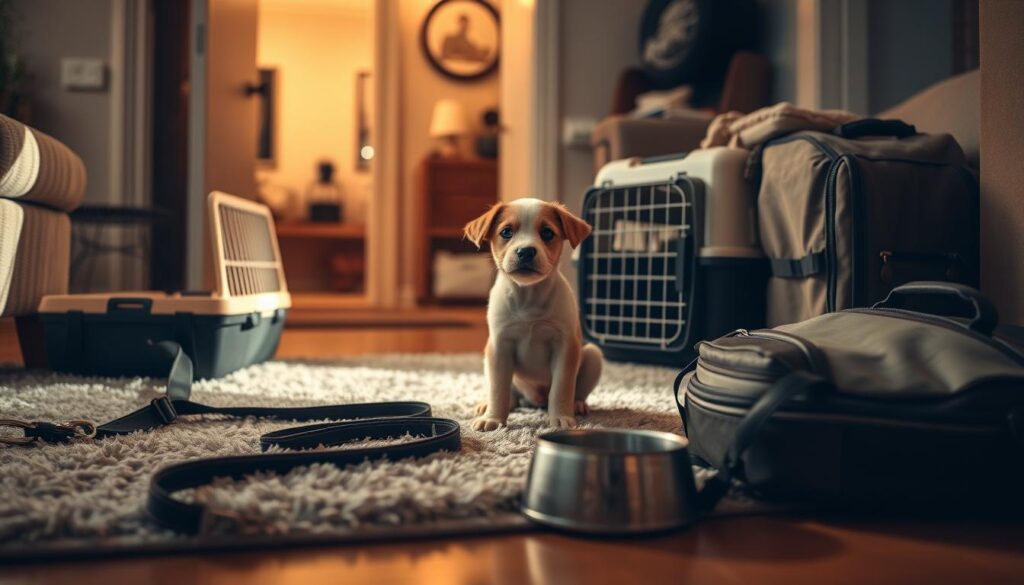
Packing Checklist for Puppy Travel
Creating a detailed packing list is key for puppy travel. Include these essential items:
Food and Water Supplies
Bring enough of your puppy’s food and water for the trip. Add extra for any delays. Remember bowls and a water bottle or container.
Comfort Items and Toys
Bring your puppy’s favorite comfort items and toys. This helps reduce their travel stress.
Acclimation Training
Acclimation training is crucial. It helps your puppy get used to their carrier and travel.
Carrier Familiarization
Start by letting your puppy get used to their carrier. Make it cozy with familiar bedding.
Short Practice Trips
Take short trips to get your puppy used to the car and carrier. Reward them for staying calm.
Documentation and Identification
Having the right documents and ID is key for a smooth trip.
Microchipping
Consider microchipping your puppy before you go. It helps ensure you’re reunited if they get lost.
Emergency Contact Information
Ensure your puppy’s tags and travel documents have current emergency contact info.
Car Travel with Your Puppy
Traveling by car with your puppy can be fun with the right steps. Think about your puppy’s safety, comfort, and health. This will make your trip enjoyable for both you and your pet.
Safety Equipment and Restraints
Keeping your puppy safe in the car is very important. The right safety gear can help prevent injuries during sudden stops or accidents.
Crash-Tested Carriers
Crash-tested carriers are a safe choice for your puppy. They are made to protect your puppy in a crash.
Harness and Seat Belt Options
Another good option is a puppy harness and seat belt. It lets your puppy move a bit but keeps them safe.

Managing Motion Sickness
Motion sickness is common in puppies on car trips. Knowing how to handle it can make the trip better for your pet.
Prevention Strategies
Start by getting your puppy used to car rides slowly. Make sure they face the front to help prevent motion sickness.
Medication Options
If your puppy gets really sick, talk to your vet about medicine. They can help make your puppy feel better.
Planning Rest Stops
Stopping often is key for your puppy’s comfort and health on long trips.
Frequency Guidelines
Stop every few hours to let your puppy stretch, play, and go to the bathroom.
Finding Safe Potty Areas
When you stop, pick clean and safe spots for your puppy to go. Always keep them on a leash and watch out for dangers.
By focusing on safety, motion sickness, and regular breaks, you can make car trips fun and stress-free for your puppy.
Air Travel Considerations for Young Dogs
Traveling by air with young dogs needs careful planning. Knowing airline rules is key for a smooth trip.
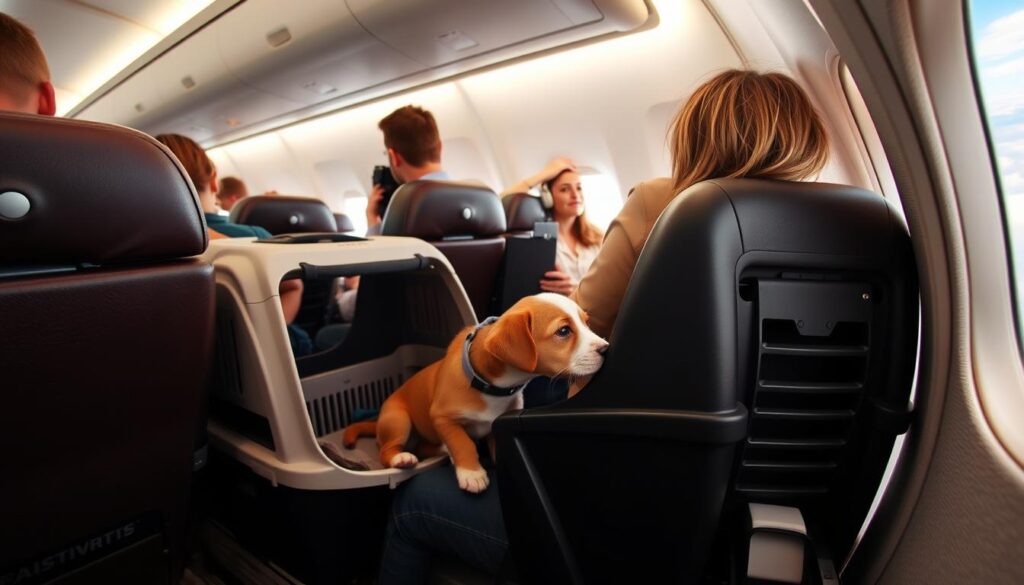
Airline Policies for Puppies
Every airline has its own rules for puppy travel. It’s important to know these to avoid any issues.
Age Restrictions
Most airlines won’t let puppies fly until they’re at least 8 weeks old. But, this can change.
Breed Limitations
Some airlines won’t fly certain breeds due to health reasons. Always check with your airline first.
Cabin vs. Cargo Options
You can choose between cabin or cargo when flying with your puppy. Each has its own benefits and drawbacks.
Safety Comparisons
The cabin is safer for puppies because you can watch them closely. But, cargo might be better for bigger dogs.
Size Requirements
Size matters when deciding between cabin and cargo. Check your airline’s size limits.
Preparing Your Puppy for Flight
Getting your puppy ready for flight is crucial for a stress-free trip.
Crate Training
Crate training helps your puppy feel safe and secure during the flight.
Day-of-Travel Tips
On the day of travel, make sure your puppy is well-rested and hydrated. Arriving early at the airport can also help reduce stress.
Accommodations: Finding Pet-Friendly Lodging
Traveling with your puppy needs careful planning, mainly for where you’ll stay. A pet-friendly place is key to a good trip.
Researching Pet Policies
Always check a hotel or rental’s pet policy before booking. It’s important to know about hidden fees and restrictions.
Hidden Fees and Restrictions
Some hotels might charge extra for pets. Others might have rules about size or breed. Always ask about these when you book.
Amenities for Puppies
Look for places that have puppy-friendly amenities. This could be dog beds, treats, or even puppy-sitting services.
Puppy-Proofing Your Temporary Space
After arriving, make sure your new space is safe for your puppy. This means looking for hazards and setting up safe areas.
Hazard Assessment
Quickly check the room or rental for dangers. Look out for things like toxic substances or electrical cords.
Creating Safe Zones
Make sure your puppy has places to relax and play safely. This could be a quiet corner or a special puppy area.
Maintaining Routines Away from Home
Keeping your puppy’s routine can help them feel less stressed and anxious. Stick to feeding schedules and make sure they get exercise and potty breaks regularly.
Feeding Schedules
Feed your puppy at the same times as you would at home. This helps keep their digestive routine steady.
Exercise and Potty Breaks
Regular exercise and potty breaks are crucial. They help prevent accidents and keep your puppy happy and healthy.
Managing Your Puppy’s Stress During Travel
It’s important to manage your puppy’s stress when traveling. Travel can be tough for puppies, with new sights, sounds, and being in a small space. These can make them anxious.
Recognizing Signs of Anxiety
Knowing the signs of anxiety in your puppy is key. Anxiety can show in different ways.
Physical Symptoms
Your puppy might pant, tremble, or drool a lot if they’re stressed. These signs mean they’re feeling uneasy.
Behavioral Changes
Look out for changes like whining, pacing, or trying to hide. Spotting these signs early helps you act fast.
Calming Techniques and Products
There are many ways to calm your puppy during travel.
Natural Methods
Try gentle petting, soothing music, and pheromone diffusers. These can make your puppy feel more relaxed.
Therapeutic Aids
Items like calming treats and collars can also help. Talk to your vet to find the best one for your puppy.
When to Postpone Your Trip
If your puppy’s anxiety is really bad, it might be best to delay your trip.
Red Flags
Watch out for severe distress, like constant vomiting or diarrhea. If you see this, it’s time to think about delaying your trip.
Alternative Arrangements
Think about pet-sitting or boarding if traveling is too much for your puppy.
| Signs of Anxiety | Calming Techniques | When to Postpone |
|---|---|---|
| Panting, trembling | Gentle petting, soothing music | Severe distress |
| Whining, pacing | Pheromone diffusers, calming treats | Alternative care options |
Special Considerations for Different Travel Destinations
Going to the beach, exploring cities, or traveling abroad all have special needs for puppy owners. Knowing these can make your trip safe and fun for both you and your puppy.
Beach and Outdoor Adventures
Beach trips and outdoor fun need extra care. Puppies must be shielded from the sun, heat, and dangers like sharp things or harmful substances.
Weather Precautions
Always look at the weather forecast before going out. Make sure your puppy has shade and water to avoid getting too hot.
Environmental Hazards
Watch out for dangers like toxic plants, sharp rocks, or hot sand. Always keep a close eye on your puppy to avoid accidents.
Urban Exploration
City trips come with their own challenges, like busy streets and loud noises. Getting your puppy ready for these places can help them feel less stressed.
Navigating Crowds
Begin by slowly introducing your puppy to crowded places. This helps them get used to the noise and chaos.
Finding Pet-Friendly Attractions
Look for pet-friendly spots and parks in your destination. This way, you and your puppy can enjoy the trip together.
International Travel Requirements
Traveling internationally with puppies has many rules and needs. Knowing these can prevent last-minute problems.
Quarantine Regulations
Check the quarantine rules of your destination country. This ensures you follow the rules and avoid issues when you arrive.
Country-Specific Documentation
Get the right papers, like health certificates and export permits, early. This helps avoid any trip delays.
Conclusion
Traveling with puppies needs careful planning to keep everyone safe and happy. We’ve talked about how age, growth stages, shots, and behavior are key. These things help figure out if a puppy is ready for travel.
To make travel good for your puppy, know what they need. Get them ready for the trip, pick the right safety gear, and manage their stress. It’s important to find pet-friendly places to stay and make stops for breaks.
By using the tips and care advice from this article, you can make your trip smooth and fun. With the right planning and care for your puppy, you’ll make memories that last a lifetime.