Traveling with your furry friend can be tough, even more so when flying. Many dogs get anxious during flights. This can upset both the dog and the owner.
It’s important to know how to calm your dog on a plane. With the right steps and advice, you can make the trip easier for your pet.
Key Takeaways
- Understand the causes of dog anxiety during air travel
- Learn pre-flight preparation techniques to calm your dog
- Discover in-flight care strategies to soothe your pet
- Explore expert tips for flying with anxious dogs
- Implement effective calming methods for a stress-free journey
Understanding Canine Flight Anxiety
Air travel can be scary for dogs, causing a lot of stress. The new surroundings, loud noises, and tight spaces make dogs anxious. Knowing why dogs get anxious is important to help them feel better.
Why Dogs Experience Stress During Air Travel
Dogs get stressed for many reasons when flying. The loud sounds, air pressure changes, and small spaces all add to their anxiety. Experts say the main reason is the unfamiliar and unpredictable flight experience. Knowing this helps dog owners take steps to lessen their pet’s stress.
Common Signs of Anxiety in Flying Dogs
It’s important to know the signs of anxiety in dogs. They might pant, pace, whine, or seem restless. In some cases, dogs may even try to escape or show aggression. Spotting these signs early helps owners comfort their pets.
The Impact of Untreated Travel Anxiety
If not treated, travel anxiety can harm a dog’s health and behavior. Chronic stress can lead to behavioral problems and health issues.
“Untreated anxiety can lead to a negative association with travel, making future flights even more challenging for both the dog and the owner.”
It’s crucial to tackle anxiety early to make flying better for dogs.
Pre-Flight Preparation: Weeks Before Travel
Weeks before your dog’s flight, start a detailed pre-flight plan. This plan is key to lowering your dog’s stress and making travel easier.
Crating is a big part of getting ready. A crate-trained dog feels safer and calmer on the flight.
Crate Training Strategies
Start crate training by making the crate inviting. Put treats and toys inside. Gradual exposure helps your dog get used to it.
- Let your dog explore the crate at their own pace.
- Use treats to encourage them to go inside.
- Start closing the door for short times.
Desensitization to Travel Sounds and Experiences
Getting your dog used to travel sounds and sights lowers their stress. Play recordings of airport noises and mimic busy areas. This helps them get used to these new things.
| Desensitization Techniques | Description | Benefits |
|---|---|---|
| Sound Recordings | Play airport noise recordings | Reduces startle response to loud noises |
| Crowd Simulation | Simulate crowded areas | Helps dog become comfortable in busy environments |
Practice Trips to the Airport
Practice trips to the airport are very helpful. They make your dog familiar with the airport, reducing travel day anxiety.
On these trips, expose your dog to various airport sights and sounds. Like security checks and busy travelers. Reward calm behavior to make it a positive experience.
Veterinary Considerations for Air Travel
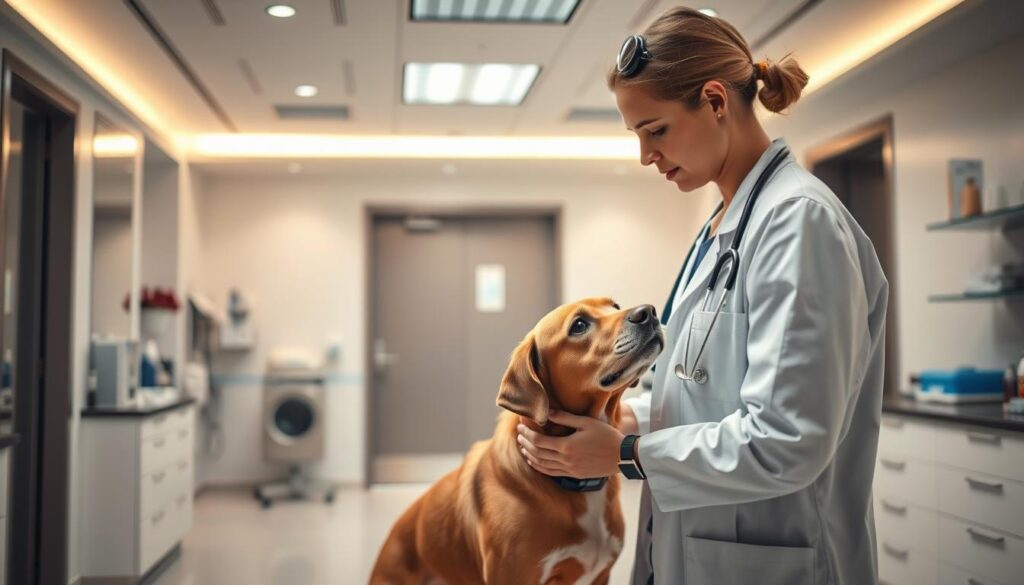
Before flying with your dog, a vet visit is key. It helps check if your dog is ready for air travel and finds ways to ease anxiety. Your vet’s advice is crucial for your dog’s health and safety in the air.
Pre-Travel Health Check Requirements
A health check before travel is vital. It spots health problems that flying might make worse. Your vet will look at your dog’s health and talk about their travel history.
This is a chance to learn how to reduce travel stress for your dog.
Discussing Medication Options with Your Vet
If your dog gets anxious in the air, meds might help. Talk to your vet about this. They can suggest the right medicine or supplements for your dog.
It’s crucial to follow veterinary advice to keep your dog safe and comfortable.
Natural Supplements vs. Prescription Solutions
There are many ways to help your dog feel better during flights. You can try natural supplements or prescription meds. Natural ones might be kinder, but meds could work better for serious anxiety.
Your vet can help you decide. They’ll think about your dog’s health, how anxious they are, and any past reactions.
- Consult with your veterinarian to determine the best approach for your dog.
- Consider the potential benefits and risks of natural supplements versus prescription medications.
- Follow veterinary guidance to ensure your dog’s safety and comfort during air travel.
Best Calming Tips for Dogs During Flights
Air travel can be stressful for dogs. But, there are many ways to calm them down. Preparing your dog, using the right products, and understanding their behavior are key.
Proven Relaxation Techniques and Therapies
Techniques like gentle massage, calming music, and exercise before flying can help. Massage therapy relaxes muscles and calms the mind. Calming music for dogs also creates a soothing atmosphere.
Effective Calming Products and Tools
Many calming products can soothe your dog during flights. ThunderShirts provide gentle pressure. Calming treats and supplements work too, but always check with a vet first.
Anxiety-Reducing Scents and Pheromones
Certain scents and pheromones calm dogs. Lavender is calming and can be used in a diffuser or on bedding. Adaptil mimics a mother dog’s calming scent for puppies.
Behavioral Training Approaches
Behavioral training helps reduce flight anxiety. Counterconditioning and desensitization make flying positive. Gradual exposure to anxiety triggers helps your dog become more resilient.
Using these calming tips and techniques can greatly reduce your dog’s flight stress. This makes travel more enjoyable for both you and your pet.
Creating a Comfort Zone: Carrier Preparation
To help your dog feel less anxious on a flight, make their carrier a cozy and familiar spot. A well-prepared carrier can greatly lower your dog’s stress during air travel.
Selecting the Right Travel Carrier for Your Dog
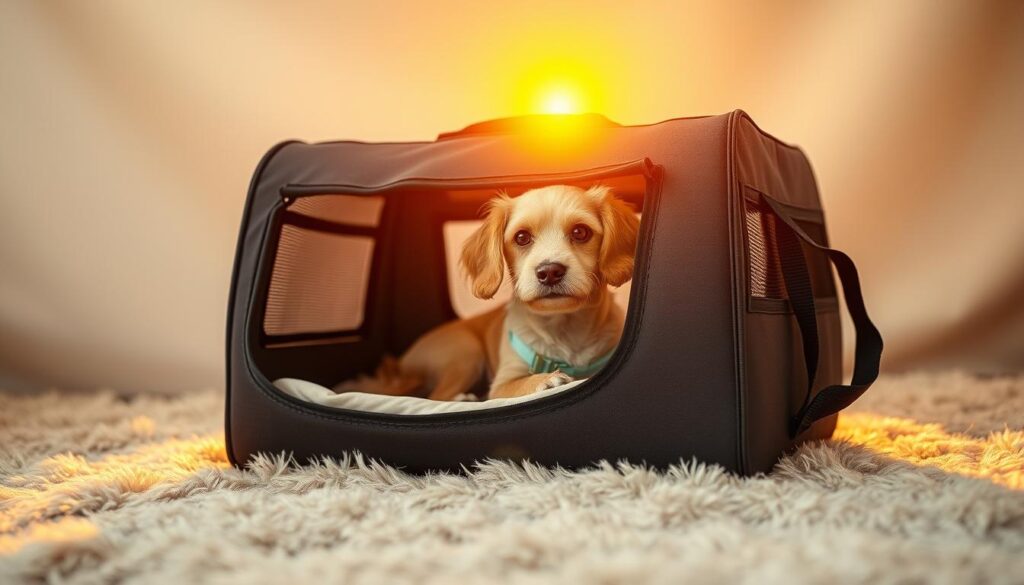
Finding the perfect travel carrier is key. It should be well-ventilated, sturdy, and follow airline rules. Pick a carrier that lets your dog stand, turn, and lie down easily. Soft carriers are great for small dogs, while big dogs need hard ones for safety.
Making the Carrier a Safe and Familiar Space
To make the carrier cozy, start with your dog’s favorite bedding or blanket. Add some of their favorite toys to make it feel like home. Use treats to get your dog to go in the carrier willingly. This crate training makes the carrier a positive place for them.
Essential Comfort Items to Include
Adding comfort items to the carrier can really help your dog relax. Try using a familiar scent, like a worn t-shirt, or a pheromone product. You can also include a favorite toy or treat. Just make sure these items are safe and won’t be a problem during the flight.
Day-of-Flight Anxiety Management
The day of the flight can be overwhelming for dogs. But, with the right preparation, you can help them feel more at ease. Making sure your dog is comfortable and calm is key for a smooth trip.
Exercise and Bathroom Strategies Before Departure
Before heading to the airport, make sure your dog gets enough exercise. A tired dog is a happier dog. Take them for a long walk or play with them to burn off energy.
Also, make sure they can go to the bathroom before you leave. This will prevent any discomfort during the flight.
Feeding and Hydration Guidelines
It’s important to follow the right feeding and hydration guidelines on the day of the flight. Avoid giving your dog a big meal close to the flight. Instead, give them a light meal a few hours before.
Make sure they have water, but don’t let them drink too much. Portable water containers can help keep your dog hydrated during travel.
Navigating Airport Security with a Nervous Dog
Going through airport security with a nervous dog can be tough. Get your dog used to their carrier and the security checks beforehand. Have their documents ready and be prepared to take them out of their carrier if needed.
Stay calm and speak reassuringly to your dog. Knowing the airport’s pet travel policies can also make things easier.
| Pre-Flight Tips | Benefits |
|---|---|
| Exercise before departure | Reduces stress and anxiety |
| Light meal before flight | Prevents motion sickness |
| Familiarize with airport security | Makes the security process smoother |
In-Flight Care Techniques
When flying with your dog, knowing the right in-flight care is key. It ensures their comfort and safety. The right care can lessen your dog’s anxiety and make the trip better for both of you.
Cabin vs. Cargo Considerations and Regulations
Choosing between cabin or cargo travel for your dog is important. It depends on your dog’s size, breed, and how they act. Cabin travel is best for smaller dogs that fit under the seat. Larger dogs might need to go as cargo, which has its own rules.
Make sure your dog’s crate meets the airline’s standards if they go as cargo. This is crucial for their safety.
Communication with Flight Attendants and Staff
Telling the flight attendants about your dog’s needs is vital. Talk to them about any special needs, like walks or medication, before the flight. Clear communication ensures your dog gets the care they need.
Managing Anxiety Episodes Mid-Flight
Your dog might still feel anxious during the flight. Having calming treats, toys, or other soothing items can help. Hearing your voice and feeling your touch can also comfort them.
Being prepared with the right care can greatly reduce your dog’s stress. This makes flying more comfortable for them.
Post-Flight Recovery and Care
After landing, it’s key to help your dog recover. The flight stress can still affect them. So, creating a calm space is very important.
Helping Your Dog Decompress After Landing
Dogs often need time to decompress after flying. Give them a quiet spot with familiar bedding. You can also use calming aids like pheromone diffusers or calming music.
Recognizing Post-Travel Stress Symptoms
Watch for post-travel stress symptoms in your dog, like panting or loss of appetite. If you see these signs, talk to your vet for help.
Establishing Routine in a New Location
Creating a routine in a new place helps your dog adjust faster. Keep regular times for meals, exercise, and play. This routine can make your dog feel more at home.
| Post-Flight Care Tips | Benefits |
|---|---|
| Provide a quiet space | Reduces stress and anxiety |
| Use calming aids | Promotes relaxation |
| Establish a routine | Provides a sense of stability |
Conclusion: Ensuring a Positive Flying Experience
Flying with dogs can be tough, but with the right steps, it can be better. Understanding why dogs get anxious in the air is key. This knowledge helps you make flying easier for them.
To reduce your dog’s stress in the air, pay close attention to their needs. Start with pre-flight prep and keep them calm during the flight. Techniques like relaxation and special scents can make a big difference.
With the right plan, flying with your dog can be a success. Follow the advice in this article to make flying a positive experience. This way, you and your dog will have a safe and fun trip.